




Government plans spot LNG purchases to prevent fertiliser production disruptions.
Gas-dependent urea plants face risks due to supply uncertainty.
Move aims to stabilise output, farmer access and food security.
The government is preparing to spend over ₹600 crore to immediately build a financial reserve by buying additional liquefied natural gas (LNG) from spot markets to support fertiliser plants facing a supply shortage, according to Business Standard.
This move comes at a time when several gas-based urea units have advanced their annual maintenance shutdowns due to limited availability of LNG. If tensions in West Asia including the Iran crisis continues, gas supply to fertilisers could fall below the promised 70% of average consumption to around 60% or even 50%. Such a decline could easily slow down production. To avoid shortages, the government wants to buy extra gas from the open market.

1 September 2026
Get the latest issue of Outlook Business

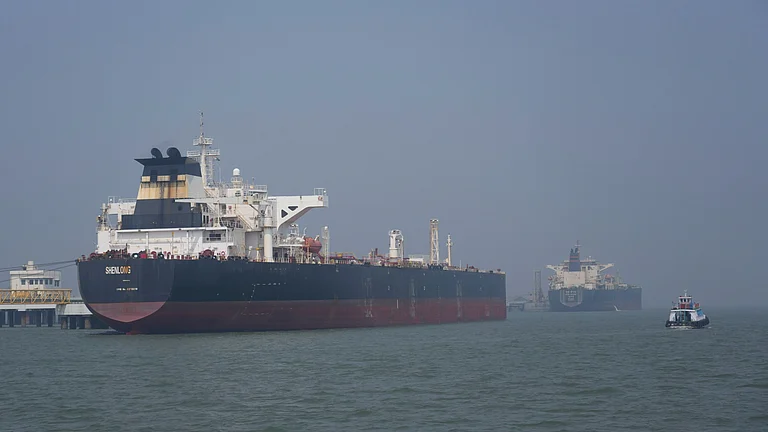
How Current Gas Supply System Works
This is significant because the government is currently sourcing at least 65% of their LNG requirements through long-term contracts, while 15% comes from spot markets. The remaining 20% shortage is managed by temporary shutdown of plants for maintenance.
With the West Asia not showing any signs of an early closure, the government has started working on measures to ensure fertiliser production does not decline once plants resume operations after maintenance ends.
This supply structure is crucial because, given the industry's strong reliance on natural gas, any disruption in LNG availability directly impacts fertiliser production.
Advertisement

Why This Matters
According to Ministry of Chemicals & Fertilisers, India’s total domestic production of fertilisers, including Urea, DAP, NPKs and SSP, has steadily increased over the years, rising from 433.29 lakh tonnes in 2021 to an all-time high of 524.62 lakh tonnes in 2025.
India reportedly consumes 32-33mn tonnes of fertilisers during the kharif season, which is necessary for crops such as paddy and maize. Domestic urea production stands at around 30-31mn tonnes annually, with imports of 6-10mn tonnes, helping bridge demand shortfalls.
Of the roughly 37 urea-manufacturing units in India, most depend heavily on LNG, which accounts for more than 80% of their raw material cost, making production highly sensitive to gas supply fluctuations.
Advertisement
Since fertiliser production in India depends heavily on natural gas, any disruption in LNG supply directly affects output and availability. This makes the system highly vulnerable to global shocks.
As fertilisers provide nutrients to crops essential for their growth – including nitrogen (N), phosphorous (P), potassium (K) and sulphur (S) – any increase in fertiliser prices would directly raise the cost of fruits, vegetables and grains.
According to The Indian Express, about 75% of India’s imported urea comes from the Gulf Cooperation Council (GCC) countries including Oman, Qatar, Saudi Arabi, United Arab Emirates (UAE) and Bahrain. Similarly, Saudi Arabia is the largest source of India’s imports in DAP, while GCC states including West Asian countries such as Jordan and Israel or Tukmenistan are a significant supplier of MOP.
Russia is a major supplier of MOP and among the top three biggest suppliers of urea and DAP for India. China was also a leading source of urea and DAP as recently as 2023-24. This indicates how India’s fertiliser security is dependent on the geopolitical developments.
Energy Security Concerns
Due to its heavy reliance on imported petrol and fertilisers, India is susceptible to disruptions in important international routes like the Strait of Hormuz, which is used by a significant portion of the world's oil and LNG trade. Any escalation in tensions could tighten supply, increase prices and raise pressure on subsidy bills.
Even brief shocks can have an impact on domestic output and farmer availability because fertiliser production heavily relies on imported natural gas. In order to improve long-term energy and food security resilience, reports highlighting these risks emphasise the significance of diversifying supply sources, bolstering strategic reserves, increasing fertiliser efficiency, and progressively reducing an excessive reliance on gas-intensive production models.
According to a report published by Zero Carbon Analytics in March 2026, fertiliser supply shocks quickly translate into higher food prices, as agricultural and food producers pass rising input costs through to consumers. Already in the second week of March this year, palm oil, soybean oil, soy, corn and wheat prices surged as disruptions to crude oil supplies heightened interest in crop-based biofuels, while panic around wartime food security may have prompted some countries to stockpile staples such as wheat.








