
The finance ministry begins Union Budget 2027-28 preparations, inviting citizens to share suggestions on policies
Ahead of the budget, Nirmala Sitharaman held pre-budget talks with economists, farmers and agriculture experts
In 2016, the government merged Railway and Union Budgets to simplify finances after committee recommendations
The finance ministry has started preparing for the Union Budget 2027‑28. In a move to make the budget more inclusive, the government is asking citizens to share their suggestions on key areas and policies.
As per a post by MyGovIndia on X (formerly Twitter), people are encouraged to contribute ideas that could shape national growth and development. Citizens can submit their views on the MyGov website, allowing the public to play a direct role in financial planning.
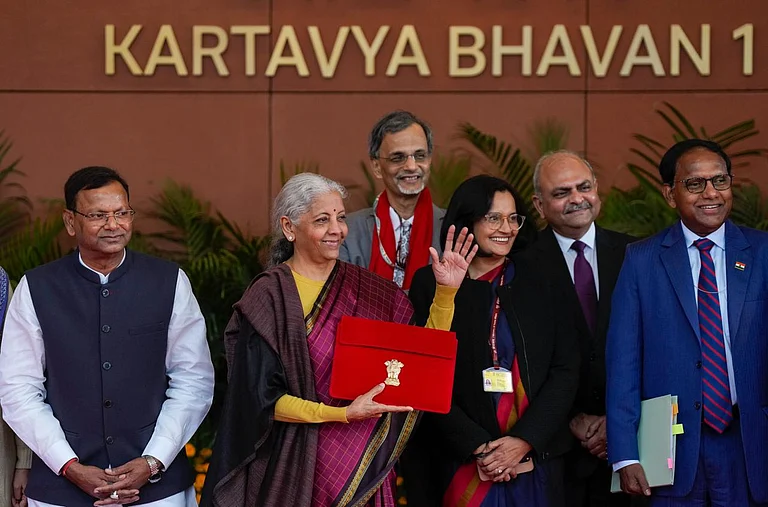
Ahead of the budget, Finance Minister Nirmala Sitharaman conducted several rounds of pre-budget consultations in New Delhi. She met economists, farmer groups, and agriculture experts to get a bunch of perspectives on the country’s financial needs and priorities.

1 September 2026
Get the latest issue of Outlook Business

While the Union Budget draws most attention, allocations for Indian Railways are always closely watched.
Railway Budget Merger Explained
Back in 2016, the government decided to bring the Railway Budget and the Union Budget together. The idea came after a committee led by Bibek Debroy of NITI Aayog suggested it would make handling the country’s money a lot simpler. A white paper titled ‘Dispensing with the Railway Budget’ backed the plan, saying it was time to stop treating the railways like a separate money island.
Advertisement
Even after the merger, Indian Railways keeps running like a business. But now, all its spending and grant details are part of the bigger Union Budget. This means the finance ministry keeps a closer eye on where the money goes, without taking the fun out of railway operations.
The plan got a thumbs-up from the Railway Minister Suresh Prabhu, who took it to Finance Minister Arun Jaitley. The idea was discussed in the Rajya Sabha, and by 2017, the merger became a reality. From that year on, the railway allocations were no longer a standalone show—they joined the main budget stage.
Advertisement
Reasons Behind Merging Budgets
So why were these two budgets merged? One of the reasons to merge the Railway Budget with the Union Budget was to better align railway policies with India’s broader economic strategies.
Earlier, the Railway Budget often faced criticism for prioritising fare cuts and announcing new projects over long-term financial sustainability and operational efficiency.
Operating separately led to coordination issues for Indian Railways. Planning, budgeting and decision-making were spread across different processes, often slowing execution. The merger streamlined these functions, making fund allocation smoother and helping railway projects to move forward more efficiently.
This unified approach has also accelerated infrastructure development. With the budget combined, resources can be flexibly directed toward modernisation and can extend the railway network.