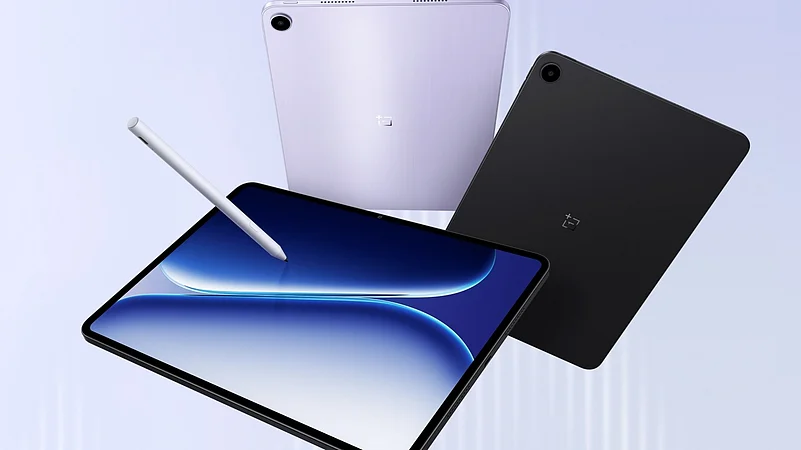

The mid-range Android tablet space has heated up with new launches like the Redmi Pad 2 Pro and OnePlus Pad Go 2.
The OnePlus Pad Go 2 stands out as a more mature entry-level tablet.
While it makes a few compromises, it strikes a solid balance between display quality, battery life, performance and clean software.
If you’re looking for a mid-range Android tablet, then the last few weeks and months have been a treat for you. Two heavyweights - Redmi Pad 2 Pro & OnePlus Pad Go 2 - have launched, and there’s something for everyone. The OnePlus Pad Go 2, which I’ll be talking about today, is an entry-level slate that has grown up. It’s now an all-day tablet with entertainment at its core, without breaking the bank. Yes, it’s missing in some areas, but it’s a tablet that’s figured out the sweet spot between display, battery, performance, and neat and clean software.
I’ve been spoiled by the OnePlus Pad 3, the Xiaomi Pad 7, and their accessories. The mid-range tablet segment is highly competitive one to be a part of.

1 June 2026
Get the latest issue of Outlook Business

After using it for a month, I find the OnePlus Pad Go 2 sits comfortably on my shelf and is a slate I pull out at least once a day for bingeing on YouTube and casual browsing. It’s also one tablet I take whenever my friends want to do some doodling and have some fun for a couple of hours.



Design, Display & Audio
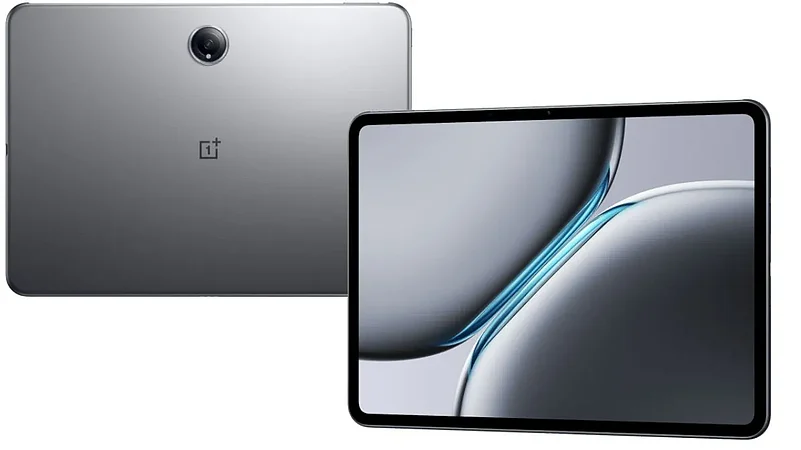
The Pad Go 2 might be noticeably heavier than an iPad, but then again, you get a lot more screen space, and the balanced weight means you can still use it one-handed without feeling bogged down. The Pad Go 2 weighs 597g (Wi-Fi variant) and is a little under 7mm thick. The beauty of the Pad Go 2 is that you can have two apps side by side without any compromise.
The jump from an 11.3-inch display to a 12.1-inch panel is ingenious. I think OnePlus has finally found the perfect size without the tablet getting unwieldy. The tablet comes in two colourways- Lavender Drift and Shadow Black - both of which look good, in my opinion.
The 12.1-inch 2.8K display is crisp and vibrant, with colours that pop. With a 120Hz refresh rate, scrolling is smoother than ever. Everything from reading text to binge-watching Slow Horses (the display supports Dolby Vision) to casually browsing the web is much easier on the eyes.
The 7:5 aspect ratio hasn’t fully settled in for me. But I don’t mind that OnePlus has gone with an LCD panel over an OLED one. Cost is obviously a factor, and I don’t see many downsides in this segment.
OnePlus claims the peak brightness is 900 nits, which is plenty for outdoor use, but reflections will make it hard to see the screen clearly.
Since we’ve discussed this tablet being ideal for media consumption, we must discuss the speakers. Well, the Pad Go 2 has a quad-speaker setup (supported by its Omnibearing Sound Field technology). It’ll adjust the audio output intelligently based on the screen orientation. Dolby Atmos support is missing, which is a weird omission from OnePlus. After all, the original OnePlus Pad Go had it. Nonetheless, the tuning seems to have improved, albeit slightly, resulting in a decent listening experience overall.
How does it perform daily?
The Pad Go 2 comes with a MediaTek Dimensity 7300 Ultra chip, paired with 8GB of LPDDR5X RAM and either 128GB or 256GB of UFS 3.1 storage. The chip is very capable, with apps loading faster than ever. Multiple Google Chrome tabs don’t bog it down anymore, and split-screen is a dream on this tablet. For menial, daily tasks, this chipset is more than capable.
Like I always say, just don’t push the tablet beyond its limits, and especially, don’t try to play all those fancy video games. You’ll just get bogged down and won’t have a smooth and fun experience. Only those very casual games can be played; don’t expect anything else.
Battery & Charging
The icing on the cake is the tablet's 10,050mAh battery under the hood. The tablet easily lasted two days of use without triggering the ‘I need to be charged’ warning. Taking this on a weekend trip, and you won’t even need to bring the charger along.
One of this tablet’s standout features is its 10,050 mAh battery (up from 8,000 mAh). In routine use, which included a mix of video streaming, browsing, productivity apps and occasional gaming, I consistently got more than a day and a half of usage, often closer to two days on lighter days. For travellers, students or anyone who dislikes frequent charging, that endurance is a real strength.
However good the battery life is, charging is just not up to the task. There’s a bundled 45W SuperVOOC charger. The kicker is that the tablet only supports 33W wired fast charging. With the charger, the tablet took about two hours to juice up from 0 to 100 percent. There’s also support for 6.5W reverse wired charging, which is a thoughtful inclusion.

Middling-t accessories
My real issue with the OnePlus Pad Go 2, as fantastic as it can be, is the selection of accessories. The Pad Go 2 offers a specialised Pad Go 2 Stylo, which attaches to the side of the folio case (an additional add-on) and charges via USB-C. The stylus is good enough for doodling, as I mentioned above, my friends love to draw on this tablet.
While that’s fine, it’s the lack of a keyboard accessory that frustrates me the most. Yes, this is a mid-range tablet, but even the Redmi Pad 2 Pro offers a keyboard case. OnePlus pitches this tablet as one you can use for light work. Unless you’re doodling, you’re definitely going to be needing a keyboard (and maybe even a mouse) to be even a tad bit productive. It’s just sad that OnePlus couldn’t offer one, even if it would have cost a fair bit as an add-on accessory. Sure, the folio case keeps the tablet propped up for your binge-watching sessions, but how does that boost your productivity? Surely you aren’t crazy enough to type out entire emails and documents using the onboard keyboard.
While there will be third-party accessories available, I’m sure, they aren’t the same as having one officially from the company.
Verdict: One of the best mid-range tablets
Yes, the OnePlus Pad Go 2 offers thoughtful improvements over its predecessor (which came out over two years ago), and can handle all your daily tasks without breaking a sweat. The software, which I didn’t touch upon above, is fast, fluid and free of much bloatware.
There’s that slightly larger display, which does wonders, and the battery life that excels. With entertainment at its forefront, this could be your best companion to take on a trip where you aren’t going to be thinking about work.
The other factor I didn’t bring up, until now, is the price. Yes, it’s a significant increase from the original Pad Go’s Rs 19,999 cost. The Pad Go 2 retails at 26,999, and that might be reason enough to think twice before purchasing the tablet. Because the excellent OnePlus Pad 3 and even the Xiaomi Pad 7 are within reach if you just increase your budget a little bit more.
Still, I’d look no further than the OnePlus Pad Go 2 & the Redmi Pad 2 Pro, in the under Rs 25,000 price bracket. The Redmi Pad 2 Pro, in my opinion, is the only true competition to the OnePlus Pad Go 2, which has matured well over the two years.