Vivo’s compact X300 has been overshadowed by the Ultra and Pro models
Yet it packs high-end features at a much more accessible price
The cost difference is large enough to buy useful add-ons and still save money
Last year, the Vivo X200 Ultra stole the limelight in the smartphone world, even though it didn’t launch outside its home country, China. The Vivo X200 Ultra, along with its telephoto extender, was considered the pinnacle of smartphone photography by many.
Many folks in the industry, and even consumers alike, had their eyes firmly set on the Vivo X300 Pro, as it meant a lot of the X200 Ultra goodness would trickle down to the X300 Pro.

1 September 2026
Get the latest issue of Outlook Business

Amid all of that, the younger, more compact sibling, the Vivo X300, has largely been forgotten. Fret not, though, as I’m here to tell you that the smaller and more compact X300 is the smartphone to get this year. With a starting price of Rs 75,999 for the 12GB RAM and 25GB storage variant, the X300 is much more affordable than its ‘Pro’ sibling.
The X300 Pro retails in India in a single variant. The 16GB RAM and 512GB storage model is priced at Rs 1,09,999. That’s a difference of Rs 34,000! With the money saved, you can even get the 2.35x Telephoto Extender Kit, which is priced at Rs 18,999 (compatible with both the vanilla and Pro flagships).
Advertisement

Just Forget About the Vivo X300 Pro
Yes, as the title says, you can safely forget about the X300 Pro. The X300 (as I’ll refer to it henceforth) is a powerhouse in its own right. I’ll give you a spoiler alert: unless you’re a wildlife photographer who needs all that ‘zoom’ goodness and the extra bit of sharpness, the X300 will do the job just fine.
The icing on the cake is that the X300 fits beautifully in the hand. From the moment you unbox the smartphone, it’s love at first sight. I thought the OnePlus 13s or the Vivo X300 FE were cute, compact, and offered just the right amount of trade-offs compared to their bigger, more expensive siblings.
Advertisement
I was proven wrong the moment the Vivo X300 landed on my doorstep. It’s a force to be reckoned with. A modern design, with some of the best ergonomics on any smartphone. It’s a power-packed smartphone without the bulk and heft of the ‘Pro’ model.
This is the smartphone that should win hearts and sway potential buyers.


It’s All About the Aesthetics
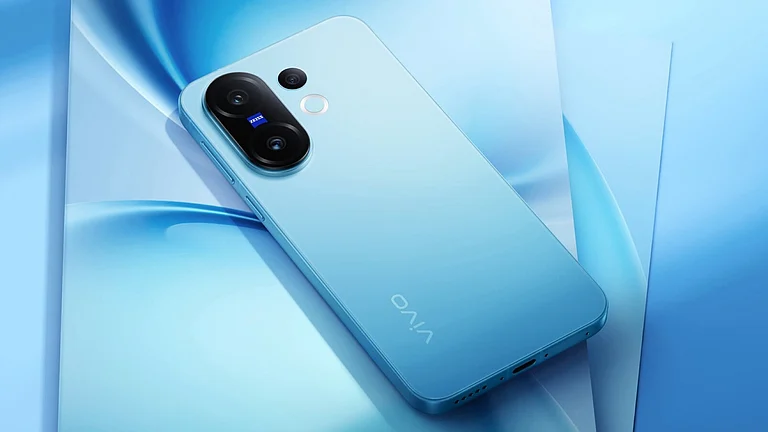
Yes, the X300 shares the same design language as the X300 Pro, but it has a far superior in-hand experience. It’s got frames (made from aluminium) that have been flattened, a round camera island, and a frosted glass back panel that is elegant and sophisticated. The camera bump may protrude a little, but it doesn’t disrupt the panel’s geometry.
It’s understated. The kicker in the X300’s design language is that it is clean, minimalist (branding is kept to an absolute minimum), and has no sharp edges.
Even if it isn’t love at first sight, it’s definitely a design that’ll quickly grow on you.
The smartphone measures just 7.95mm thick and weighs just 190 grams. Its compact body and lightness are immediately felt. With one-handed use encouraged, this is a breath of fresh air. Sometimes, and I’m not even exaggerating, I forgot the smartphone was even in my pocket and had a brief moment of panic. Comfort and elegance take the front seat.
If the design hasn’t sold you by now, the display will. Yes, this display stands tall (no pun intended) against the ‘Pro’ sibling. The X300 features a 6.3-inch LTPO AMOLED panel (with a 120Hz refresh rate and 2640x1216px resolution). Peak brightness is 4,500 nits (more than enough for outdoor usage).
Colour accuracy is excellent, and the text is as sharp as on other flagship displays. You can adjust the colour mode to vibrant, warm, soft, or pro colour calibration.


Performance and Software
I said this during the launch event, held in New Delhi, and I’ll repeat it. 2025 is the year MediaTek finally goes mano a mano with Snapdragon, and even surpasses it in certain areas. Yes, the MediaTek 9500 chipset is far from a slouch. It’s bringing top-quality competition to Qualcomm and the Snapdragon 8 Elite Gen 5. Multitasking is a breeze, and playing graphics-intensive games is guaranteed to be a lot of fun.
Couple the MediaTek 9500 with the latest OriginOS 6 software, which is modern, fluid, and very efficient, and you have a winner on your hands. People (hello there, Samsung) complain about animations and transitions. Let me just tell you that Vivo has nailed it this time around. Animations and transitions are smooth and snappy, and the smartphone will never lag, even when you push it to its limits.
With Origin OS 6, Vivo is pushing the boundaries. This new OS replaces the much-hated Funtouch OS. Sure, it may look a lot and be heavily inspired by Apple’s iOS, but it does a good job of being efficient and intuitive. It’s prettier (again, thanks to Apple), more responsive, and very much customisable (unlike iOS). What’s the USP of Origin OS 6, you may ask? Multitasking. Yes, you can open apps at lightning speed, and even before one opens, you can open a second. Crazy right? But that’s the hallmark of this OS.
The other defining feature is VivoShare. Yes, Vivo has again taken inspiration from AirDrop. Just touch two phones, and you’ll get a pop-up asking you if you want to share the files/photos. It works for iPhone users as well (provided they download the EasyShare app).

Cameras: It’s Extremely Easy to Get a Good Photo
I was in Goa for two different events and got some excellent photos with minimal effort. Yes, the cameras are a step down from the X300 Pro, but that’s to be expected. There’s a 200MP main camera (f1/.68 aperture and a 1/1.4-inch Samsung HPB sensor).
Then there is the 50MP telephoto lens (1/1.95-inch Sony LYT-602 sensor, an f/2.57 aperture, and 3x optical zoom). There’s also a 50MP ultra-wide sensor. On the front is a 50MP selfie shooter.
On paper, it is no match for the X300 Pro, and yes, when you look at the zoom quality, it will be much behind. But let me just tell you this, the X300 is one of the easiest smartphones to shoot photos with, and the photos will surpass any and all of your expectations. It has the backing of Zeiss, after all.
The photos come out looking excellent. They’ve got bright colours, outstanding dynamic range, and natural-looking portraits. Thankfully, the processing doesn’t go overboard, and the photos aren’t oversharpened.
Even in low-light conditions, the X300 shines bright. The photos come out with minimal noise, are well-exposed, and show consistent quality. There is minimal loss of details, and the photos come out looking sharp.
Portraits, with a wide range of focal lengths, are an absolute pleasure to use. There’s also a bunch of filters - Vivid, Zeiss Natural, Textured, and others - which can enhance the contrast of the photos to make them look more dramatic. Portraits have excellent edge detection, even if the subject is far away, and the black-and-white portraits (my favourite mode to shoot in) came out exceptionally well.
It’s only the ultra-wide that is a bit of a letdown. Yes, in low-light conditions, you can often find photos over-sharpened, with a loss of detail. Videos, again, weren’t up to standard. iPhone blows away the competition in video quality, and even Oppo one-ups Vivo here.
There is a ZEISS 2.35x Telephoto Extender Kit for the X300 series, but I haven’t had a chance to test it extensively yet. In my brief testing, though, it did beat Oppo’s version of the same.

Battery and Charging
Vivo is a step behind the OnePlus 15 and the Oppo Find X9 in the battery department. The X300 comes with a 6,040mAh battery and 90W wired charging. There’s also 40W wireless charging support. The battery performance was stellar, though OnePlus and Oppo have spoiled me.
I easily got 1.5 days from a single charge, and that was even when I was using the smartphone heavily. I constantly got around 7-8 hours of screen-on-time (SoT), and battery anxiety was truly a thing of the past. The 90W FlashCharge support (charger is included in the box), will juice up the smartphone from dead to full in just 50 minutes.
Verdict
The display size, ergonomics, battery, and cameras differentiate the X300 Pro from the X300, which I reviewed above. Still, with all that said, the X300 comes with a better in-hand feel, an equally good display, and stellar cameras that can hold on their own.
The Vivo X300 has been the surprise of the year for me, and yes, the year is nearly over, so I can confidently say it. It’s compact, yet thoroughly premium. The build quality is good, and from the moment you hold it in your hand, it's love at first sight.



Compact smartphones used to have severe compromises, chief among them being the battery. Fret no more, as Vivo has solved that with a solid 7-8 hours of SoT. This small, compact, and charming smartphone consistently outperforms its size.