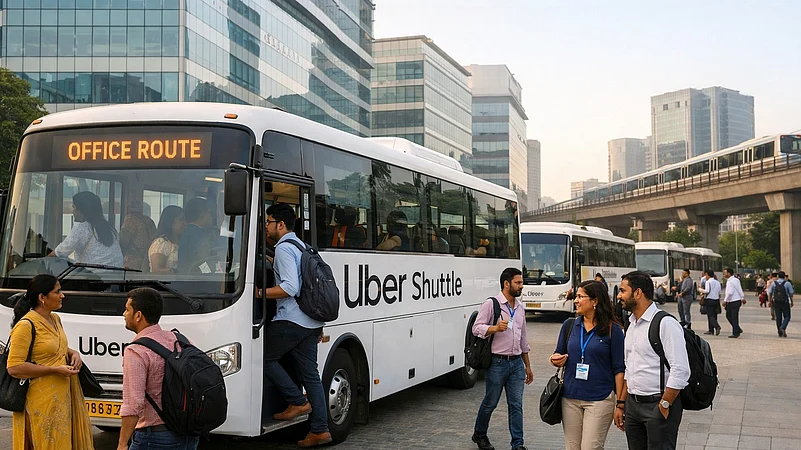


Uber is expanding in India into employee transportation, targeting a corporate commute market estimated at $13 billion by 2030.
The company is leveraging its large vehicle network and routing technology to offer predictable and cost-efficient office transport.
Uber expects rising GCCs, 24/7 work shifts and congestion concerns to drive strong demand for shared corporate mobility solutions.
Uber is expanding its India operations beyond individual riders to tap the country’s fast-growing corporate transportation market, which could be worth about $13 billion by 2030, according Business Standard.
The ride-hailing company is betting that transporting employees to offices, IT parks, factories and global capability centres (GCCs) will provide steady demand and large volumes. India’s rapid growth in IT hubs, manufacturing and large enterprises has created strong demand for organised employee transport, especially in major cities.

1 April 2026
Get the latest issue of Outlook Business

Nikolaas Van de Loock, who heads Uber Shuttle for Europe, the Middle East, Africa and India, told Business Standard that the company sees this as a major opportunity not just in India but globally. He said Uber began studying large, fixed commute patterns seven to eight years ago, starting with a pilot in Egypt. The focus soon shifted to India due to its scale, traffic congestion and clearly defined daily office commutes in cities such as Delhi, which showed strong potential for Uber’s shared transport model.
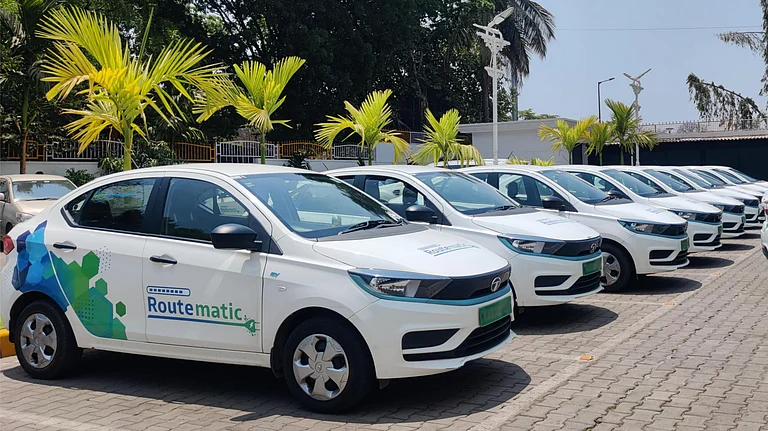



According to Van de Loock, Uber believes it has an edge in this space because of its large vehicle network across India and the technology it has developed over more than a decade to match multiple riders into a single trip. About three years ago, Uber decided to build a dedicated employee transportation service for India, hiring local engineers and operations teams to design the product.
Uber’s employee transport service creates routes dynamically based on where employees live and who needs a ride on a particular day. This allows better use of vehicles, lower costs for companies and fewer cars on the road. The company reportedly said the predictable nature of office commutes makes the business financially attractive while also supporting efforts to reduce congestion and pollution.
Unlike regular Uber rides, employee transport uses dedicated fleets assigned to corporate clients. However, when these vehicles are idle, they can be deployed on Uber’s main platform, allowing drivers to earn more while helping keep prices competitive for companies.

Uber’s corporate clients are currently concentrated in IT and financial services firms, mainly in large cities like Bengaluru, Hyderabad, Pune, Chennai and Gurugram. Safety and regulatory compliance are key concerns for employers, and Uber reportedly said its employee service includes the same safety features available on its main app, like emergency buttons and support teams.
As GCCs operate across global time zones, employee transport is increasingly becoming a round-the-clock service with multiple daily shifts. Uber also plans to use larger vehicles with the possibility to carry more employees per trip. According to Van de Loock, reducing the number of cars on India’s roads will be a major focus for Uber in the years ahead, Business Standard reported.