A holiday-season gig workers’ strike reignited concerns over pay, safety and rapid deliveries
Eternal CEO Deepinder Goyal defended the gig model, pointing to earnings growth and flexibility
He warned that tighter regulation could slow quick commerce and hurt job creation
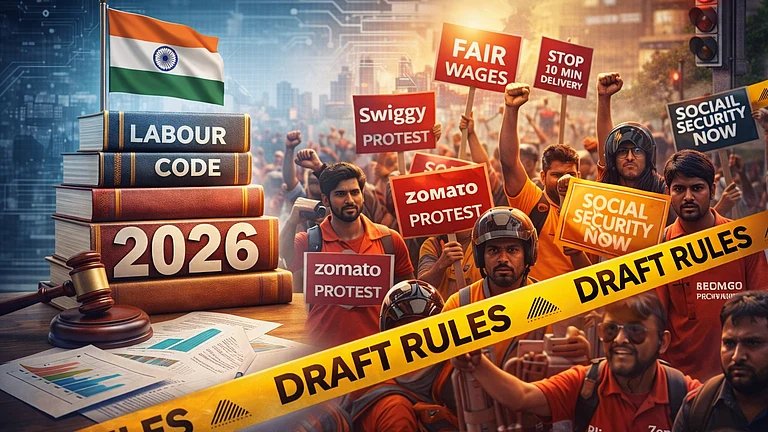
The gig workers’ debate is back in the spotlight after workers called for a nationwide strike on Christmas and New Year’s eve. The protestors even asked food delivery platforms to scrap the 10-minute delivery model, which led to split opinion across the sector.
However, Eternal CEO Deepinder Goyal responded with a strong pushback, arguing that the gig ecosystem is being misunderstood. In a post on X (formerly Twitter), Goyal defended the company’s gig work model. He shared a detailed five-point statement, while explaining how delivery partners earn.
1 April 2026
Get the latest issue of Outlook Business

In 2025, Goyal said the average hourly earnings for delivery partners rose to ₹102, excluding tips, compared with ₹92 a year earlier. This marks nearly 11% increase from the previous year.
And workers who put in longer shifts of about 10 hours a day over 26 days a month earn roughly ₹26,500, which drops to around ₹21,000 after accounting for fuel and vehicle upkeep. In addition, delivery partners retained the full value of customer tips, which in 2025 worked out to an average of about ₹2.6 per hour.
These figures also included all logged-in time and waiting periods, he noted, providing a realistic view of overall earnings rather than just “busy hours”.
“In 2025, the average delivery partner on Zomato worked 38 days in the year and 7 hours per working day, reflecting true gig-style participation rather than fixed schedules. Only 2.3% of partners worked more than 250 days in the year,” he added.
The founder further stated that demanding full-time employee benefits like PF, or guarantee salaries for gig roles doesn’t align with what the model is build for.
He also addressed concerns about 10-minute delivery promises leading to unsafe driving, while clarifying that partners never see a timer or countdown in the app.
“Quick deliveries happen because stores are close to customers, not because riders are forced to speed. Blinkit orders averaged 2 km per delivery, taking 8 minutes at 16 kmph, while Zomato deliveries were slightly faster at 21 kmph,” he said.



Goyal also highlighted that Zomato and Blinkit invested over ₹100 crore in insurance for delivery partners, covering accidents, medical treatment, loss of pay, and maternity benefits last year.
He warned that politicising the sector could destroy jobs, slow quick commerce, and push workers into unsafe informal work, while emphasising that India’s gig and quick-commerce platforms are among the country’s largest engines of job creation.
Meanwhile, food delivery platforms Zomato and Swiggy offered more incentives to their delivery partners, a standard practice they follow on festive periods, to ensure minimal disruptions in services on New Year's Eve amid strike call by gig workers' unions.
Zomato has offered delivery partners payouts of ₹120 to ₹150 per order during peak hours between 6 pm and 12 am on New Year's Eve. The platform has also promised earnings of up to ₹3,000 over the course of the day, subject to order volumes and worker availability.
Similarly, Swiggy has also increased incentives around the year-end period, offering delivery workers earnings of up to ₹10,000 across December 31 and January 1.









.jpg?w=200&auto=format%2Ccompress&fit=max "Voice AI Firm Gnani.ai Secures $10Mn Funding for Global Expansion")