India’s coal expansion risks stranded assets as renewables become cheaper and scalable.
Domestic coal financing must shift toward transition planning, not capacity expansion.
Innovative finance tools can enable a just, orderly coal phase-down.
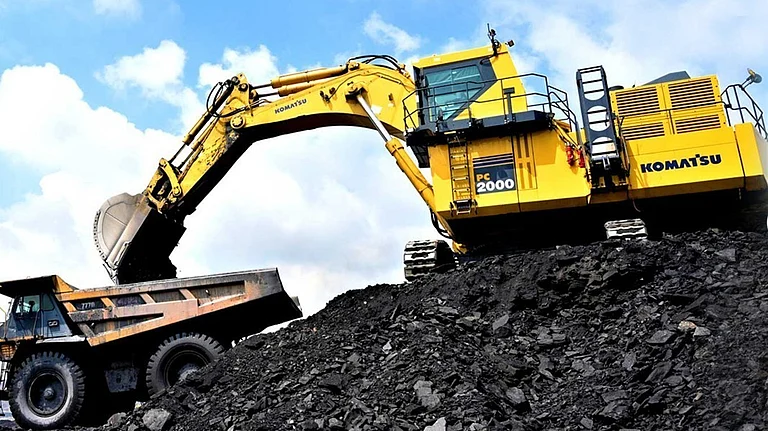
India confronts a defining energy challenge as the world's second-largest coal producer and consumer. With coal powering approximately 70% of electricity generation and production exceeding 1bn tonnes in the financial year 2024-25, the nation must balance immediate energy security against climate commitments while expanding access to underserved populations. Coal financing policy sits at the nexus of this tension, demanding sophisticated analysis beyond simplistic narratives.
India’s energy system continues to depend heavily on coal, with 235GW of installed capacity. In 2025, 7.2GW of new coal power was added—a 60% rise from the previous year—and another 88 GW is planned by 2032. Current proposals, totaling 38.4GW, mark the highest level in a decade. Financing has shifted to domestic sources, as public sector banks, led by SBI, provided about $29bn between 2016 and 2023. Coal India units MCL and SECL secured stock listing approvals in 2025. The sector employs 400,000 directly, supports millions indirectly, and faces energy access challenges with per capita use at 1,200 kWh as compared to 3500 kwh globally.

1 September 2026
Get the latest issue of Outlook Business


Strategic Vulnerabilities
India’s coal reserves provide energy security by reducing reliance on imports, yet vulnerabilities remain as nearly 90% of coking coal for steel is imported. Government measures like CoalSETU improve transparency, while gasification incentives worth Rs 50,000 crore target processing 100mn tonnes (MT) by 2030. However, stranded asset risks threaten new coal projects, with renewables now cheaper—solar and wind at ₹2 per kWh versus ₹3–4 for coal. Between 2020–2025, India added 130GW of renewables, reinforcing alternatives.
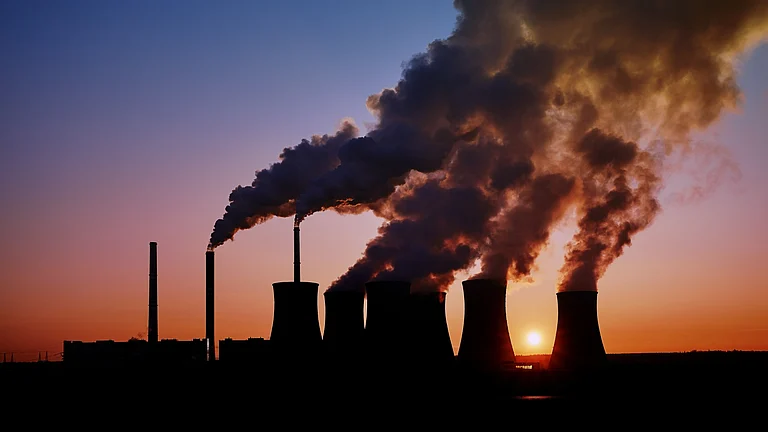
India ranks as the world's third-largest annual emitter, releasing approximately 2.9bn tonnes of carbon dioxide (CO2) yearly. Climate science establishes unequivocally that limiting temperature increases to 1.5 degrees Celsius necessitates rapid reduction of coal usage, particularly among major economies. The nation's net-zero by 2070 commitment demands reconciling current expansion plans with long-term decarbonisation.
Advertisement
The just transition framework proves critical yet underfunded. Coal-dependent regions in Jharkhand, Odisha and Chhattisgarh require comprehensive support for worker reskilling and community economic diversification. Estimates suggest $50–100bn may be needed for comprehensive just transition programmes—financing that traditional revenue models cannot generate—necessitating innovative approaches.
Innovative Financing Mechanisms
Infrastructure investment trusts (InvITs), regulated by market regulator Sebi, pool infrastructure assets, ensure 90% cash flow distribution and provide liquidity via listings. Though unused in coal, they could monetise pithead plants, washeries, or logistics. Coal India’s listings may evolve into InvITs, attracting long-term investors and recycling capital.
Blended finance mechanisms prove essential for addressing transition's social dimensions. Integrating concessional public funds, Multilateral Development Bank support and philanthropic capital with private debt and equity can derisk projects lacking conventional revenue models.
Advertisement
Applications include sustainability-linked bonds for plant re-purposing,
viability gap funding combined with district mineral foundation and corporate social responsibility funds, dedicated just transition platforms coordinating multiple ministries and modernisation investments incorporating AI and safety enhancements. India's green bond market has already mobilised approximately $50bn for sustainable projects, demonstrating appetite for structured environmental finance.

Strategic Policy Framework
India requires differentiated approaches recognising that not all coal financing carries equivalent implications. Immediate actions could be terminating financing for new coal plants, piloting InvITs for coal-related infrastructure through CIL subsidiaries and mandating climate risk and just transition metric disclosures to attract sustainable investment.
Transitional support, like maintaining financing for operational integrity at existing facilities during phase-out periods, could be looked at too to prevent premature closures that create energy gaps. India needs to distinguish between subcritical (33% efficiency), supercritical (38% efficiency) and ultra-supercritical installations (42%+ efficiency), with stricter limitations on inferior technologies.
However, for a long-term transformation, it is essential to establish blended finance platforms integrating domestic and international concessional funds. There is a need to accelerate gasification incentives and strategic overseas coking coal acquisitions to reduce import vulnerabilities. Developing comprehensive coal financing dashboards for transparency and monitoring is necessary too.
Progressive Solutions
India's coal financing deliberations mirror broader tensions in global climate action. While industrialised nations constructed prosperity on fossil fuels, developing countries now face pressure selecting cleaner but costlier pathways while addressing poverty. This asymmetry demands acknowledgment without negating present responsibility.
The solution proves progressive rather than absolute: immediate cessation of new coal plant financing, gradual existing infrastructure restrictions, vigorous renewable investment and comprehensive just transition mechanisms. Strategic adoption of InvITs and blended finance can unlock capital, reduce risks and enable equitable transformation.
India's determinations will echo internationally, shaping other developing countries confronting comparable dilemmas. The path must prove ambitious yet achievable—recognising that the proper question isn't whether coal financing should terminate, but how its conclusion proceeds responsibly, equitably and decisively towards net-zero by 2070.
(The author is Delhi-based energy transition expert. The views expressed are personal.)