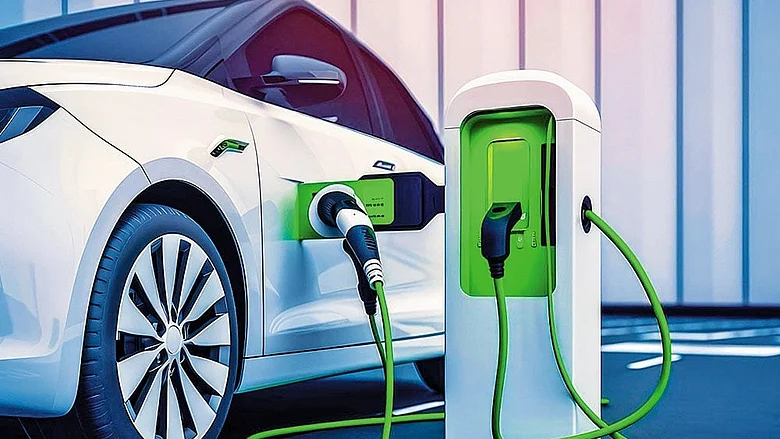

Delhi's Electric Vehicle Policy 2026 marks a shift from incentives to mandatory EV adoption across several vehicle categories.
India's next phase of EV growth will depend on stronger financing, reliable charging infrastructure and institutional readiness.
Long-term success will require commercially viable EV markets alongside ambitious electrification targets.
India's electric mobility transition is entering a fundamentally different phase. The first generation of electric vehicle policies focused on creating demand through purchase incentives, tax exemptions and charging infrastructure support.
That strategy has delivered impressive results. Electric mobility has gained momentum across two-wheelers, three-wheelers and public transport, giving policymakers the confidence to gradually replace subsidies with regulatory mandates.

1 October 2026
Get the latest issue of Outlook Business

The Delhi Way
The recently notified Delhi Electric Vehicle Policy 2026 exemplifies this shift. Widely regarded as one of India's most ambitious state-level EV policies, it moves decisively from encouraging EV adoption to mandating it. New registrations of several vehicle categories, including 3Ws, light commercial vehicles and eventually 2Ws are required to transition to electric within clearly defined timelines.
The policy deserves recognition for this ambition. It also strengthens institutional coordination by integrating charging infrastructure planning with electricity networks and governance reforms, acknowledging that electric mobility is no longer merely a transport issue, but an urban infrastructure challenge.
Yet the next phase of India's EV transition demands a different policy question.
Advertisement
The challenge is no longer how to encourage people to buy electric vehicles. It is whether the surrounding ecosystem is ready to support them.

Getting the Ecosystem Ready
As governments replace incentives with mandates, EV policies should be judged not only by adoption targets but by ecosystem readiness; whether financing, infrastructure, institutions and markets are prepared to support large-scale electrification. Viewed through this lens, Delhi's policy reveals both the promise and the limitations of India's next-generation EV transition.
The first challenge is financing.
Commercial EV adoption remains constrained by high borrowing costs, uncertain battery residual values, underdeveloped secondary markets and lender risk perceptions. Yet the policy does little to address these financing barriers. Credit enhancement, concessional finance and risk-sharing mechanisms could have reduced the cost of capital, making ambitious electrification mandates more commercially viable.
Advertisement
The second challenge is infrastructure quality.
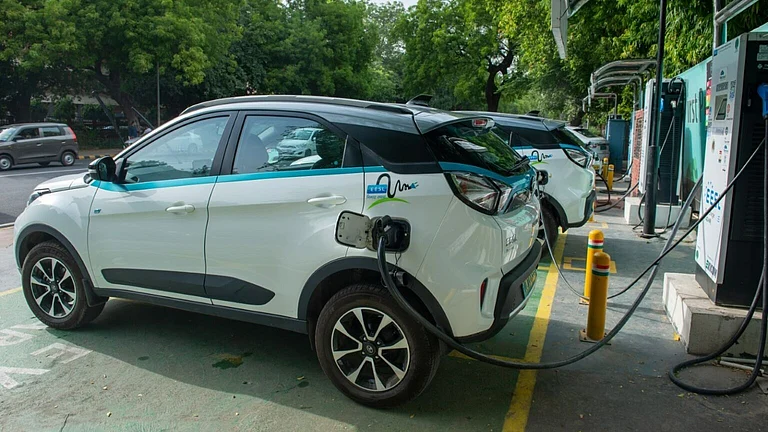
Delhi has invested significantly in expanding charging infrastructure, but the next policy challenge is no longer installing chargers, it is ensuring that they remain operational. Recent assessments indicate that nearly 84 per cent of surveyed public charging stations in Delhi were non-functional, primarily because of inadequate maintenance and theft of charging equipment. This highlights an important shift in policy priorities. The effectiveness of charging infrastructure should increasingly be measured through reliability, uptime and user accessibility, rather than simply the number of charging points installed. Infrastructure that exists but cannot be relied upon does little to strengthen consumer confidence or improve commercial viability.
Perhaps the clearest illustration of the difference between policy ambition and ecosystem readiness lies in the treatment of school buses.
The inclusion of school buses is both timely and necessary, recognising the disproportionate impact of vehicular emissions on children's health. However, the implementation pathway appears surprisingly cautious. Schools are required to electrify only 10% of their fleets by the second year, 20% by the third year and 30% by 2030.
For a policy that itself concludes in 2030, this effectively means that nearly 70 per cent of Delhi's school bus fleet could continue operating on conventional fuels throughout the policy period.
The modest target reflects a deeper commercial reality. Electric school buses remain difficult to finance because of high upfront costs, low utilisation and fragmented ownership. But these challenges call for stronger policy support and not weaker ambition. Concessional finance, aggregated procurement and dedicated charging infrastructure could have addressed these barriers more effectively.
The broader lesson extends well beyond Delhi.
Different vehicle segments have reached different levels of market maturity. While commercial 2W and 3Ws are increasingly ready for regulatory mandates, school buses and heavy commercial vehicles continue to require stronger financial and institutional support. A one-size-fits-all policy approach is therefore unlikely to succeed.
Going Beyond Mandates
Delhi's EV Policy marks an important milestone in India's electric mobility journey. But it also highlights that the next phase of the transition cannot be driven by mandates alone.
India's first generation of EV policies focused on adoption. The next generation must focus on ecosystem readiness.
Success will increasingly depend not on how many electric vehicles governments mandate, but on whether they build the financing systems, reliable charging infrastructure, institutional capacity and commercially viable markets needed to make those mandates succeed.




Only then will electric mobility become not merely an environmental aspiration, but the rational economic choice.
Disclaimer: Ria Sinha is a Senior Research Consultant at Chintan Research Foundation. Views expressed are personal.