

Women’s start-up participation nearly doubled, reaching 32–40% from an earlier 15–20%
Late-stage ventures and unicorns show stronger diversity than founder-led early-stage start-ups
Women hold 45–48% of board roles, but senior technical positions remain male-dominated
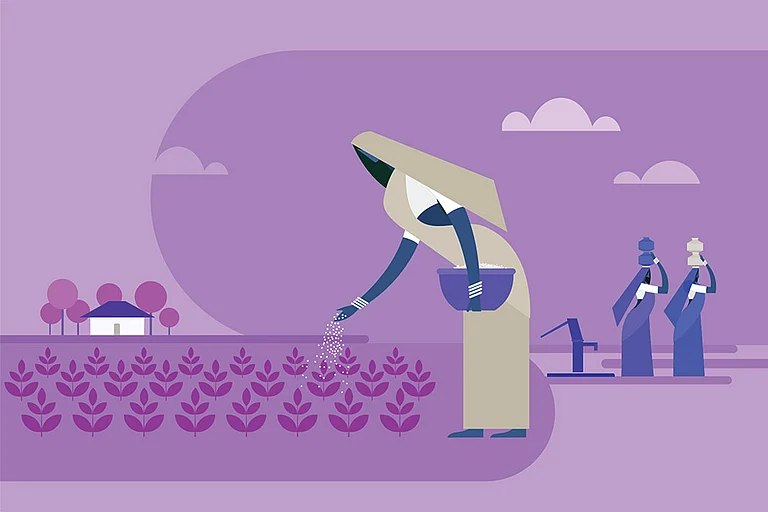
Women’s participation in India’s start-up workforce has nearly doubled over the past few years, rising to about 32–40% from roughly 15–20% earlier, according to hiring and payroll data from TeamLease Digital.
The growth has been driven largely by expanding opportunities in sectors such as software-as-a-service, fintech and direct-to-consumer businesses, along with the wider adoption of remote and hybrid hiring practices across the start-up ecosystem.

1 September 2026
Get the latest issue of Outlook Business




Women Representation in Start-Ups
The data indicates that women are increasingly joining start-ups across functions, particularly in human resources, talent acquisition and customer success roles, followed by marketing and operations.
However, representation remains significantly lower in technical roles such as engineering, DevOps, artificial intelligence and senior enterprise sales. These functions continue to show the widest gender gaps, highlighting structural imbalances in the distribution of women across different job categories in the start-up sector.
Women also tend to have stronger representation in mature, late-stage start-ups and unicorn companies compared with early-stage ventures.
TeamLease notes that it is largely because late-stage start-ups usually implement more structured hiring processes, formal HR policies and diversity benchmarks. In contrast, early-stage companies often depend on founder-led hiring networks and rapid recruitment cycles, which can inadvertently limit gender diversity at the outset.
Advertisement
Women in Leadership Roles
Leadership participation has improved but still reflects a notable imbalance. According to the TeamLease data, about 45–48% of Indian start-ups have women directors on their boards or leadership teams.
Representation is relatively strong in HR leadership roles, but senior technical and strategic positions, including chief technology officer, chief product officer and revenue leadership, remain heavily male dominated.
This leadership disparity is more pronounced than the gap seen in the overall workforce.
Another challenge emerges in long-term career progression. Many women enter start-ups strongly at entry and mid-management levels, but workforce participation tends to decline after eight to twelve years of experience, often due to personal or family-related commitments.
Advertisement
This indicates structural bottlenecks around career progression, particularly in roles involving profit-and-loss responsibility or complex technical architecture.
Disparity in Pay
Pay disparities also persist in several high-impact roles. The widest pay gaps appear in enterprise sales, engineering management and senior product positions, where compensation is often influenced by negotiation and performance incentives. By contrast, roles such as HR, talent acquisition and junior-level technology positions tend to show more equitable pay because compensation structures are typically standardised.
Sector-wise, start-ups in SaaS, healthtech, edtech and D2C consumer segments have reported stronger retention of women employees, largely due to flexible work policies and structured team environments. Deep-tech and hardware-focused start-ups, however, tend to see comparatively lower female participation and retention.
Teamlease data states that gender pay parity across the start-up ecosystem could begin to emerge within the next five to seven years if companies adopt transparent pay bands, expand flexible work options and increase women’s representation in technology and revenue leadership roles. Among these measures, pay transparency is considered the most effective intervention because it reduces negotiation-based disparities, compresses unjustified pay gaps and accelerates broader workplace equity.