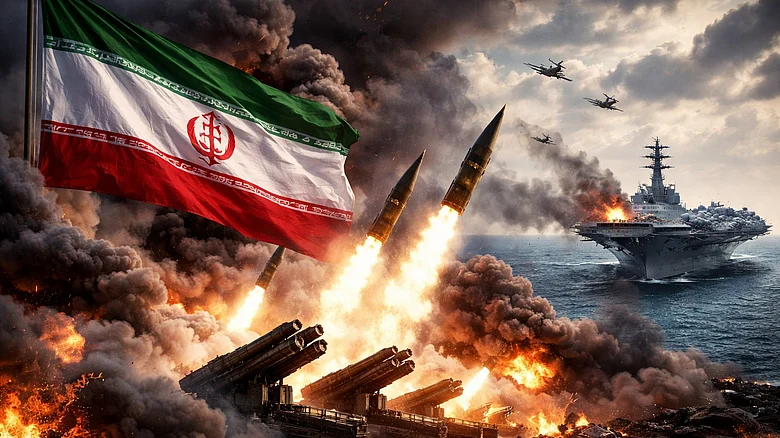

Iran has warned that any US attempt to interfere in the Strait of Hormuz would cross an "unbreakable red line," as Washington continued military strikes for a fifth consecutive night.
The US expanded attacks beyond Iran's southern coastline, while Tehran claimed retaliatory strikes on US-linked military facilities in Jordan and warned of broader action against regional infrastructure.
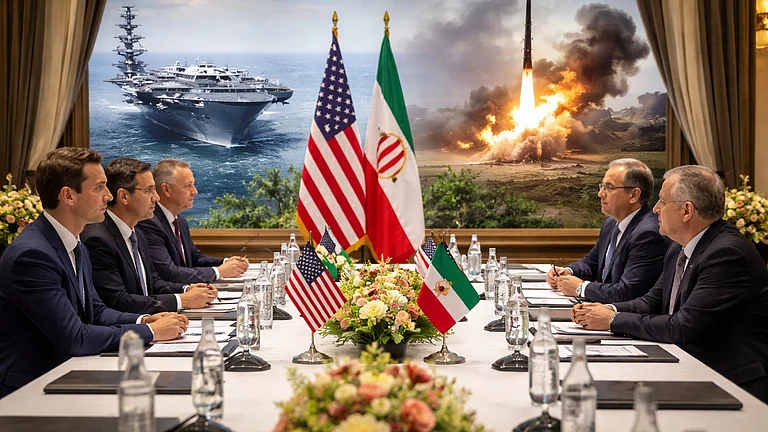
Pakistan has urged both sides to resume negotiations, but Tehran insists any future engagement depends on reciprocal US action, while President Donald Trump has threatened further strikes if Iran refuses to return to talks.
Iran has declared that any US attempt to interfere in the Strait of Hormuz crosses an "unbreakable red line" for Tehran. The warning comes as the US struck Iran for a fifth consecutive night, expanding attacks beyond the southern coastline, reports said.
US President Donald Trump threatened to target Iranian power plants and bridges if Tehran refuses to return to negotiations.

1 October 2026
Get the latest issue of Outlook Business

A senior Iranian military official said Tehran would "under no circumstances" allow any US interference in the Strait of Hormuz, describing such action as "Iran's unbreakable red line", CNN reported.

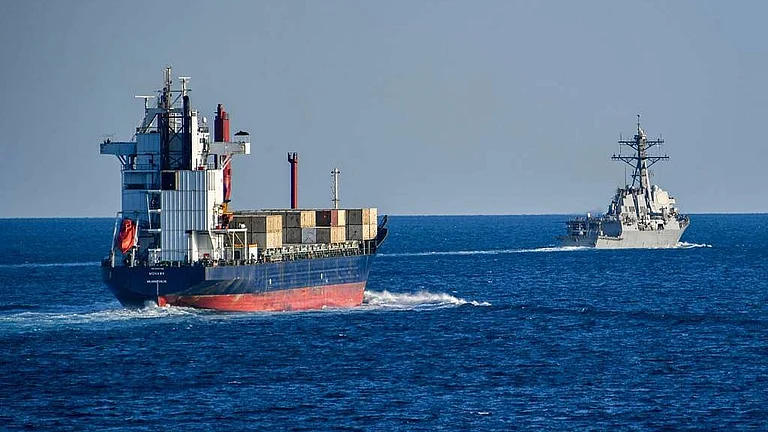
The strait remains a crucial global energy chokepoint for liquefied natural gas and oil shipments. Tehran has repeatedly insisted the waterway will stay closed "until the US ends its aggression".
US Military Campaign Expands
CENTCOM stated that American forces targeted military sites in Bandar Abbas "to degrade Iran's ability to threaten innocent mariners" navigating the strait.
Advertisement
CENTCOM stated this operation followed earlier strikes on cruise missile sites and coastal defence positions on Greater Tunb Island.
Iranian media reported that the military campaign expanded significantly. IRNA reported that a projectile struck parts of Semnan airport in northern Iran without causing injuries, while air defence systems were activated around Tehran.
Explosions also hit Lorestan province, and Mehr News reported strikes near Ahvaz in Khuzestan province. Foreign Ministry spokesperson Esmaeil Baqaei condemned a strike near a children's cancer hospital in Ahvaz as "barbaric".
The latest US strikes killed at least 35 people and injured more than 300 others, the Iranian Health Ministry stated.
Advertisement
Tehran Threatens Regional Infrastructure
An Iranian military headquarters spokesperson warned that the armed forces would ensure "all infrastructure in the region" is "crushed under the steel blows" if Washington executes its threats.
Iran's Revolutionary Guards stated they targeted a US air base in Jordan with ballistic missiles, claiming it was retaliation for American strikes near the Ahvaz hospital.
The Guards stated US forces had "used air bases located in Jordan to target various parts" of Iran before launching "two waves of missile strikes" at the base. Separately, Iran's military stated it targeted US facilities in Jordan using drones.
Regional allies faced immediate fallout. Jordan stated it intercepted multiple Iranian missiles, while Kuwait reported shooting down drones. Bahrain activated air raid sirens, and Kurdish authorities stated US-led coalition forces intercepted eight explosive-laden drones over Erbil, Iraq.
Stalled Diplomacy And Threats
Pakistan, which helped mediate a memorandum of understanding between Washington and Tehran last month, urged a resumption of negotiations.
Pakistan Foreign Office spokesperson Tahir Andrabi said Islamabad would "continue to encourage all sides to end violence and resume technical-level talks".
Tehran signalled its commitment relies on reciprocal action. Top negotiator Mohammad Bagher Ghalibaf said: "If Iran is not to derive any benefit from the memorandum of understanding, we have no reason to adhere."
Trump warned Tehran to return to negotiations, saying: "Next week it gets really bad for them."