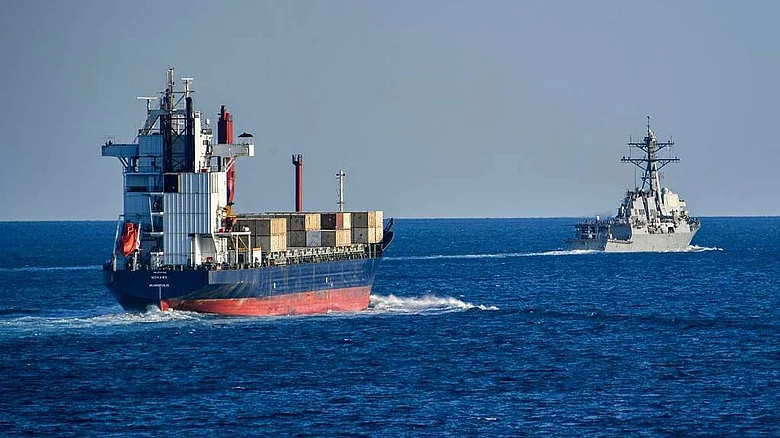

US reimposed naval blockade on the Strait of Hormuz after attacks
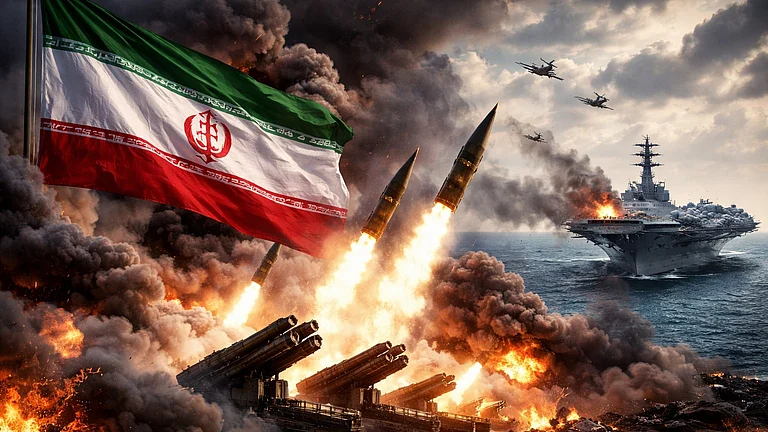
Missile alerts were issued in Bahrain and Kuwait after Iranian launches
Trump warned further US strikes could target bridges and power infrastructure unless negotiations resume
The United States has reinstated its naval blockade on Iran after accusing Tehran of carrying out attacks on vessels transiting the Strait of Hormuz, even as the US military confirmed it had concluded a fresh round of strikes against Iranian targets.
US Central Command (CENTCOM) said the latest military operation lasted around seven hours and targeted Iranian missile launch sites, drone facilities, coastal defence systems and naval assets, as per the Associated Press (AP).

1 October 2026
Get the latest issue of Outlook Business

Iranian authorities did not immediately release details of casualties or damage following the strikes.

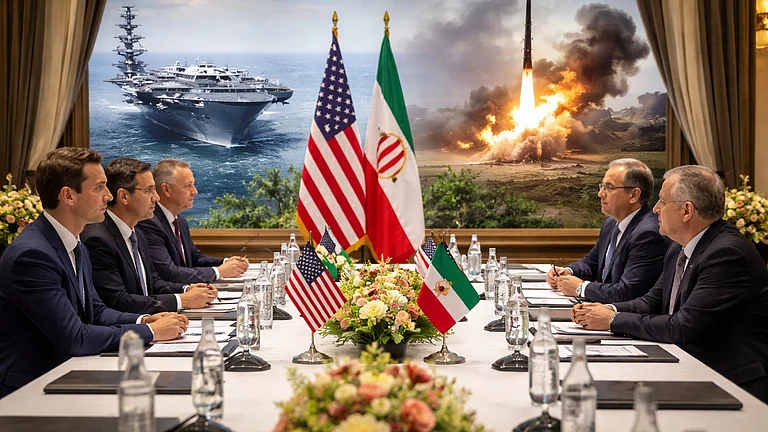
The renewed blockade comes amid growing tensions over Iran's alleged attacks on commercial shipping in the strategic waterway, through which roughly one-fifth of the world's oil and natural gas moves during peacetime.
Interim Deal Under Strain
Washington first imposed the blockade in mid-April before lifting it in mid-June after signing a 60-day interim agreement aimed at facilitating negotiations on issues including Iran's nuclear programme.
However, those talks have since stalled as clashes around the Strait of Hormuz intensified.
Advertisement
US President Donald Trump announced on Monday that the blockade would return. He also proposed a 20% fee on vessels passing through the strait before abandoning the plan hours later after consultations with Gulf allies.
Trump said Tuesday that he was called by the region's "kings and emirs," who suggested an alternate arrangement to charging ships fees to pass through the strait like the president proposed a day earlier.
"They said we'd love to do it a different way. We'd love to invest in the United States with billions and billions of dollars," Trump told reporters Tuesday in the Oval Office, as per AP.
Advertisement
Trump added that he preferred that approach because "I don't think anybody should be able to charge a fee for the strait."
Missile Exchanges Continue
Missile alerts were issued in Bahrain and Kuwait after Iranian launches, while Iranian state media later reported an exchange of fire in the Strait of Hormuz without providing further details.
CENTCOM chief Adm. Brad Cooper said Iran had launched dozens of missiles and drones towards neighbouring Gulf Arab countries.
"US forces are holding Iran accountable for unwarranted aggression that continues to endanger innocent lives," Cooper said, as per AP.
According to CENTCOM, the US currently has at least 19 warships in the Arabian Sea, including two aircraft carriers and an amphibious assault ship carrying more than 1,000 Marines, alongside hundreds of military aircraft operating across the Middle East.
Iran's ambassador to the United Nations, Amir Saeid Iravani, rejected Washington's position. "The US is the aggressor, not the victim," he wrote to the UN chief, according to Iran's state-run IRNA news agency.

Trump warned further US strikes could target bridges and power infrastructure unless negotiations resume, while regional mediators, led by Pakistan, continue efforts to revive the ceasefire and restart diplomatic talks.