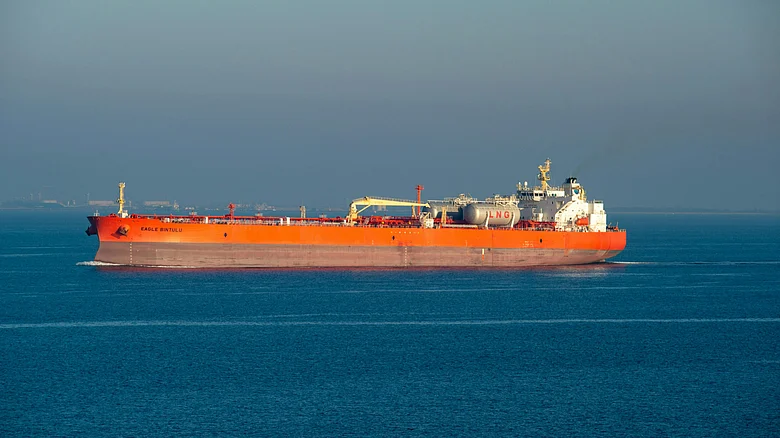

Maritime traffic through the Strait of Hormuz has largely normalised, clearing most India-bound energy shipments after recent disruptions
As US-led sanctions on Iran are lifted, Tehran is courting New Delhi to revive crude exports, with ministers meeting on the BRICS sidelines
Iran’s return, alongside Russian and UAE supplies, is boosting India’s bargaining power as Brent falls near $72
Maritime traffic through the Strait of Hormuz has largely normalised, with most India-bound energy shipments clearing the critical chokepoint over the past three days.
According to an Economic Times report, of the more than 30 vessels that had been stranded, only 12 remain on the other side and are expected to transit in the coming days.

1 October 2026
Get the latest issue of Outlook Business

The development comes as Iran has signalled its readiness to resume crude oil exports following the lifting of US-led sanctions, and has initiated direct outreach to New Delhi to revive oil trade.
Diplomatic Energy Talks
Iranian petroleum minister Mohsen Paknejad met Union minister Hardeep Singh Puri on the sidelines of the recent BRICS energy ministers' meeting, and conveyed Tehran's interest in resuming crude oil sales to India.
Tehran has separately communicated through foreign ministry channels to formalise the proposal, reported ET.
India is carefully evaluating the proposal following the removal of US-led sanctions, and New Delhi may become a major purchaser of Iranian oil in the near future as Tehran works to broaden its pool of buyers.
Advertisement
Up to this point, China has served as the main purchaser of Iranian oil under sanctions, granting it significant influence over prices. A wider range of buyers, including India, would provide Iran with more room to manoeuvre when negotiating export conditions.
Resilient Diplomatic Ties
India-Iran relations have stayed strong throughout the recent crisis in West Asia. During the conflict, New Delhi enabled Iranian naval ships to dock and helped repatriate Iranian sailors.
India is also likely to send a high-level representative to the funeral of Ayatollah Ali Khamenei, and Tehran has invited Prime Minister Narendra Modi for an official visit.
Oil Prices Post Hormuz Reopening
Benchmark Brent crude dropped to about $72 per barrel on Thursday, returning to levels seen before the Iran war. This represents a steep decline from an average price of $99 in the first week of June and $109 over the three months ending in May.
Advertisement
The reopening of the Strait of Hormuz has heightened competition among suppliers, as Iran’s return to global markets, the UAE’s departure from OPEC, and the sustained flow of substantial Russian supplies have broadened choices for buyers and bolstered India’s negotiating leverage.
Lower crude procurement costs are expected to improve refinery margins, with gains likely to reflect in the July-September quarter.