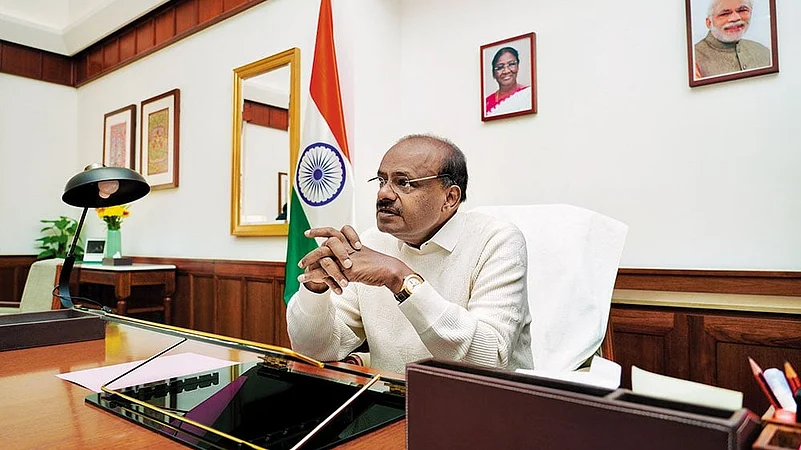
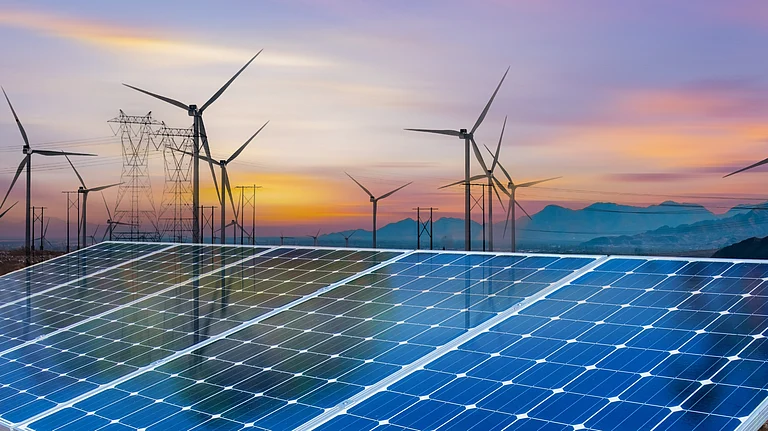
India should not merely become one of the world's largest consumers of clean energy technologies but also a leading producer, which will drive the global energy transition, Union Minister H D Kumaraswamy said on Thursday.
Addressing a CII event here, the minister said significant deployment of renewable energy, adoption of energy-efficient technologies, greater resource efficiency and decarbonisation are the need of the hour.
"Our objective is clear. India should not merely become one of the world's largest consumers of clean energy technologies. India must become one of the world's leading producers of the equipment, material and technologies that will drive the global energy transition," the Minister for Steel and Heavy Industries said.
1 September 2026
Get the latest issue of Outlook Business

The minister said India is pursuing a development model that combines rapid economic growth with strategic industrial capability.
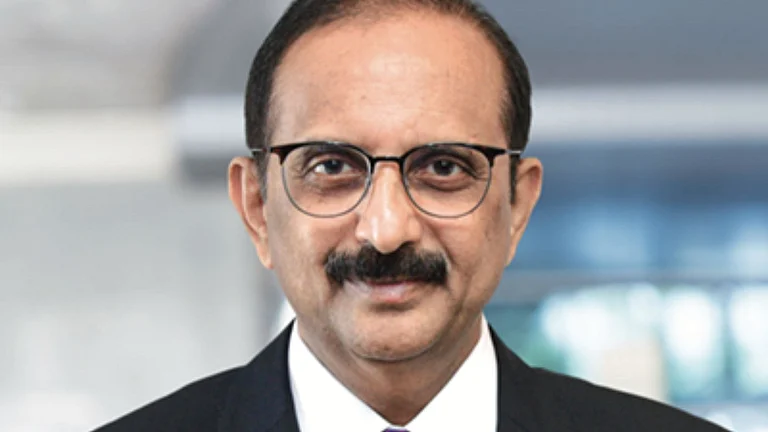


"Our objective is to build complete domestic manufacturing ecosystems that create value and generate employment. This is the essence of resilient supply chains in the 21st century. I invite industry and all the stakeholders to come forward and work with the government to make India Aatmanirbhar and Viksit Bharat by 2047," Kumaraswamy said.
Today, India's energy security is no longer defined solely by access to energy resources. It is increasingly determined by its ability to manufacture, innovate and build resilient supply chains for the technologies that will power the future, he said.
Advertisement
Describing steel as the backbone of the clean energy transition, the minister said every major investment in renewable energy infrastructure, from solar parks and wind turbines to transmission networks, battery manufacturing facilities, ports and green hydrogen projects, depends fundamentally on steel.
Pointing to the country's electric mobility ecosystem as an example of industrial progress, Kumaraswamy said it has evolved from demand-side support into a comprehensive manufacturing strategy.
He said India produced nearly 31 million vehicles in the last financial year, while exports from the segment crossed 5.3 million units.
"What began as demand-side support has evolved into a comprehensive industrial strategy encompassing manufacturing, localisation of batteries, charging infrastructure, advanced materials and supply chain security," he said.
Advertisement
The minister said the PM E-DRIVE Scheme, with a financial outlay of ₹10,900 crore, exemplifies this approach. "The scheme is supporting demand creation while simultaneously strengthening domestic manufacturing capability," he added.