Drone strike hits Fujairah; UAE blames Iran while Tehran denies involvement; ADNOC-linked tanker also targeted, no injuries reported
Fujairah handles ~1.7 mb/d and enables exports bypassing Hormuz via the Habshan–Fujairah pipeline, making it critical to global flows
Oil jumps (Brent +5.8%, WTI +4.4%) as global powers condemn attacks and IRGC issues fresh warnings over shipping
UAE authorities reported a drone strike targeting an installation in Fujairah on Monday. Emergency teams were deployed to contain the situation, according to the Fujairah media office.
Fujairah holds strategic importance as the UAE’s main energy hub on the Indian Ocean, allowing oil exports to bypass the Strait of Hormuz. It is also one of the world’s bunkering hubs, with extensive storage and shipping infrastructure critical to global energy flows.

1 September 2026
Get the latest issue of Outlook Business

The incident marks the first reported attack on the UAE since the Iran–US ceasefire agreed on April 8.
The UAE’s Ministry of Foreign Affairs condemned what it described as “renewed, unprovoked attacks” by Iran on civilian facilities. Tehran, however, denied responsibility.
State broadcaster IRIB, citing a senior military source, said Iran had “no pre-planned operation” targeting the reported sites, according to Al Jazeera.
In a related development, the UAE said Iran launched two drones at a tanker linked to Abu Dhabi National Oil Company (ADNOC) transiting the strait. Presidential adviser Anwar Gargash described the incident as “maritime piracy.”
ADNOC confirmed that the vessel was not carrying cargo and that no injuries were reported.
Advertisement
Oil markets reacted sharply to the developments. Brent crude rose $6.27, or 5.8%, to settle at $114.44 per barrel, while US WTI crude gained $4.48, or 4.4%, closing at $106.42.
How Significant Is Fujairah?
The port handles over 1.7 million barrels per day of crude and refined products on average last year, according to a Reuters report citing Kpler.
Located on the Gulf of Oman, about 70 nautical miles from the Strait of Hormuz, Fujairah offers a key alternative route as the strait remains effectively shut amid the Iran conflict. This has significantly elevated the port’s importance in maintaining global supply flows.
Advertisement
For the UAE, Fujairah is central to energy security and export continuity. The country, which produced over 3.4 million barrels per day of crude before the conflict, relies on the 1.5 million bpd Abu Dhabi Crude Oil Pipeline (ADCOP) to bypass the Strait of Hormuz.
The Habshan–Fujairah pipeline transports crude from inland fields to the Fujairah port, where the UAE’s flagship Murban grade is loaded for export, primarily to Asian markets.
With the Strait of Hormuz largely inaccessible, any disruption at Fujairah could severely constrain exports, potentially forcing OPEC’s third-largest producer to cut output.
Iran Draws Global Criticism
The attacks drew widespread international condemnation. Saudi Arabia and Qatar backed the UAE, affirming support for measures to safeguard its sovereignty and security. Kuwait called the strikes “reprehensible aggression,” while Bahrain termed them a “dangerous escalation.” Jordan’s foreign minister also condemned the attack in a call with his UAE counterpart.
Western nations including Canada, Germany, and the United Kingdom criticised Iran and urged de-escalation and a return to negotiations. European Commission President Ursula von der Leyen said the strikes violated sovereignty and international law.
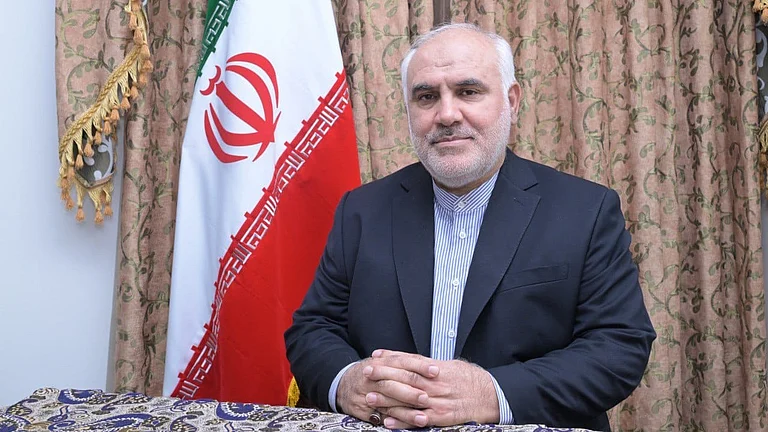
Iran Issues Fresh Threats
Tensions in West Asia escalated sharply after a warning from Iran’s Islamic Revolutionary Guard Corps (IRGC). Spokesperson Brigadier Ibrahim Dhu al-Faqqari said, “The clock is ticking to zero hour. Tonight, a new chapter of power will unfold—one our adversaries have never witnessed before.” He added that while Iran does not seek war, it would respond decisively if provoked.
Al-Faqqari also claimed that no commercial vessels or oil tankers had passed through the Strait of Hormuz in recent hours without IRGC clearance, accusing US officials of spreading misinformation. He warned that any ships violating IRGC naval directives would face “serious risks” and could be forcibly stopped.