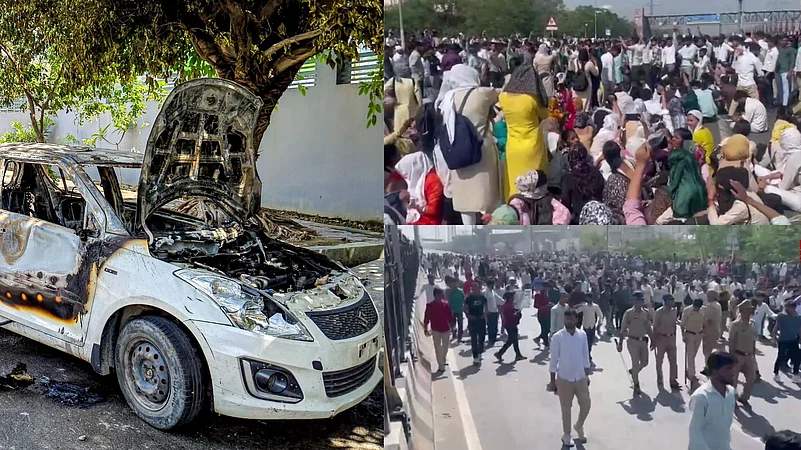

Despite a 21% interim wage hike, workers in Noida continue protesting, saying the increase is inadequate against rising living costs.
The unrest is rooted in long-standing issues like low base wages, long hours, and unequal pay across regions.
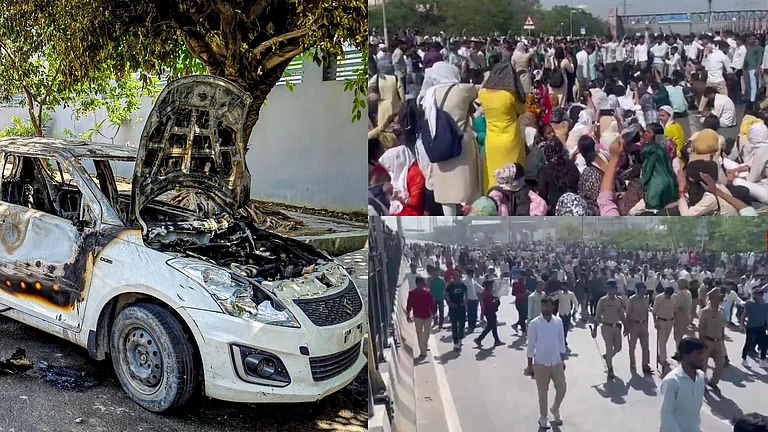
Protests have repeatedly turned violent with road blockades, arson, and clashes with police.
The Uttar Pradesh government on Tuesday approved an interim minimum wage hike of approximately 21% for factory workers in Gautam Buddh Nagar and Ghaziabad, caving to pressure from a mass protest that brought large parts of Noida to a standstill and turned violent in several locations the previous day.
The decision, effective from April 1, came after an emergency cabinet meeting chaired by Chief Minister Yogi Adityanath and follows days of escalating agitation that saw around 40,000 workers assemble at 80 to 83 locations across the Gautam Buddh Nagar commissionerate, including key industrial hubs in Sector 62, 63, 60, 84, Phase-2 and parts of Greater Noida.

1 September 2026
Get the latest issue of Outlook Business

New Wage Rates Across Categories
Under the revised structure, monthly wages for unskilled workers in Gautam Buddh Nagar and Ghaziabad have been raised from ₹11,313 to ₹13,690. Semi-skilled workers will now earn ₹15,059, up from ₹12,445, while skilled workers will see their monthly pay rise from ₹13,940 to ₹16,868. The revised rates were finalised by a high-powered committee and received official approval late on the night of Monday, April 13.


Labour Minister Anil Rajbhar reportedly said the adjustment was necessary to maintain industrial peace in the state's flagship economic zone, acknowledging that the cost of living pressures on workers in the 2026 fiscal year had made some form of relief unavoidable.
Advertisement
A Protest That Turned Violent
The wage agitation, which had been building for several days, took a sharp and destructive turn on Monday. Workers gathered in large numbers across Noida's industrial corridors, raising slogans and demanding relief from rising living costs. In Sector 62, protesters climbed onto road dividers and blocked key arterial roads, bringing traffic to a near standstill. Major routes connecting Sector 62 to Sector 16 and the NH-9 were choked, resulting in long delays that rippled across the city and caused significant hardship for commuters and office-goers.
Advertisement
The situation deteriorated most sharply in Phase 2, where demonstrations turned violent. Incidents of stone-pelting, vehicle arson and vandalism were reported, forcing the deployment of heavy police presence to manage the crowds and restore order. The unrest effectively paralysed large parts of one of the National Capital Region's most important industrial zones for much of the day.
Ahead of the official announcement, the state government moved to counter a wave of misinformation circulating on social media, which falsely claimed that the minimum wage had been raised to ₹20,000 per month and that employers were refusing to comply. The UP government categorically denied these claims, calling the reports baseless and misleading.
"The Uttar Pradesh government would like to clarify that the misleading information being circulated through social media is completely baseless," the state government said in a press release, adding that Chief Minister Yogi Adityanath had appealed to the public to rely only on information from official sources.
Unrest Spreads Despite Wage Hike
Even as factory workers began dispersing following the government's announcement, the unrest showed little sign of fully subsiding. By Tuesday afternoon, a new wave of protests had emerged, this time from an unlikely quarter. Hundreds of private security guards, domestic workers and maintenance staff employed by prominent housing societies under the "Supertech" and "Jaypee" banners staged sit-ins at residential complex gates across Noida, demanding that the 21% wage hike be strictly enforced for private domestic staff and security agencies, workers who frequently operate outside the ambit of formal industrial oversight, according to reports.
The sudden wage revision has also rattled the business community. The Noida Entrepreneurs Association warned that a 21% jump in the wage bill could push cash-strapped MSMEs toward operational downsizing, raising concerns about job losses in the very sector the hike was designed to protect.
Resident Welfare Association federations echoed similar anxieties, cautioning that the spillover protests could translate into a sharp rise in monthly maintenance charges for apartment residents already grappling with rising living costs.
With tensions still simmering, district authorities remain on high alert. Section 144 of the Code of Criminal Procedure, which prohibits the assembly of four or more persons, continues to be enforced across sensitive zones in Sectors 62 and 18.