Climate technologies often struggle scaling beyond pilots due to operational and infrastructure constraints.
Localisation, ecosystem collaboration and market access remain crucial for climate innovation success nationwide.
Investors prefer scalable low-cost models despite growing climate-tech funding across India recently.
India’s climate innovation ecosystem has seen steady momentum in recent years, with solutions emerging across agriculture, waste management and clean technology. This reflects not just technological progress, but also a shift in how climate challenges are being approached. The conversation today, however, is moving beyond what can be built to what can be sustained on a scale in real-world conditions. The gap between what is developed and what is deployed is becoming more visible, shaped largely by how well solutions align with on-ground realities.
Ecosystem leaders and foundations now lead in bridging this gap—running on-ground pilots, enabling stakeholder engagement and validating technologies in real conditions to map paths from concept to scaled reality.

1 October 2026
Get the latest issue of Outlook Business

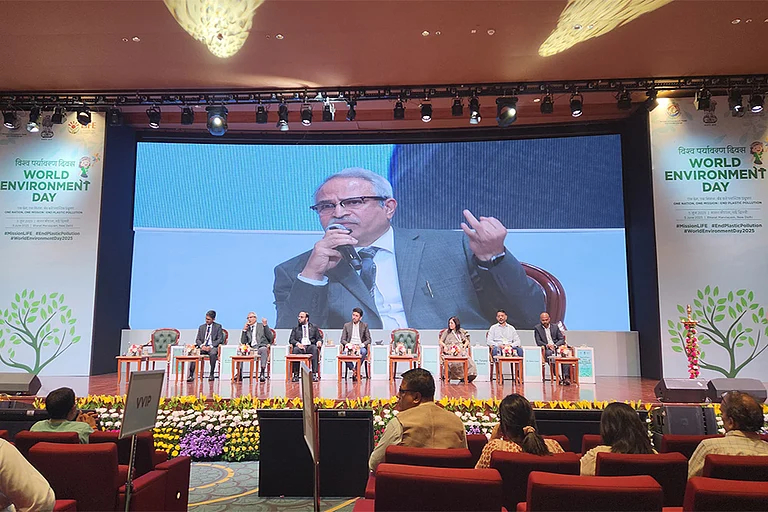
From Innovation to Execution
Across sectors, many of the required solutions already exist. In waste management, technologies for sorting, recycling and material recovery have advanced significantly. In agriculture, data-led advisory systems and precision tools are improving decision-making. In clean technology, innovations in energy systems and materials are expanding possibilities. At a broader level, only a fraction of these technologies has reached meaningful scale, with many still early in their adoption journey.
Advertisement
What becomes evident over time is that performance in controlled environments does not always translate into performance on the ground. Laboratory conditions rely on standardised inputs, whereas real-world conditions involve mixed feedstock, fragmented supply chains and uneven infrastructure. As solutions move beyond pilots, these variables begin to influence outcomes more than the core technology itself.
This is where the nature of the challenge begins to shift—from developing new solutions to ensuring that existing ones can operate reliably within real-world constraints.

The System Constraint
Climate challenges do not operate in isolation and the barriers to solving them are also interconnected. In plastic waste management, for instance, the issue extends beyond recycling technology to include collection, segregation, logistics and end-use markets. India generates significant volumes of plastic waste annually, yet only a limited proportion is effectively recycled, with most of it processed through basic methods. This reflects how the system functions in practice. Waste is not consistently segregated, feedstock quality varies significantly, logistics remain inefficient and end markets for recycled materials are still evolving.
Advertisement
As a result, solutions that show promise in controlled settings often face friction when they are introduced into these conditions. Scaling, therefore, depends on how well solutions integrate into the system they are meant to operate in, rather than how they perform in isolation. This has sparked foundation-led ecosystem approaches, where innovators, industry and institutions unite to strengthen collection, material flows and end markets while advancing core technologies.
What Enables Scale
Scaling climate solutions are shaped by a set of practical, interdependent realities. Solutions need to be implemented consistently despite variability in input and operating conditions. Cost structures must align with market realities, particularly in price-sensitive environments. Systems need to remain simple enough to operate reliably, without adding complexity that affects up time. Accessibility also plays a role—if a solution is not available where decisions are made, its adoption remains limited. When these factors are not addressed together, even well-designed innovations tend to slow down beyond early deployment. Experience across scaling ecosystems also shows that capital alone is rarely sufficient at this stage. Solutions often require support across operations, market access and execution to move from early promise to sustained scale.
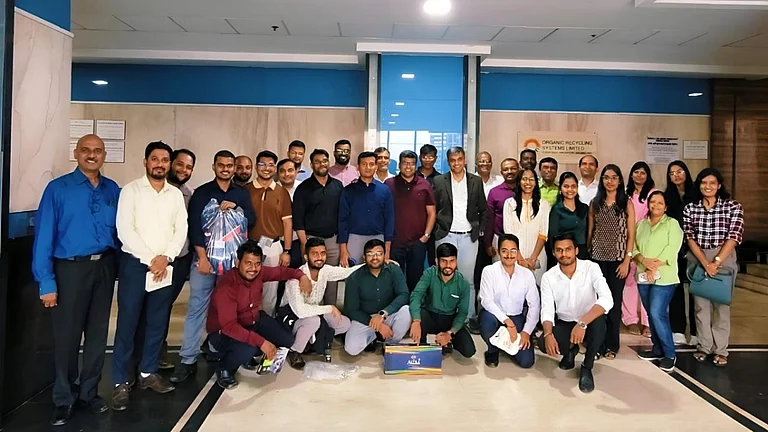
In many cases, curated platforms and sector-focused convenings are helping address this need—by connecting innovators with investors, corporates and implementation partners, and enabling access to pilots, customers and expert guidance. Foundations spearheading these convenings provide the hands‑on guidance that turns early promise into scaled impact.

The Role of Localisation
Another challenge lies in the gap between globally developed solutions and local operating conditions. Technologies designed for standardised environments often require adaptation to function effectively in India, where variability in inputs, infrastructure gaps and operational constraints is common. In sectors like recycling, imported systems frequently require re-engineering before they can perform consistently. This points to a broader shift in how scaling is approached. Rather than replication, progress depends on designing solutions with local conditions in mind—from the outset.

Capital and Confidence
While investment in climate innovation is increasing in India with climate-tech start-ups attracting over $2.2bn in the last 18 months as of August 2025, access to capital remains uneven, with only about 3% of startups progressing to Series B or later-stage funding. There is a visible preference for models that can scale quickly with lower capital intensity, while infrastructure-heavy solutions require longer timelines, higher investment and greater operational certainty. Investors typically look for demonstrated performance and clear demand before committing capital.
At the same time, sustainability is increasingly being viewed as a driver of long-term value, shaping how businesses and investors approach climate solutions. This creates a familiar dynamic, where the ability to scale and the availability of capital tend to reinforce each other over time.

From Pilots to Systems
India’s climate innovation ecosystem has a strong foundation, supported by entrepreneurs, institutions and enabling platforms working to move solutions beyond early promise. The next phase will depend on how effectively these solutions integrate into larger systems and operate consistently within them. This requires a shift in focus—from developing solutions in isolation to embedding them within systems that are practical, reliable and accessible, often through sustained engagement and collaboration.
It also highlights the importance of long-term institution building where knowledge, networks and collaborative platforms continue to support innovators through access to capital, markets and strategic guidance as they scale. The true value of climate innovation lies in its staying power - solutions that move beyond pilots and embed themselves into everyday systems.
(Suranjana Ghosh is Head of Marico Innovation Foundation. The views expressed are personal.