

ASEAN onshore wind capacity set to jump from 6.5 GW to 26 GW.
India shares expertise in manufacturing, grid integration, and renewable energy policies.
Cross-border collaboration vital to ensure supply chain resilience and energy security.
The Association of Southeast Asian Nations (ASEAN) is rapidly positioning itself as a central hub for the global wind energy transition. At the AWE-ASEAN Wind Energy Expo 2026, the Indian Wind Turbine Manufacturers Association (IWTMA) underscored the region’s critical role in meeting rising electricity demands while reducing fossil fuel dependence.
As detailed in the sources, current projections indicate a massive scale-up in renewable infrastructure; ASEAN’s onshore wind capacity is expected to jump from 6.5 GW in 2024 to 26 GW by 2030. This surge is driven by a 3–4% annual growth in power demand across member nations, necessitating a swift shift toward sustainable alternatives.

1 September 2026
Get the latest issue of Outlook Business

Unlocking this potential requires more than just installation; it demands a coordinated effort across manufacturing, technology, and policy frameworks. Industry leaders emphasise that the coming decade will be "decisive" for wind and energy storage across the region. To achieve these ambitious targets, stakeholders are calling for deeper global ties, specifically between India, Germany and ASEAN, to bridge existing capability gaps and ensure efficient project execution.
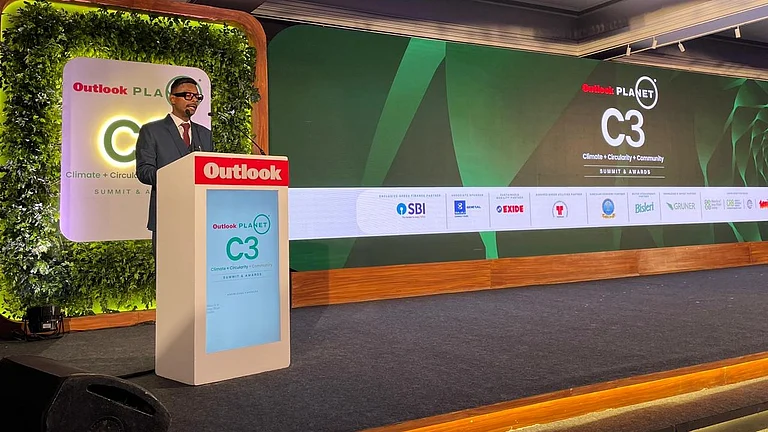
Scaling Regional Green Energy
During a panel discussion titled “Offshore & Onshore Wind Capacity Addition in ASEAN,” IWTMA CEO Aditya Pyasi urged for the creation of a "resilient green corridor". As noted in the sources, Pyasi proposed a co-created Asian supply chain that leverages India’s manufacturing scale and competitive costs to de-risk dependence on any single technology or country. India, already a global leader in wind power, aims to share its extensive experience in grid integration and policy development with its ASEAN neighbours.
Advertisement
PK Dash of India’s Ministry of New and Renewable Energy (MNRE) noted that such platforms are vital for knowledge exchange as the region collectively scales up deployment. The discussion focused on localised manufacturing and financing frameworks to turn strategic intent into reality. By moving turbines, talent and technology seamlessly across borders, the partnership aims to deliver reliable, clean power to over 2 billion people. This collaborative approach is seen as essential for advancing shared climate goals and ensuring regional energy security.

Regional Wind Growth
According to Rystad Energy, ASEAN’s wind energy market is expanding rapidly, with onshore capacity projected to rise from 6.5 GW in 2024 to 26 GW by 2030 (Global Wind Energy Council).
Advertisement
Bloomberg NEF reports that investment in Southeast Asian renewable, surpassed $10bn in 2025, aided by strong electricity demand growth and supportive government policies. Industry experts emphasised that cross-border collaboration and knowledge sharing will be crucial to build resilient supply chains and integrate variable renewable energy efficiently across the region.