Gold recycling involves refining old jewellery, coins, bars, and scrap into reusable gold, reducing the need for fresh imports.
India imports most of its gold requirements despite households and temple trusts collectively holding an estimated 30,000-35,000 tonnes of the precious metal.
Experts say even recycling a small portion of idle gold could significantly reduce imports, ease pressure on the rupee, conserve foreign exchange reserves, and support economic stability.
It is not an overstatement to say that Indian households possess more gold than the official reserves of several central banks around the world. For generations, gold has been India's ultimate safe-haven asset—trusted in times of prosperity and uncertainty alike.
As per data, Indian households and temple trusts are estimated to collectively hold between 30,000 and 35,000 tonnes of gold—worth nearly $3.8 trillion at current prices.

1 October 2026
Get the latest issue of Outlook Business

Yet a significant portion of this wealth remains locked away in lockers, vaults, and cupboards, generating little economic value.
At a time when India faces rising import costs, a weakening rupee, and heightened geopolitical uncertainty, policymakers are increasingly looking at gold recycling as a way to unlock some of that dormant wealth and reduce dependence on imports.
Prime Minister Narendra Modi recently urged citizens to consider recycling old and unused gold rather than purchasing newly imported metal. The idea is gaining attention as India seeks ways to strengthen its external sector and reduce pressure on foreign exchange reserves.
Advertisement
Why Does So Much Gold Remain Idle?
For generations, gold has served multiple purposes for Indian families. It acts as a financial safety net during emergencies, a hedge against inflation, a means of preserving wealth, and a traditional asset passed down through generations.
Unlike financial investments, gold is often viewed as something that should be held rather than traded.
As a result, large quantities of jewellery, coins, and bars remain untouched for years. Many households possess old ornaments that are broken, outdated, or no longer used but continue to sit idle because of sentimental value or the perception that selling gold is undesirable.
Advertisement
This tendency has created an enormous stock of dormant gold that contributes little to economic activity despite its substantial value.
What Is Gold Recycling?
Gold recycling refers to the process of recovering gold from old jewellery, coins, bars, and industrial scrap and converting it back into usable bullion.
The process typically begins with a purity assessment, after which the metal is melted, refined, and transformed into pure gold. It can then be reused to manufacture new jewellery, coins, investment products, or industrial components.
Unlike mining, which requires extensive extraction, energy consumption, and environmental resources, recycling allows existing gold to be reintroduced into the market without the need for fresh imports.
For consumers, recycling often means exchanging old or unused jewellery for redesigned ornaments or receiving credit toward new purchases.
Why Is the Government Promoting Gold Recycling Now?
The push comes at a time when India's economy is facing multiple external challenges.
The ongoing conflict in West Asia has heightened uncertainty in global energy markets, pushing up crude oil prices and increasing pressure on oil-importing countries such as India. At the same time, investors worldwide have been flocking to safe-haven assets such as gold and the US dollar.
This trend has placed additional pressure on the Indian rupee.
The rupee was among Asia's weakest-performing currencies in 2025, depreciating nearly 10% against the US dollar. In 2026, it has already weakened by more than 6%, driven by rising crude oil prices, foreign capital outflows, and geopolitical risks.
A weaker rupee makes imports more expensive, including gold imports.
Since India relies heavily on imported bullion to satisfy domestic demand, rising gold imports add pressure to the country's trade balance and foreign exchange reserves.
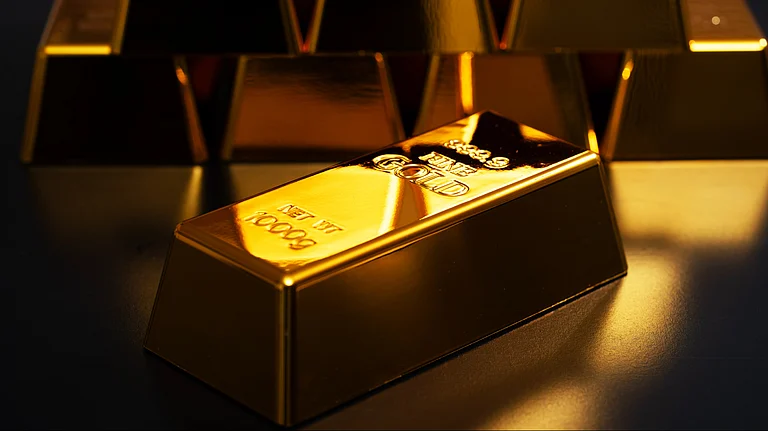
The Gold Import Burden
Despite being one of the world's largest consumers of gold, India produces only a small fraction of the metal domestically.
Most of the country's demand is met through imports, making gold one of India's largest non-oil import categories.
According to reports, India spent approximately $72.4 billion on gold imports in FY26 alone. Such a large import bill can significantly affect the country's current account deficit, especially during periods of currency weakness and elevated global prices.

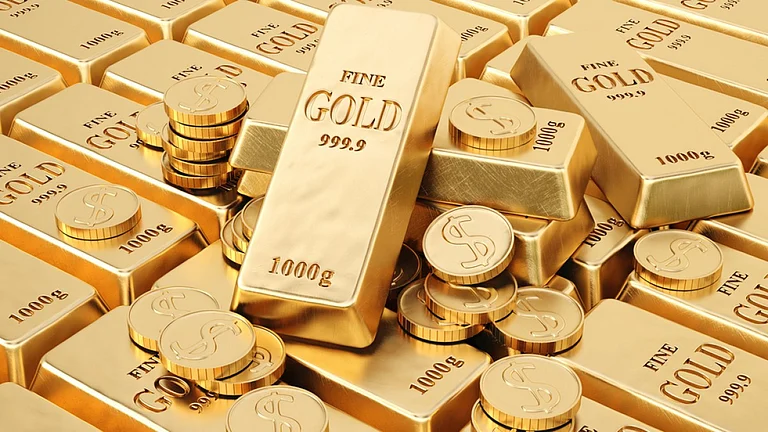
Every additional dollar spent on importing gold increases demand for foreign currency and can contribute to pressure on the rupee.
This is where gold recycling becomes economically significant.
By encouraging households to bring idle gold back into circulation, India can meet part of its domestic demand without relying entirely on imported supplies.
How Much Difference Could Recycling Make?
Even a modest increase in recycling could have a meaningful impact.
According to experts cited by NDTV, if just 1% of the gold held by Indian households and temple trusts were recycled annually, the country's gold imports could decline by as much as 25% to 30%.
Such a reduction would help lower India's import bill, narrow the trade deficit, and reduce pressure on foreign exchange reserves. It could also lessen the economy's vulnerability to fluctuations in global gold prices and currency movements.
For policymakers, this offers an opportunity to improve macroeconomic stability without imposing restrictions on consumers or businesses.
Changing Consumer Behaviour
The concept of gold recycling is gradually gaining acceptance among consumers. As per the report, jewellers are increasingly offering exchange programmes that allow customers to trade old ornaments for new designs with minimal deductions.
Many retailers also provide redesign services that make it easier for families to convert outdated jewellery into products that better suit current preferences.
The sharp rise in gold prices has added another incentive. As the value of unused jewellery continues to increase, many households are beginning to reassess the wealth sitting idle in their lockers.
Rather than purchasing additional gold, some consumers are opting to recycle existing holdings and unlock value from assets they already own.
More Than Just a Consumer Trend
Gold recycling is not merely a jewellery industry initiative; it has broader economic implications.
Reducing dependence on imported gold can help conserve foreign exchange reserves, improve India's trade position, and strengthen resilience during periods of global uncertainty.
With thousands of tonnes of gold already held within the country, policymakers see recycling as an opportunity to turn a largely dormant asset into an active contributor to economic stability.