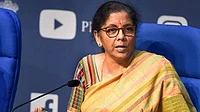
Economic Advisory Council member Rakesh Mohan said India should attract more Chinese investment and deepen engagement with Asian supply chains
Mohan advocated encouraging Chinese investment in labour-intensive sectors such as textiles, garments, footwear and furniture
This will help in creating jobs, boosting exports and improving India's manufacturing competitiveness amid unpredictable US trade policies
India may need to rethink its economic engagement with China as shifting global trade dynamics make the United States a less predictable partner, according to Rakesh Mohan, a part-time member of Prime Minister Narendra Modi's Economic Advisory Council.
Speaking in an interview with Bloomberg, Mohan argued that India should attract more Chinese investment into labour-intensive manufacturing instead of relying primarily on protectionist policies.

1 October 2026
Get the latest issue of Outlook Business

His remarks come as New Delhi gradually recalibrates its approach towards Chinese businesses after tightening investment rules following the Galwan Valley clashes in 2020.


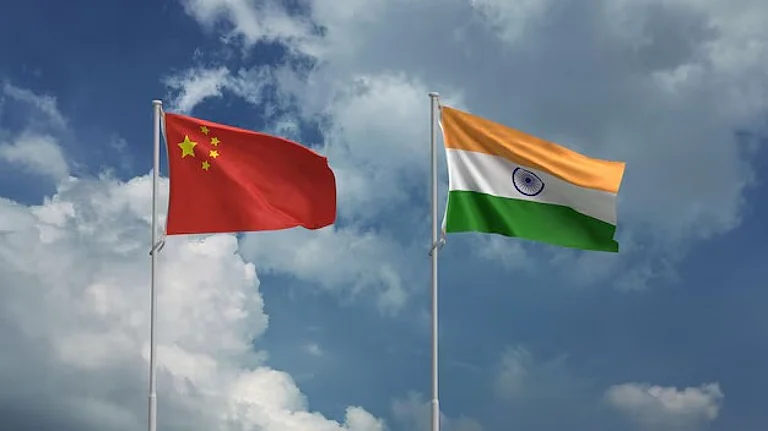

Why The US Factors Into The Debate
Mohan believes India should continue pursuing trade agreements with Western economies, including the US, but cautioned against becoming overly dependent on any single market.
Washington has become "a lot more unreliable" because of frequent shifts in its trade policies, Mohan said, adding that India should diversify its economic partnerships by strengthening ties with East and Southeast Asia, regions he expects to drive global economic growth over the coming decade.
Advertisement

"We need to be much more part of the Asian supply chain," he said.
Chinese Investment Could Support Manufacturing
India should use its relatively low manufacturing costs to attract Chinese companies, particularly in labour-intensive sectors such as textiles, garments, footwear and furniture, Mohan said.
He argued that India must examine its trade relationship with China more closely, especially given the country's dependence on Chinese imports.
"We are importing everything from China and exporting very little," Mohan said. "We have to look in detail at what China imports and identify where India can compete."
Advertisement
Mohan believes such investments could generate employment, strengthen exports and help India integrate more effectively into global manufacturing supply chains.
Rethinking Regional Trade Agreements
Another key recommendation is for India to reconsider its decision to stay out of the China-backed Regional Comprehensive Economic Partnership (RCEP), which New Delhi declined to join in 2019 over concerns about cheaper imports affecting domestic industry and agriculture.

Mohan suggested India should explore joining the Comprehensive and Progressive Agreement for Trans-Pacific Partnership (CPTPP).
He argued that participation in both regional trade blocs could strengthen manufacturing competitiveness and improve export opportunities in Western markets.
Economic Engagement Despite Strategic Rivalry
India and China remain strategic competitors following decades of border disputes, including the military clashes in 2020 that prompted New Delhi to introduce stricter scrutiny of investments from countries sharing a land border with India.
However, relations have shown signs of improvement over the past year. India has restored direct flights, resumed issuing business visas and approved select Chinese investments, particularly in electronics.
China, meanwhile, continues to restrict exports of critical technologies and rare earth materials.
Reflecting this balancing act, Mohan said, "We have to be pragmatic in our dealing with China, adding that economic security is as important as national security.

He also called for easier business travel, expanded academic exchanges and more direct flights between the two countries, as per the BBG report.
Is India's Investment Policy Already Evolving?
Recent government decisions suggest New Delhi may already be adopting a more selective approach towards Chinese investment.
The latest example is the government's approval for Chinese smartphone maker Vivo Mobile India to form a joint venture with Dixon Technologies to manufacture smartphones in India.
The decision indicates policymakers are increasingly distinguishing between investments that strengthen domestic manufacturing under Indian leadership and those that could increase Chinese control over Indian assets.
This represents a shift from the immediate post-Galwan period, when Press Note 3 mandated government approval for investments from neighbouring countries and significantly slowed fresh Chinese proposals.
Rather than pursuing complete economic decoupling, the emerging framework appears aimed at allowing access to Chinese technology and supply chains while retaining ownership and strategic control within Indian businesses.
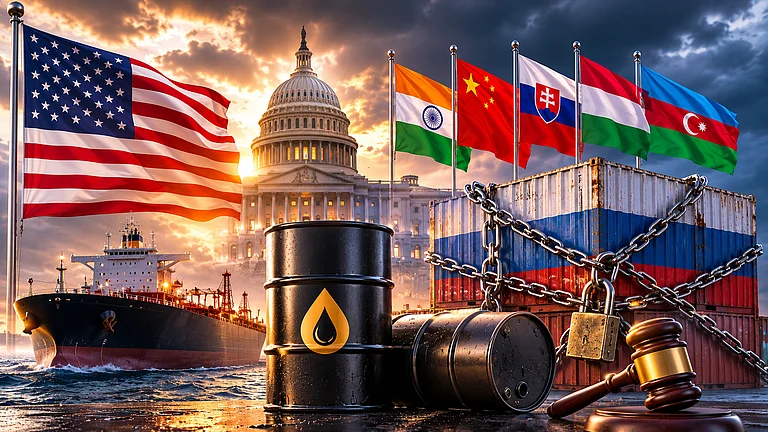
Trade Imbalance Remains Key Concern
Despite political tensions, economic ties continue to expand.
China's exports to India rose 21.8% during the first half of 2026 to $79.41 billion, while India's exports to China increased 37.2% to $12.31 billion, Chinese customs data show, as per a report by The Economic Times (ET).
Total bilateral trade reached $91.72 billion, although India's trade deficit widened to $67.1 billion.
The figures underline the challenge highlighted by Mohan: reducing India's dependence on Chinese imports while building stronger domestic manufacturing and expanding exports through a more pragmatic economic strategy.