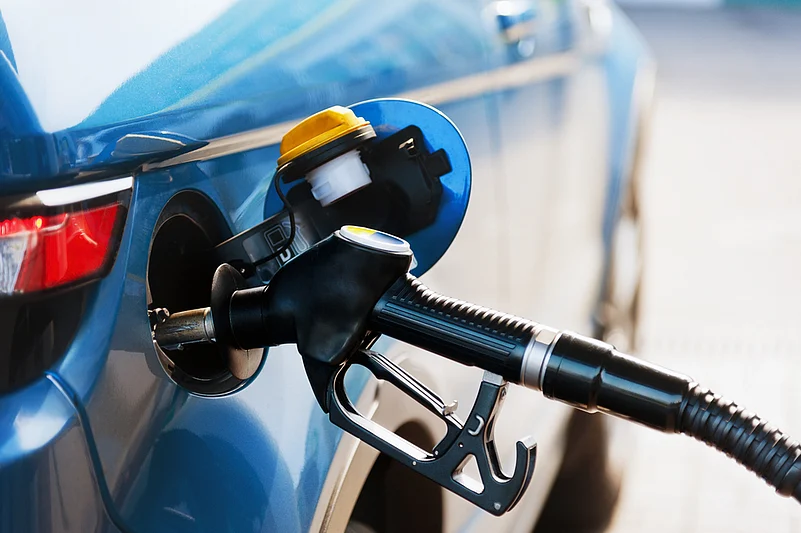
Pakistan has announced an unprecedented increase of 43% and 55% in the prices of petrol and high-speed diesel (HSD), respectively, in response to spiking global oil prices amid the US-Israel war on Iran.
The government made the announcement on Thursday. The price of petrol has been increased by ₹137.23 per litre (42.7%) to ₹458.41 from Rs 321.17, while HSD by ₹184.49 per litre (55%) to ₹520.35 from Rs 335.86, with immediate effect.
The price of kerosene was also increased by ₹34.08 per litre to ₹457.80.

1 October 2026
Get the latest issue of Outlook Business

The government also adjusted the petroleum levy rates to limit the increase in diesel prices as the levy on petrol was increased to ₹160 per litre from ₹105, while it was reduced to zero on diesel from ₹55.
Petroleum Minister Ali Pervaiz Malik while making the announcement, which he termed as a "difficult decision", said that the objective was to restrict subsidies to the most deserving segments while maintaining fiscal discipline and preserving economic stability.
Advisor to Prime Minister on Economic Affairs, Khurram Shehzad, said in an interview with the Geo News that the government increased the prices to control consumption after it recorded an 8% increase in petrol and a 13% rise in HSD consumption last month.
“The government took the decision to increase prices after resisting the rise during the past three weeks when it first raised prices by ₹55 soon after the war started,” he said.
Advertisement
He said that the government was still providing subsidies to motorbike owners, intercity transport, good transport vehicles and agriculturists.
“The government decided to provide a ₹100 per liter subsidy to the motorbike owners and the subsidy will be applicable for 20 liters per month,” he said.
He said that small farmers will receive a one-time subsidy of ₹1,500 per acre as immediate support during the harvest season, while inter-city and goods transport, a subsidy of ₹100 per litre would be provided, which will be reviewed every month. Truckers would receive direct support of Rs 70,000 per month.
The decision came as the government officials indicated during the week that after providing a ₹129 billion subsidy, it was not possible to further subsidize petroleum products. Earlier, it introduced several austerity measures and also cut the development budget by ₹100 billion to provide cheap fuel to the masses.