Iran believes New Delhi can play a crucial role in easing global and West Asia tensions.
Tehran seeks deeper economic, energy, and diplomatic engagement with India.
Iran flags imbalance in world order, calls for equality among nations.
As tensions continue to simmer in West Asia following weeks of conflict and a fragile ceasefire, Iran has called for a more balanced and just global order.
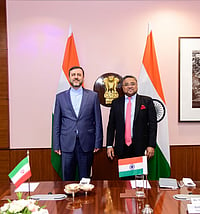
In this conversation with Outlook Business, Dr. Abdul Majid Hakeem Ilahi, the representative of Iran’s Supreme Leader in India, spoke on the evolving geopolitical situation, the controversy surrounding the Strait of Hormuz, and Tehran’s expectations from New Delhi.

1 October 2026
Get the latest issue of Outlook Business

Emphasizing India’s civilisational depth and diplomatic weight, he underscores that New Delhi is well-positioned to play a meaningful role in mediating conflicts and shaping global peace efforts, while also signalling Iran’s intent to deepen economic and energy ties with India.
Here are the excerpts from the interview -
We are seeing the war entering its eighth week, and recently the United States has announced a unilateral ceasefire. How do you see this, and what is the future of the second round of peace talks in Islamabad?
The core issue is the prevailing mentality among certain countries that they have the right to attack others and act with impunity. This mindset has led to injustice and instability globally. There is a clear double standard—actions by powerful nations often go unchecked by international organisations. We all saw what United States did with the Venezuelan President Nicolás Maduro and the world and the international organisations did nothing. Similarly, the whole world saw how the US and Israel unleashed the war against Iran.
We believe this mentality must change. There should be equality among nations, without any country claiming superiority over others. The future depends on nations standing up against oppression and these double standards. We are hopeful that this will eventually lead to a more peaceful world.
Advertisement
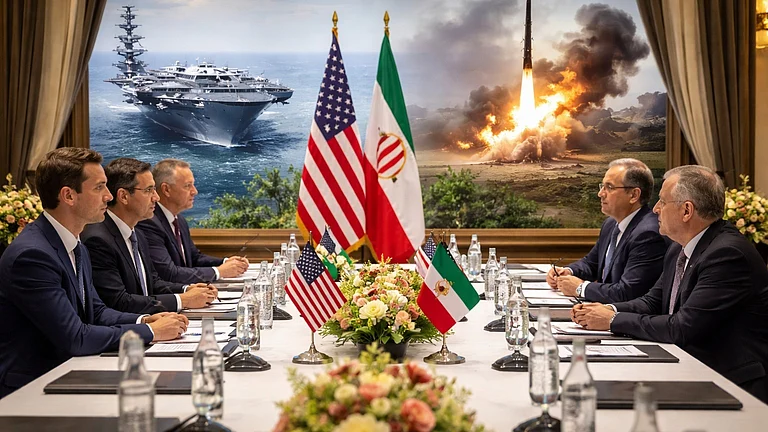
You mentioned other countries standing against the United States. What are your expectations from New Delhi? How do you see India’s response?
Iran and India share a very strong and historic relationship. Even during times when India faced sanctions, our ties remained strong. Today as well, there is continuous diplomatic engagement between both countries at the highest levels and those were very successful conversation between two sides.
We expect this relationship to grow further, especially in economic and diplomatic domains. We are optimistic about expanding cooperation in multiple sectors.
You spoke about strengthening economic ties. Does that mean Iran is willing to supply oil to India?
Advertisement
Yes, of course. Iran is open to enhancing economic cooperation with India, including in the energy sector.
There have been tensions in the Strait of Hormuz, and last week two Indian vessels faced firing. Has Iran given any assurance to India regarding maritime security?
This issue has been misunderstood. After the ceasefire, Iran announced the reopening of the Strait of Hormuz. However, at the same time, the United States increased its military presence and violated the ceasefire.
Due to security concerns, Iran temporarily restricted movement through the strait. The warnings issued were not targeted specifically at Indian vessels. In fact, India had permission, unlike many others.
The firing that occurred was only a warning shot in the air, meant to ensure safety. Iran has no intention of targeting Indian ships. Once security conditions improve, normal operations will resume.
When can we expect the second round of talks in Islamabad?
At this moment, I cannot specify a timeline. However, we hope that the talks will take place soon.
Do you think India can play a role in resolving the situation?
Certainly. India is a major global player with a rich civilisation, strong cultural values, and a long history of diplomacy.
India’s civilisation spans thousands of years, and it has deep historical, cultural, and philosophical ties with Iran. Because of its stature and values, India can play a very constructive role in international affairs and contribute positively to global peace efforts.