West Asia conflict intensifies India’s push toward energy diversification and electrification.
Energy transition projected to reduce fossil fuel dominance over coming decades.
₹7.6trn transmission opportunity emerges amid grid expansion and monetisation plans.
India is accelerating its energy transition to mitigate risks from external dependencies highlighted by the ongoing West Asia war.
According to the Kotak Institutional Equities report, currently, net energy imports account for 4% of India’s GDP and approximately 50-70% of the trade deficit. With nearly 50% of crude oil and natural gas imports passing through the volatile Strait of Hormuz, diversifying the energy base through domestic electrification has become a national priority.

1 October 2026
Get the latest issue of Outlook Business

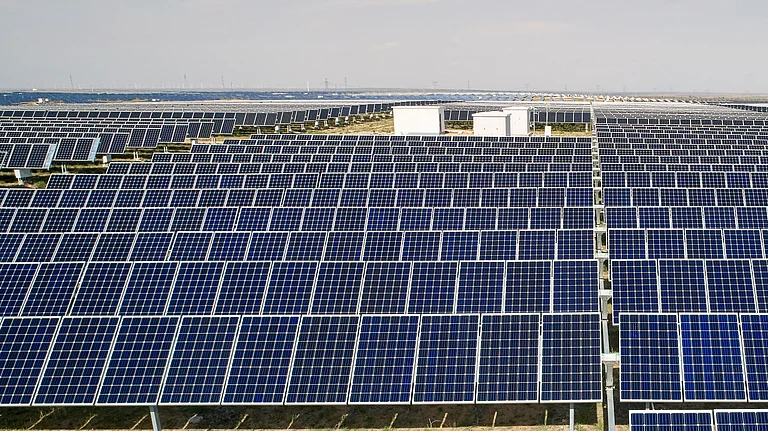
The Kotak report also suggested that while fossil fuels dominate, their share in the energy mix is projected to decline from 95% in FY2026 to approximately 60-65% by FY2056. This transition relies on meeting stiff climate targets, including achieving 50% non-fossil installed capacity by 2030. Despite strong volume growth in the solar chain, analysts remain cautious regarding the investment appeal of major utilities like NTPC and Power Grid, noting they are trading at expensive valuations compared to their growth prospects.
₹7.6 Trillion Grid Opportunity
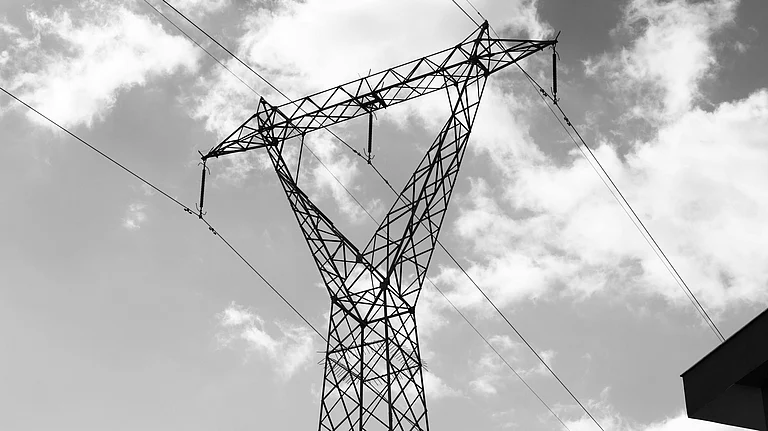
While generation targets are ambitious, the SBICAPS report indicated the transmission sector is poised for a turnaround in FY27 after five stagnant years. Although FY26 showed recovery signs with line additions jumping 37% year-on-year, the 12,139 ckm achieved remained short of the 15,382 ckm target. This execution gap has created a massive investment opportunity, estimated at ₹7.6trn over the next six years.
Advertisement
To fund this expansion, the National Monetisation Pipeline (NMP 2.0) has assigned a ₹2.3trn target for the transmission sector between FY26 and FY30. Furthermore, intra-state transmission (InSTS) lines, which hold 90% of the network, represent an additional ₹2.9trn monetisation opportunity. Experts suggest that successful capital recycling through InvITs and securitisation will be critical to "completing the circuit" for India's power future.
Fuel Price Stability Assured
The government, on the other hand, has pushed back against concerns of rising fuel prices because of tensions around the world. The Ministry of Petroleum and Natural Gas clarified that there is no proposal to raise petrol or diesel prices, dismissing media reports of a hike as “misleading”, reported Moneycontrol.
Advertisement
India continues to rely heavily on crude oil imports that go through sensitive areas like the Strait of Hormuz, so this is a welcome reassurance. Stable fuel prices are thought to be very important for controlling inflation and helping the energy transition as a whole. This is true even though policymakers are trying to reduce the country's long-term dependence on imported fossil fuels by using electricity and renewable energy sources.