
India's retail inflation rose to 4.4% in June 2026, up from 3.9% in May, crossing the RBI's 4% target for the first time since January 2025.
Higher prices of food, beverages and fuel pushed inflation higher, while core inflation remained unchanged.
Data up to July 20 indicates food inflation pressures persist, with onion prices recording the sharpest increase, while edible oils continue to rise due to stronger global biofuel demand.
The Reserve Bank of India published its 'State of the Economy' article in the July Bulletin, detailing India's economic resilience despite global geopolitical and supply chain pressures.
The Indian economy has navigated the external uncertainties well, according to the RBI monthly bulletin report said.

1 October 2026
Get the latest issue of Outlook Business

"Amidst these uncertainties, India remains among the fastest growing major economies across the globe and has been able to sustain the momentum in economic activities through June. Both industrial and services sector indicators remained firm," the report said.
The operationalisation of the India-UK Comprehensive Economic and Trade Agreement supported external trade momentum in the first quarter of 2026-27.
Progress in other bilateral trade agreements further strengthened the trade trajectory.
An uneven southwest monsoon has impacted the farm sector. Comfortable foodgrain stocks, however, may mitigate food inflation, the report stated.
The central bank issued a disclaimer stating the views in the article belong to the authors and do not represent the Reserve Bank of India.
Advertisement
Foreign Investment Inflows Surge
Foreign portfolio investments and direct investments recovered steadily. "External vulnerability indicators also remained sound.
Recovery of foreign investments in recent months shows a revival of confidence in the economy," the RBI article said.
Foreign portfolio investors infused $3.1bn into equity and debt segments in July 2026 up to July 20. This followed net inflows throughout June, driven by policy support for the debt segment and easing of geopolitical tensions.
Foreign direct investment recorded higher gross and net inflows during April and May 2026. Lower repatriation supported this upward trend. Japan, Singapore and Mauritius accounted for approximately 74 per cent of total FDI equity inflows.
Advertisement
Financial services received the highest share of equity inflows, followed by manufacturing, retail and wholesale trade, and computer services. These sectors together accounted for around 80 per cent of total inflows.
The US, Cayman Islands and the Netherlands received 74 per cent of the outward FDI flows. The major sectors included financial, insurance & business services and manufacturing, accounting for more than 85 per cent of the outward flows during April-May 2026.

Inflation Hits 18-Month High
Headline consumer price index inflation rose to an 18-month high of 4.4 per cent in June 2026. This reflects an increase from the 3.9 per cent recorded in May.
The June 2026 inflation mark represents the first time the consumer price index crossed the target since January 2025. Food, beverages and fuel components drove the inflation spike. Core inflation remained unchanged during this period.
Sequential increases in key food items appeared to be broad-based in July so far (up to July 20). Within foodgrains, prices of key staples like rice and wheat ticked up.
Meanwhile, the pace of increase in pulses moderated sequentially, with moong dal recording a marginal month-on-month decline.


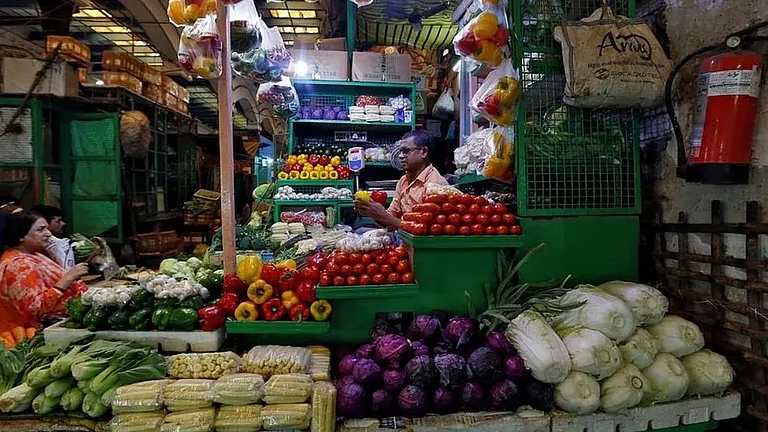
Rising biofuel demand drove edible oil price increases. Indonesia recently raised its palm oil diesel blending target from 40 per cent to 50 per cent.
July price trends up to July 20 show rising costs for major perishables. Potato, onion and tomato prices increased further, with onion spiking the most in the market.