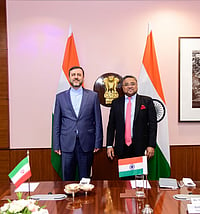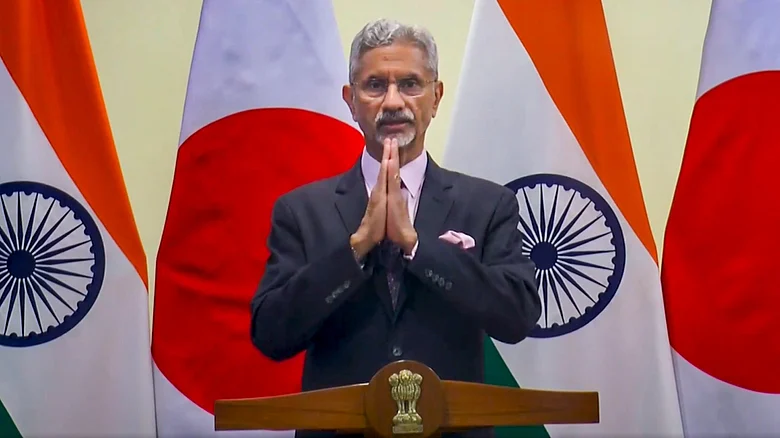
External Affairs Minister S. Jaishankar on Friday flagged deep concerns over the ongoing crisis in West Asia, warning that its cascading impact on energy, trade and food security is being felt sharply across the Indian Ocean region and highlighted India’s firm opposition to “the targeting of civilians, of infrastructure, and of commercial shipping.”
Speaking at the 9th Indian Ocean Conference in Port Louis, Jaishankar said that the conflict in West Asia has emerged as a critical concern for countries dependent on maritime trade and energy supplies.
“All of us are deeply concerned about the conflict and would like to see an early return to normalcy,” he said.

1 October 2026
Get the latest issue of Outlook Business

His comments came at a crucial time when the two-week ceasefire between Iran and Israel-US is witnessing a fragile state while Pakistan is all set to hold the peace talks on April 11.

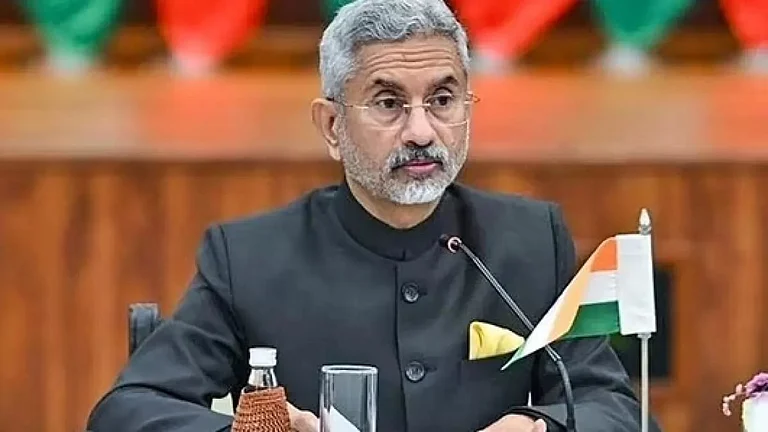

Jaishankar, who was in Mauritius for a two-day visit before leaving for UAE on Friday night met several leaders from the region including Bhutan, Saudi Arabia, UAE, Bangladesh and others.
The Union Minister in his comments stressed that the disruptions to shipping lanes and supply chains have far-reaching consequences beyond immediate conflict zones.
“When energy is scarce and expensive, it has an overarching implication for the entire society. When trade is constricted, this goes beyond business to livelihoods,” he said, adding that the fertilizers shortages triggered by such crisis have direct implications for global food security.
Advertisement
Framing his address around five key themes, he emphasized that the Indian Ocean is not merely a geographic space but a vital ecosystem shaping economic, cultural and strategic realities.
This is not just a framework in which we all exist, but an ecosystem — the resources on which we depend, the connectivity on which we thrive,” he noted, warning that disruptions in the region have widespread global repercussions.
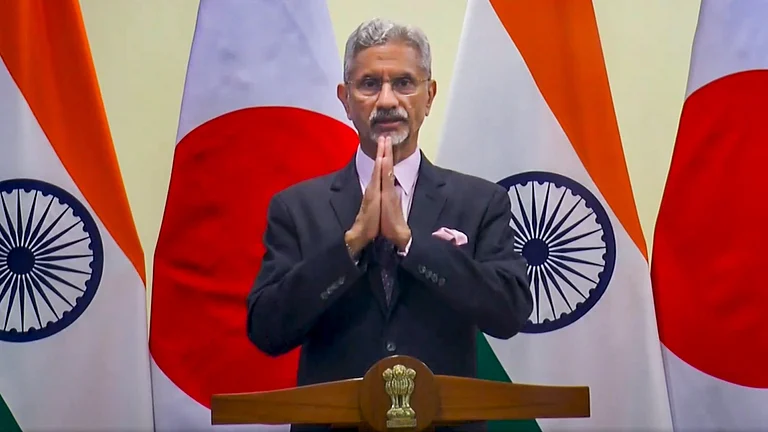
Highlighting the broader geopolitical churn, he observed that the world is undergoing a profound transformation marked by “shifting power balances, ongoing conflicts, economic fragmentation, and growing contestation.”
Advertisement
Notably, he also drew attention to the emergence of both physical and non-traditional chokepoints, ranging from maritime routes to domains like technology, finance and knowledge- which are easily being weaponised in a competitive global environment.
His comments on choke points came in the backdrop of blocking of Hormus Strait by Iran which has caused genuine gas crisis not just in India but has created turbulence at the global level.

He also made a strong pitch for deeper cooperation among Indian Ocean nations, many of which belong to the Global South. “No single Indian Ocean state, however capable, can preserve and protect the maritime space alone,” he said, calling for a shared commitment rooted in transparency, cooperation and respect for international law.
The conference in Mauritius comes at a time when geopolitical tensions are intensifying globally, even as diplomatic efforts continue elsewhere, including talks expected in Islamabad. Jaishankar’s remarks underscored India’s position that stability in the Indian Ocean is inseparable from broader global peace and economic security.