
Oil prices rebounded on Thursday following heightened uncertainty over the two-week ‘fragile’ truce between Washington and Tehran. On Wednesday, the White House announced that it had agreed to a temporary two-week ceasefire with Iran, under which Tehran would open the Strait of Hormuz, a vital waterway through which nearly 25% of global energy trade flows. However, owing to persistent uncertainty and Iran’s accusation that the US breached one of the core conditions of the agreement, the oil market continued to remain volatile.
Both benchmarks, Brent crude and West Texas Intermediate (WTI), rose over 3% to $97.71 per barrel and $97.40 per barrel, respectively. Since the eruption of the conflict on February 28, the oil market has witnessed sharp swings, with Brent crude touching a four-year high of $119 per barrel at the peak of geopolitical tensions. Following news of the ceasefire, oil prices briefly fell below $100 per barrel amid optimism that the Strait of Hormuz would reopen and supply disruptions would ease. However, lingering uncertainty surrounding the durability of the truce and the conditions attached to the reopening of the Strait have kept traders cautious.
Ambiguities Continue
While Iran and the US agreed to a two-week truce, Tehran accused Israel of continuing attacks against Hezbollah in Lebanon. A complete halt to attacks against Hezbollah was one of the core demands put forward by Iran in its 10-point peace proposal. Iranian Parliament Speaker Mohammad Bagher Ghalibaf described the Israeli military actions in Lebanon as a ‘proxy war’, arguing that they undermine the spirit of the ceasefire agreement and cast doubt on the credibility of the truce.
According to a report by The Guardian, Abu Dhabi National Oil Company (Adnoc) Chief Executive Officer Sultan Al Jaber said on Thursday that the Strait is “not open” despite the ceasefire announcement, adding that passage through the waterway remains subject to “permission, conditions, and political leverage.” He emphasised that global energy security and economic stability depend on the Strait being opened “fully, unconditionally, and without restriction.” Analysts note that even partial disruptions to transit through the Strait of Hormuz can have disproportionate effects on global supply chains, freight rates, and insurance costs.
Advertisement
Iran Introduces Alternate Routes
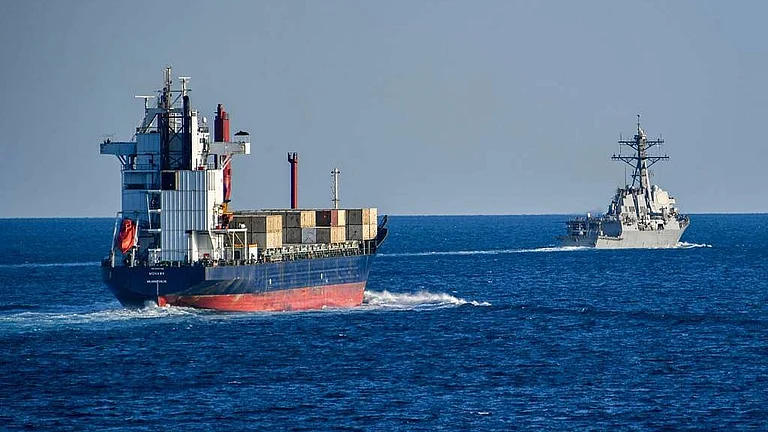
Further adding to uncertainty, Iran issued guidance recommending alternate routes through the Strait of Hormuz owing to the risk of sea mines in the region. A sea mine acts like an underwater explosive device that detonates when a vessel comes near or makes contact with it, posing significant risks to commercial shipping. Due to the conflict, Tehran has reportedly deployed fewer than a dozen underwater mines in parts of the waterway, according to reports citing Iran’s Islamic Revolutionary Guard Corps (IRGC).
Shipping authorities have been advised to use designated routes in order to avoid potential collision with naval mines and reduce risks to cargo vessels and oil tankers. Even the possibility of underwater mines has pushed insurers to raise premiums for shipments passing through the region, adding to overall transportation costs for crude and refined products. Industry experts note that maritime risk premiums typically rise sharply during periods of conflict in strategic chokepoints such as the Strait of Hormuz, which remains one of the most critical arteries for global oil supply.
Advertisement
Possible Further Closure
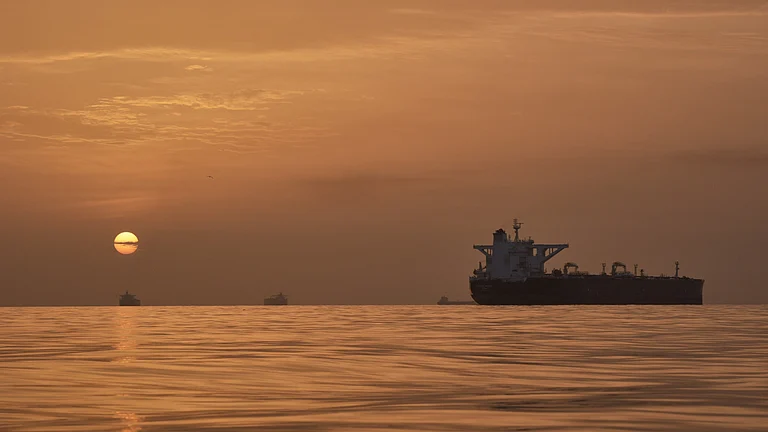
The conflict has also highlighted Iran’s strategic leverage over global energy trade routes. The Strait of Hormuz is a narrow maritime corridor connecting the Persian Gulf to the Arabian Sea, and any prolonged disruption could significantly impact exports of crude oil, liquefied natural gas, petrochemicals, and fertilisers from the West Asian region. Tehran has demonstrated its ability to restrict or regulate movement through the Strait, raising concerns about potential supply shocks if tensions escalate further.

1 October 2026
Get the latest issue of Outlook Business

Iran has also proposed new conditions for transit through the waterway, including the payment of a toll by commercial vessels and mandatory escort by the Iranian military. These additional requirements could further increase shipping costs and delay transit times, compounding uncertainty in energy markets. With negotiations for a permanent peace agreement still ongoing and no clear resolution in sight, market participants are preparing for further volatility. Analysts warn that sustained geopolitical risk could keep crude oil prices elevated for an extended period, especially if tensions persist beyond the short-term ceasefire window.
What Is the Market Bracing For?
According to analysts, if the conflict is not resolved within April and the Strait remains restricted beyond May, the likelihood of crude prices reaching the psychologically significant level of $150 per barrel increases substantially. Such a spike in energy prices could raise input costs across industries, potentially triggering inflationary pressures and slowing global economic growth. Prolonged high energy prices have historically been associated with reduced consumer demand, tightening financial conditions, and heightened recession risks.
As per reports, companies may be willing to absorb additional transit costs, including toll charges imposed by Iran, in order to maintain supply continuity. According to a report by Mint, Tehran is reportedly charging nearly $2 million per vessel to pass through the Strait, which roughly translates to about $1 per barrel. Prior to the conflict, shipping companies typically paid nearly $250,000 in insurance premiums for cargo passing through the region. However, amid escalating security concerns, insurance costs have risen sharply, further adding to the financial burden on energy companies and commodity traders.
Market participants remain cautious as developments surrounding the ceasefire, regional security conditions, and diplomatic negotiations continue to evolve. Analysts suggest that clarity regarding transit conditions and a sustained de-escalation in geopolitical tensions will be critical in stabilising oil markets in the coming weeks. Until then, traders are likely to remain sensitive to any signals indicating further disruptions to supply routes through the Strait of Hormuz, one of the world’s most strategically significant energy corridors.