After West Asia war sent fuel prices soaring, Washington tapped its emergency reserves at a record scale.
To address a deeper structural problem, Trump simultaneously announced America's first new oil refinery in 50 years, backed by Reliance Industries.
But with global supply lines still severed and allies under pressure, Washington issued a waiver allowing India to buy sanctioned Russian crude.
From draining emergency stockpiles to greenlighting Russian crude for India, America is throwing everything at an oil crisis it helped create.
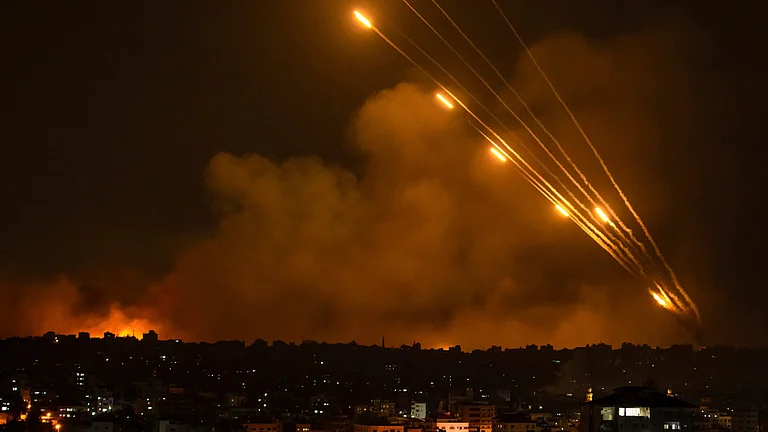
It began with the military strike on February 28, when the United States and Israel launched coordinated attacks on Iran. Within days, the Strait of Hormuz, the world's most critical oil corridor, had ground to a near standstill.

1 September 2026
Get the latest issue of Outlook Business

Oil prices surged and tankers sat stranded at sea. Fuel prices at American pumps jumped nearly 22% in a single month.



Washington's response has been rapid, multifrontal, and revealing. In the span of just two weeks, the Trump administration has tapped its emergency oil reserves at a record scale, greenlit a new refinery backed by an Indian billionaire, and quietly allowed India to buy sanctioned Russian crude.
Each move tells a different part of the same story that how an energy superpower scrambles when the world's oil plumbing breaks.

Advertisement
What Is SPR, Why Does It Matter?
The US Strategic Petroleum Reserve is essentially the world's largest emergency stockpile of crude oil, maintained by the Department of Energy. It holds hundreds of millions of barrels in underground salt caverns in Texas and Louisiana to reduce impacts from severe energy supply disruptions.
The US currently holds about 415 million barrels in the reserve, which is roughly 58% of its total authorised capacity of 714 million barrels.
US maintains it for exactly this kind of moment, when war, natural disaster, or some other shock cuts global supply and threatens economic stability.

Advertisement
US Energy Secretary Chris Wright in an interview with Fox News announced that 32 member nations of the International Energy Agency (IEA) unanimously agreed to release 400 million barrels of oil and refined products from their respective reserves.
The US will contribute 172 million barrels from the SPR, with releases beginning next week. Wright said in the interview it will take about 120 days to deliver the full US release.
This is the largest release the IEA has ever coordinated in recent history.
For context, the previous record was set in 2022, when IEA member nations deployed 182 million barrels across two separate tranches in response to Russia's invasion of Ukraine. The current release more than doubles that.

Point to note: While OPEC represents the interests of oil-producing nations, the IEA was established to protect the interests of oil consumers. It coordinates national stockpiles to create a buffer in case of an extreme shock to global oil supplies. Its 32 members, which include the US, Canada, Japan, South Korea, Australia, and most of Europe, are required to maintain reserves covering at least 90 days of the prior year's net imports.
IEA Executive Director Fatih Birol, called the release a "major action," but was careful to add that the most important solution remains reopening the Strait of Hormuz.
Wright echoed that view, saying the release was meant to "tide the world over" while oil flows remain restricted by Iran, and added that shipping traffic through the strait could begin returning to "normalcy" within the next few weeks.

The Trump administration has also been at pains to frame this as temporary. Wright said the US plans to replenish approximately 200 million barrels within the next year, at no cost to taxpayers.
Trump put it simply in an interview with Cincinnati broadcaster WKRC, as reported by CNBC. "I filled it up once, and I'll fill it up again, but right now we'll reduce it a little bit, and that brings the prices down."
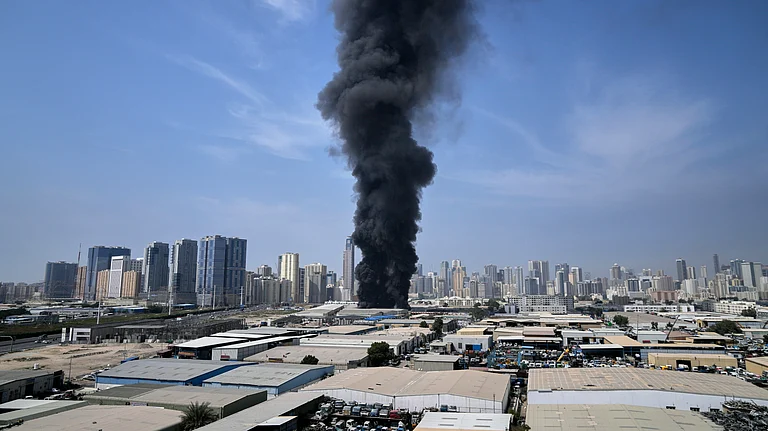
Why Strait of Hormuz Is Important
Oil prices have swung wildly over the past week as ship traffic came to a near standstill in the Strait of Hormuz, a vital waterway through which approximately 20% of the world's oil and liquefied natural gas typically travels.
Iran's closure of the strait is blocking millions of barrels of oil per day from reaching markets.
The waterway handles approximately 21% of global petroleum liquids transit, meaning any disruption is capable of triggering immediate price escalation even without actual supply shortages.
For American consumers, the impact has been direct and painful. Gasoline prices have risen to about $3.58 per gallon on average, up from around $2.94 just last month, according to CNBC. That is a jump of nearly 22% in less than a month.
The IEA release of 400 million barrels is, in theory, large enough to make up for all the oil that passes through the Strait of Hormuz for about 20 days.

The Refinery Revival and India's Role
Alongside the SPR announcement, Trump made a separate, headline-grabbing move. He announced the setting up of a new refinery in Brownsville, Texas, representing the first such facility to be built in the US in 50 years, with investment from Mukesh Ambani-led Reliance Industries.
The last comparable American refinery was built in Garyville, Louisiana in 1977, according to the Financial Times.
The project is being developed by a company called America First Refining. Under the agreement with Reliance, America First Refining will purchase and process 1.2 billion barrels of US light shale oil, worth $125 billion, and is expected to produce 50 billion gallons of refined oil products worth $175 billion.
Trump described the overall deal as worth $300 billion, though that figure reflects the full lifetime value of the offtake agreement, not upfront construction costs.
It is to be noted that Brownsville Navigation District Chairman Esteban Guerra clarified that the actual construction costs are $3 billion, and the refinery would create 300 full-time jobs once operational, according to multiple reports.
Why does America need a new refinery at all? Despite being a top crude oil producer, the US is dependent on imports because existing refineries are configured to process heavy crude oil instead of lighter shale oil, the kind that American wells now produce in abundance. The Brownsville facility is designed specifically to close that gap.
Reliance Industries, for its part, is no stranger to large-scale refining. The company operates the world's largest oil refinery in Jamnagar and has a market capitalisation of $206 billion, according to LSEG data. Reliance's owner Mukesh Ambani is also an investor in Trump's real estate firm and attended his second inauguration.
Reliance has not officially confirmed its involvement beyond what Trump has announced. Nevertheless, its shares had responded on Wednesday. The announcement also comes after India and US released a framework for an interim trade agreement in February. Under this deal, India plans to purchase $500 billion in US goods over five years, focusing on energy, aircraft, and technology to balance bilateral trade.
The Russia Pivot
Perhaps the most geopolitically layered part of Washington's energy response involves India and Russia.
India imports approximately 85% of its crude oil requirements, and a significant share of those imports typically flow through the Strait of Hormuz. With that route effectively shut, New Delhi faced a supply crisis almost overnight.
Indian refiners had been winding down purchases of Russian oil in response to US pressure, filling the gap with barrels from Saudi Arabia and Iraq, only to find those supplies cut off by the widening conflict in West Asia.

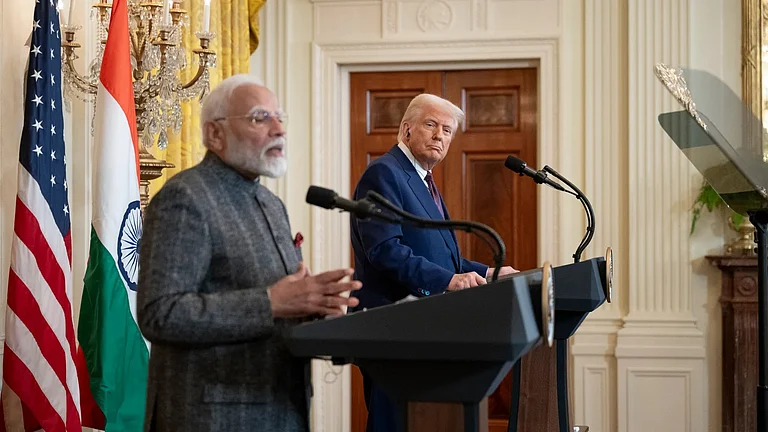
Washington's solution was pragmatic, if diplomatically awkward. The US issued a 30-day waiver allowing Indian refiners to purchase Russian crude oil that was already loaded onto ships before March 5, provided it was delivered to India and purchased by Indian companies.
India moved fast. State-owned Indian Oil Corporation purchased around 10 million barrels, while Reliance Industries bought at least as much, according to an earlier report by Bloomberg.
Together, the two companies snapped up all available unsold Russian crude in the spot market, much of it already sailing through Asian waters.
The total haul was approximately 30 million barrels, equivalent to India's entire monthly import of Russian crude in February, according to the report.
The Russian crude, comprising grades including Urals, ESPO and Varandey, was offered at premiums of between $2 and $8 a barrel to London's Dated Brent benchmark, the report added.
The US Treasury Secretary Scott Bessent described the waiver as a short-term measure that would not provide significant financial benefit to Russia, as it only allows transactions on oil already stranded at sea.

What emerges from these three moves, the SPR release, the Texas refinery, the Russia waiver, is a portrait of a superpower managing an energy crisis it did not fully anticipate when it launched military operations against Iran.