Brent crude surged to $120 per barrel before plunging over 10% as geopolitical tensions and policy signals shook markets.
Trump’s remarks on the Iran war, potential easing of Russia sanctions, and G7 emergency measures added to market volatility.
Supply risks from Strait of Hormuz disruptions and production cuts by regional producers continue to drive oil market uncertainty.
The global oil market is undergoing an extremely volatile phase. Benchmark crude oil prices — West Texas Intermediate (WTI) and Brent crude — rose as much as 30%, hitting multi-year highs. Crude prices touched $120 per barrel, the highest since July 2022, amid rising worries over supply chain disruption and prolonged geopolitical tensions in West Asia. Analysts warned that even if the situation de-escalates through conflict resolution, crude prices are likely to remain relatively higher due to damage to oil infrastructure in the region, shipment risks, and disrupted supply logistics.
However, within 24 hours, oil prices took a complete U-turn. On Tuesday, benchmark crude prices slumped over 10% following remarks from US President Donald Trump on the ongoing military conflict with Iran. Crude prices traded between $86 and $88 per barrel. On Monday, Trump said that the combined military efforts by Washington and Tel Aviv were close to achieving their war objectives and that the conflict could be over “very soon.” Global markets and investors remain rattled by the heightened uncertainty, with crude prices fluctuating sharply. Primary reasons why crude prices quickly retreated are:

1 October 2026
Get the latest issue of Outlook Business

1. The Trump Factor
Oil prices tumbled as soon as Trump stated that the war could end soon. He said the war was “very far ahead of schedule” and “very complete, pretty much,” while adding that “we haven’t won enough.” His comments sent crude prices back toward $90 per barrel, hovering near pre-war levels. However, industrialists and analysts have cautioned that even $90 per barrel may not be sustainable in the long run.
Advertisement
2. Russian Oil Comes to the Rescue
On Monday, the Trump administration stated that it is mulling easing sanctions on some countries, including Russia. Trump and Russian President Vladimir Putin held a telephone conversation on Monday, and the discussion focused on reaching a conflict resolution as well as curbing excess volatility in the global crude oil market.
If sanctions are lifted, Russia could keep oil flowing amid the near-complete closure of the Strait of Hormuz. Last week, following the US assassination of Iranian Supremo Ali Khamenei, Tehran announced the closure of the Strait — a key artery for global oil trade. However, owing to increased demand, Russian crude is now being sold at a premium, unlike the discounted prices offered to countries such as India before the conflict.
Advertisement
Russia’s potential role in stabilising oil markets also contradicts Western allegations that Moscow’s oil revenues are helping finance the ongoing war in Ukraine.
3. G7 Announces ‘Necessary Measures’
The G7 nations also held a meeting on Monday and said they were ready to take “necessary measures” to support global energy supply following the surge in crude prices. The G7 is a group of major industrialised democracies including Canada, France, Germany, Italy, Japan, the UK, the European Union, and the US.
Together, these countries, through International Energy Agency (IEA) obligations, hold over 1.2 billion barrels of emergency oil stocks, in addition to around 600 million barrels of industry-held government reserves.
Though the announcement was made, the meeting between G7 finance ministers and the IEA stopped short of committing to releasing strategic crude reserves. Following the meeting, French Finance Minister Roland Lescure said “we are not there yet” when asked about releasing emergency stocks.
If such a move occurs, it would mark the first coordinated release of emergency reserves since 2022.
“We stand ready to take necessary measures, including to support global supply of energy such as stockpile release,” the G7 said in a statement.
However, the situation remains highly uncertain, with several downside risks.
4. Tehran Pushes Back Strongly
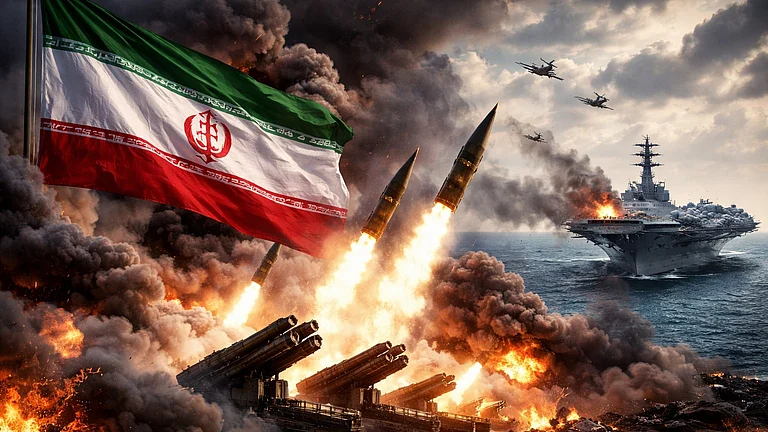
In response to Trump’s comments on Monday, Iran’s Islamic Revolutionary Guards Corps (IRGC) said on Tuesday that it would “determine the end of the war,” warning that Tehran would not allow “one litre of oil” to be exported from the region if joint military attacks by Israel and the US continued.
An IRGC spokesperson dismissed Trump’s remarks as “nonsense” and warned that security in the region would be “for everyone or for no one,” hinting that prolonged escalation could lead to retaliation that severely disrupts regional stability.
5. Oil-Producing Countries Slash Output
Amid rising supply chain tensions, several oil-producing countries have begun cutting output. With the near closure of the Strait of Hormuz, Iran, Iraq, and Kuwait have already reduced production. Analysts say Saudi Arabia and the United Arab Emirates could soon follow.
According to a Reuters report, Saudi oil giant Aramco has begun cutting output at two oilfields. The reduction by major regional producers highlights the severity of the logistical bottleneck following attacks on shipments and the disruption of the Strait.
Kuwait Petroleum Corporation has reduced oil production, while Qatar has halted liquefied natural gas output at its Ras Laffan export hub. Nearly 70% of Iran’s oil production from its main southern fields has also been disrupted.
Reports also indicate that the UAE’s ADNOC is reducing offshore production, while Bahrain’s Bapco Energies has declared force majeure — a legal clause that frees parties from contractual obligations due to unforeseen events such as war, pandemics, or natural disasters.
6. Leadership Uncertainty
On Monday, Tehran announced Ali Khamenei’s son, Mojtaba Khamenei, as the country’s next leader. However, Trump expressed strong disapproval, calling the decision “unacceptable” and a “big mistake.” He also insisted that the US should have a direct role in determining Iran’s future leadership in order to ensure long-term regional stability.


According to a Goldman Sachs analysis, if Persian Gulf oil exports fall by around 15 million barrels per day for 30 days, Brent crude could average $76 per barrel, rising to $93 if the disruption extends to 60 days. The bank added that prolonged disruptions could push prices above the peaks seen in 2008 and 2022.
With geopolitical tensions escalating and key shipping routes under threat, analysts warn that oil markets are likely to remain volatile in the near term. Much will depend on the duration of the conflict, the stability of the Strait of Hormuz, and whether major producers or strategic reserves step in to stabilise global supply.