

Indian equities slipped as the West Asia conflict rattled investor sentiment.
Rising oil prices are increasing inflation and growth concerns for oil-importing economies like India.
Foreign investors are pulling money from Indian equities amid rising geopolitical risk.
It was a rough morning on Dalal Street. The stock markets opened in the red on Friday, March 6, with the Sensex tumbling up to 500 points and the Nifty 50 slipping close to the 24,600 level. IndiGo, ICICI Bank and Larsen & Toubro (L&T) were among the day's biggest losers.
As of 11:47 AM, the markets remained under pressure, with the Sensex down 507 points and the Nifty sliding 135 points. Banking stocks bore the brunt of the selloff, with ICICI Bank, Axis Bank and Bajaj Finserv among the top losers, while UltraTech Cement dragged the index further into the red.

1 September 2026
Get the latest issue of Outlook Business

The single biggest reason for today's market slide is the escalating conflict in West Asia. What many assumed would be a short, contained military exchange has turned into something far more serious. Iran has struck US military bases across at least 10 countries in West Asia, a scale of retaliation that caught global markets off guard.





Why Does The War Shake Indian Indices?
Because it directly threatens the world's oil supply and India is deeply dependent on that supply.
Most alarmingly, Iran has closed the Strait of Hormuz, the narrow sea channel through which 27% of the world's oil and 20% of its natural gas passes. There is no quick alternate route and ships would have to take a lengthy detour around southern Africa, adding 2-4 weeks to delivery times and significantly higher costs.
Advertisement
Iran has also attacked an oil refinery in Saudi Arabia and gas producers in Qatar, making clear it intends to cause maximum disruption to global energy supplies.
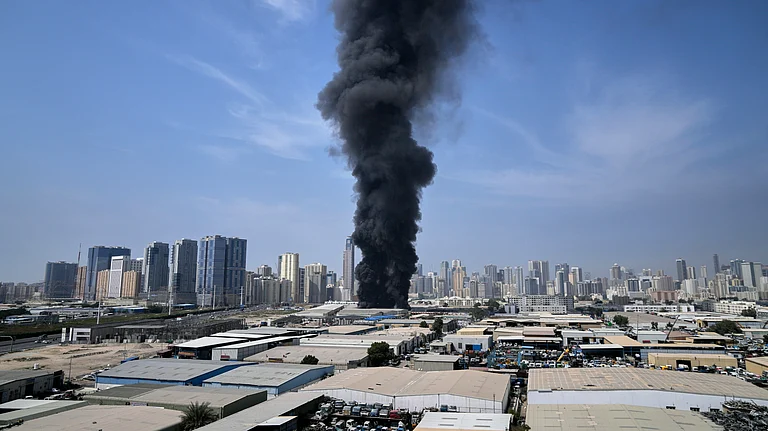
With the Strait of Hormuz closed and Gulf oil infrastructure under attack, crude oil prices have shot up. Brent crude climbed above $85 per barrel, while US crude jumped 8.5% to $81, its highest level since July 2024 and its biggest single-day jump since 2020, brokerage firm JM Financial noted.
This is particularly painful for India, which imports over 80% of its oil needs. More than 55% of India's oil imports pass through the Strait of Hormuz. JM Financial said that a higher oil import bill means more money flowing out of the country, which puts pressure on the rupee, inflates costs for businesses, and squeezes corporate profits.
Advertisement

Global Markets Fall Sharply
Another reason for the slide in Indian indices is the fall of Dow Jones. On Thursday night, the Dow Jones Industrial Average fell sharply by 785 points, or 1.6%. The S&P 500 and Nasdaq also declined. Asian markets followed suit, falling 0.7% at the open, and Indian markets simply had nowhere to hide.
Notably, the rupee also opened weaker on Friday at 91.65 to the dollar, down from 91.60 the previous session. When the rupee weakens, foreign investors or FIIs tend to pull their money out of Indian markets to avoid currency losses.
This selling by foreign investors adds further downward pressure on Indian stocks. Gold, seen globally as a safe haven during crises, has gained 14.5% since February 2026, signalling that big money is moving away from riskier assets like stocks.
Will This Push up Inflation?
Higher oil and commodity prices don't just hurt at the petrol pump. They push up prices across the economy, from transport costs to manufactured goods, feeding into broader inflation.
Historically, whenever commodity prices have risen sharply in the US, consumer price inflation has followed. This means central banks, including RBI, are unlikely to cut interest rates to support growth anytime soon, the brokerage firm further highlighted.
In fact, the RBI is more likely to intervene in currency markets to prevent the rupee from falling too sharply. Higher-for-longer interest rates are generally negative for stock markets.

JM Financial, however, noted that India is not without some cushion. Russia currently supplies about 19% of India's oil, well below the 43% peak seen in mid-2024, leaving room to ramp up imports if Gulf supplies are disrupted further. The government may also step in with an excise duty cut on fuel if crude prices stay high for an extended period.
That said, if the conflict drags on beyond a week, global investors are likely to move more money into ultra-safe assets like US government bonds and gold, pulling further capital away from emerging markets like India.