
The Trump administration launched a Section 301 investigation into excess industrial capacity across 16 major trading partners including China, the EU, India and Japan.
The probe could pave the way for new tariffs after the US Supreme Court struck down reciprocal tariffs last month.
Washington is also preparing a separate investigation into forced labour imports, which could affect more than 60 countries.
The Trump administration on Wednesday launched a new trade probe into excess industrial capacity among 16 major trading partners. The move is aimed at rebuilding the tariff structure after the US Supreme Court struck down the reciprocal tariffs last month.
US Trade Representative Jamieson Greer said the Section 301 investigation into unfair trade practices could lead to new tariffs on countries including China, the European Union, India, Japan, South Korea and Mexico. The investigation also extends to other countries including Taiwan, Vietnam, Thailand, Malaysia, Cambodia, Singapore, Indonesia, Bangladesh, Switzerland and Norway.

1 September 2026
Get the latest issue of Outlook Business

“So these investigations will focus on economies for which we have evidence suggesting structural excess capacity and production in various manufacturing sectors, such as through large persistent trade surpluses or underutilised or unused capacity,” Greer said.
He added that the investigation will analyse indicators such as large current account surpluses, government subsidies, suppressed domestic wages, non-commercial activities of state-run entities, inadequate environmental and labour standards, subsidised lending and currency practices.
Advertisement
Section 301 probes target global overcapacity
Greer cited large US trade deficits with Germany and Ireland as evidence of EU excess capacity, while Norway’s surplus highlights excess capacity in large fuel and seafood exports, a statement from the administration said.
For China and Japan, the capacity probe is focused on the automotive sector, noting that a rising number of companies were unprofitable or unable to meet interest payments from operations, according to a Reuters report citing the USTR’s official notice.
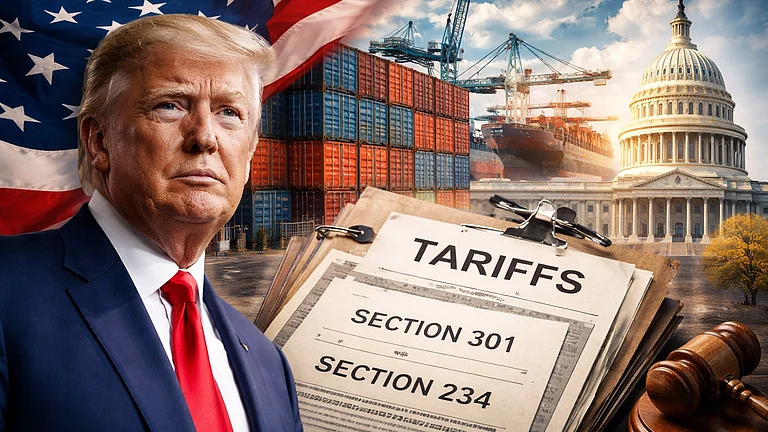
Greer said he hopes to conclude the Section 301 investigations, including proposed remedies, before the temporary global tariffs expire in July.
Advertisement
Following the Supreme Court’s ruling, Trump imposed a temporary 10% global blanket tariff under Section 122 of the Trade Act of 1974. Tariffs under this provision are valid only for 150 days.
The Trump administration will also launch another probe under Section 301 on Thursday aimed at banning US imports of goods produced with forced labour, which is expected to cover more than 60 countries.
The US has particularly accused China of establishing labour camps for ethnic Uyghur and Muslim minorities in Xinjiang. Washington has tightened restrictions on solar panels and other products from the Xinjiang region under the Uyghur Forced Labor Protection Act signed by former President Joe Biden.