Rising West Asia tensions have pushed up crude oil prices, increasing India's dollar demand for imports and weakening the rupee.
Global investors are moving toward safe-haven assets like the US dollar and gold, leading to capital outflows and added pressure on Indian markets.
While volatility may continue if tensions escalate, India's strong forex reserves and likely RBI intervention could prevent a sharp currency crisis.
Thousands of miles from New Delhi, missiles are flying over West Asia. Back home, Indians are watching their currency pay the price.
The rupee dropped sharply by 42 paise in a single session, settling at ₹91.50 against the US dollar on Monday. That followed a 17 paise fall in the previous session on Friday. At the interbank foreign exchange market, the currency opened at ₹91.23 before touching an intraday low of ₹91.65, a sign of just how volatile the session was.

1 October 2026
Get the latest issue of Outlook Business

In just four days, the rupee has slid from around ₹90.80 to as low as ₹92. Some analysts warn it could fall much further if the situation doesn't stabilise.


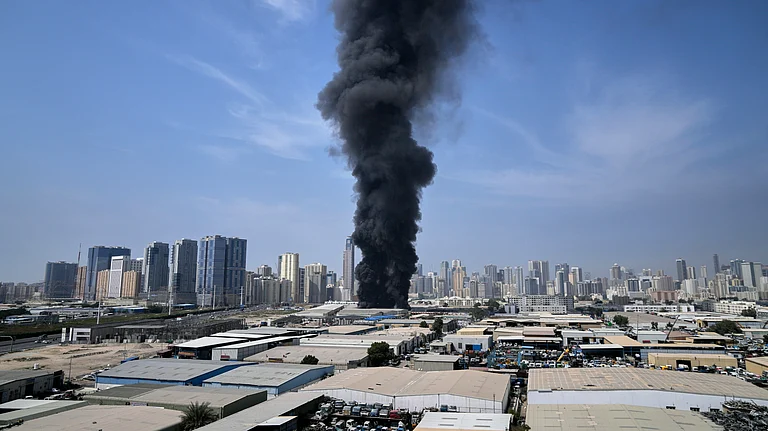
Why Does West Asia Conflict Weaken Rupee?
It comes down to three connected forces; crude oil prices, investor behaviour and equity markets, each feeding into the other.
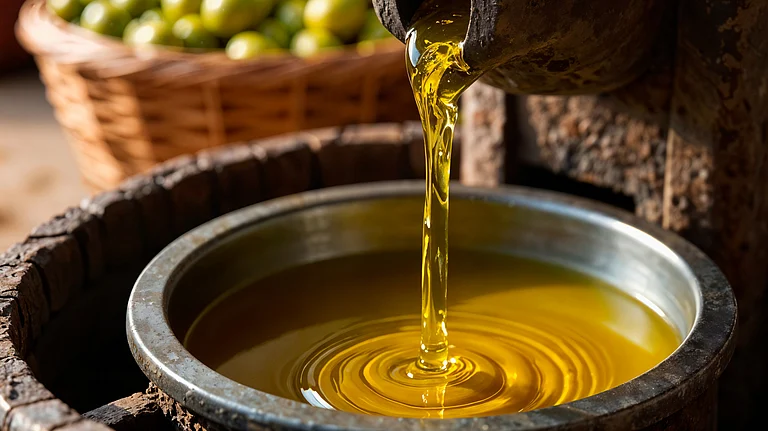
1. Crude oil prices spike: Iran is a significant player in global oil supply, and any conflict in the region immediately raises fears of disruption. When oil gets more expensive, India, which imports the vast majority of its crude, has to spend more dollars to pay for it. That surge in dollar demand puts direct downward pressure on the rupee.
Advertisement
Anirudh Garg, Partner and Fund Manager at INVasset PMS, explained it plainly by saying, "India imports the majority of its oil, so rising crude prices increase the country's import bill and dollar demand, putting pressure on the currency. A weaker rupee also raises the cost of imports, adding to inflation risks."
For sectors directly exposed to oil costs, the pain is especially acute. Ambit Insights flagged that "downstream oil and gas companies stand to lose the most," while other sectors including aviation, capital goods, chemicals, internet, and commercial vehicles will also feel the knock-on effects.

Advertisement
2. Investors flee to safety: During geopolitical crises, global investors tend to pull money out of emerging markets like India and move it into "safe-haven" assets, primarily the US dollar and gold. That capital outflow amplifies the pressure on the rupee beyond just the oil story.
Garg resonated with this and said, "global investors typically shift toward safe-haven assets like the dollar and gold during conflict."
Nilesh Choudhary, Founder and CEO of Aikyam Capital Group, described the wider dynamic at play. "The recent escalation involving Iran and Israel has led to a rise in global crude oil prices and a pickup in risk aversion across financial markets. The currency has weakened alongside broader emerging-market movements as investors temporarily shift toward safe-haven assets," he said.
3. Equity markets fall: It isn't just the currency market feeling the strain. Domestic stock markets saw heavy selling during the session, compounded by the withdrawal of foreign funds, a pattern typical of risk-off episodes that further undermines confidence in the rupee.

How Bad Could It Get?
Analysts are cautiously concerned, though their projections vary depending on how the conflict unfolds.
Ambit Insights estimates the rupee could weaken by 1-2% in the near term, with a potential decline exceeding 3% over the next year if the conflict persists. The firm also warned that government securities yields may rise by around 50 basis points as global investors gravitate toward US treasuries in times of stress.
Amit Khurana, Head of Institutional Equities at Dolat Capital, offered a measured view. "Near term it may face some pressure due to crude volatility. Hopefully as the situation gets better it will get stable. However, if the war persists and the situation becomes worse, then INR may face another round of downtick," he said.
At the more alarming end of the spectrum, Ankush Jain, Director and Fund Manager at Steptrade Capital, warned that a continued deterioration between Iran and Israel could push the rupee as far as ₹94.80 against the dollar, driven by elevated crude prices and a widening fiscal deficit.
"Over the last four days since the conflict between Iran and Israel has begun," Jain noted, "the Indian rupee has depreciated from 90.80 to 92 against the US dollar."
He also underlined the broader risk. "Such a high-level political issue between the two countries has the potential to create a 'risk-off' situation worldwide. This situation will lead to an increase in crude oil prices and a rise in demand for the dollar and a corresponding outflow from emerging market assets," he said.
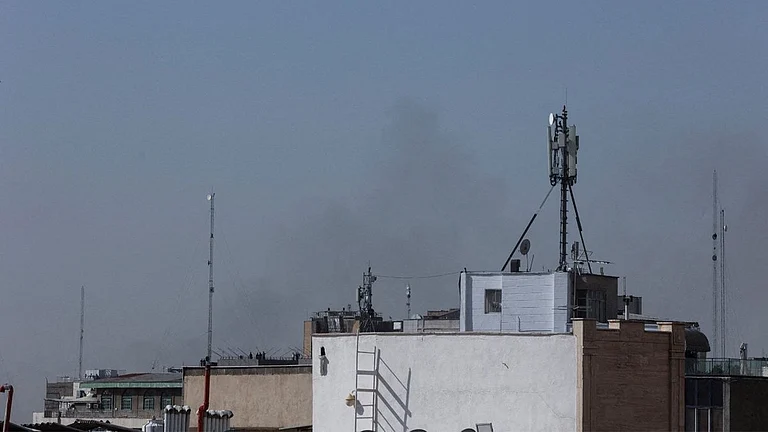
Is There a Safety Net?
Yes, but only to a degree. India holds substantial foreign exchange reserves, and the Reserve Bank of India (RBI) is widely expected to step in to prevent a disorderly or runaway decline in the currency.
Khurana noted that the market should "expect RBI to support the rupee to ensure stability and orderly monetary situation."
Garg echoed the reassurance and said, "While India's forex reserves provide stability, prolonged tensions and elevated oil prices could keep the rupee under near-term pressure."
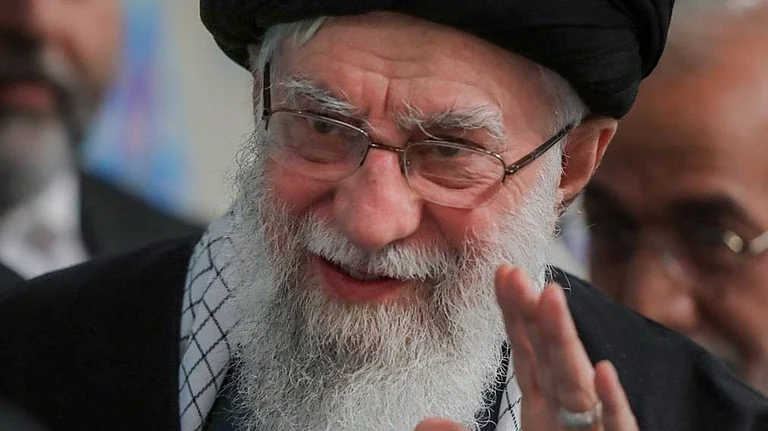
Choudhary took a longer view, arguing that the fundamentals haven't changed. "India's macroeconomic fundamentals remain relatively stable, supported by adequate foreign exchange reserves and a credible monetary policy framework. Periods of geopolitical uncertainty often lead to volatility in currency markets, but they do not necessarily alter medium-term structural drivers," he said.
He added that "a calibrated policy response and continued focus on growth and stability should help contain excessive currency fluctuations over time."
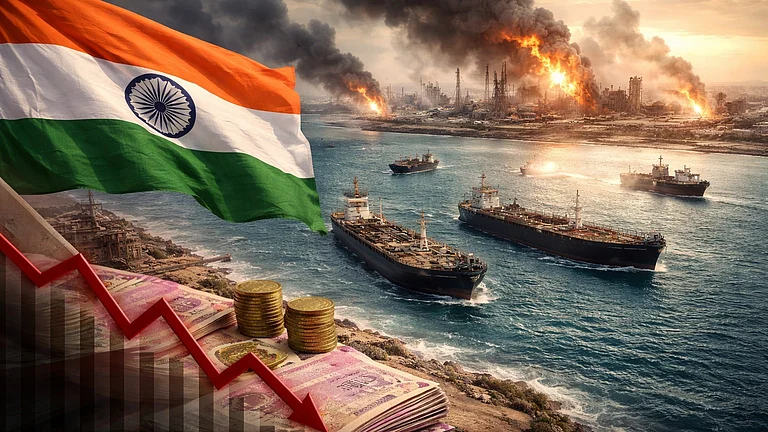
The rupee's current weakness is largely a symptom of global risk aversion. The country is caught in the crossfire of a geopolitical storm it didn't create, one that pushes up oil prices, strengthens the dollar, and pulls foreign capital toward safety.
As Choudhary put it, "the key variable to monitor will be the trajectory of crude prices and the duration of the conflict." If tensions ease, so should the pressure on the rupee. If they don't, analysts and traders alike are bracing for a rougher road ahead.