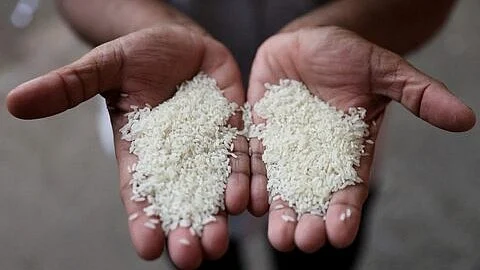

Basmati prices have fallen 6% as the Iran-Israel war disrupted India’s export trade.
Shipments are stalled and new deals paused amid rising freight and insurance costs.
Demand in West Asia is hit, threatening a key market for Indian basmati exports.
India's basmati rice prices have fallen by 6% following the escalation of the Iran-Israel war, which has severely disrupted shipments to West Asia, one of the country's most important export markets.
The agri-export industry is bracing for an even steeper price drop in the weeks ahead. This concern is significant given that more than three-quarters of India's basmati rice production is typically sent overseas, meaning any prolonged slowdown abroad quickly creates a surplus at home and pushes prices down further, the Economic Times reported citing Indian Rice Exporters Association (IREA).

1 October 2026
Get the latest issue of Outlook Business




Rice Stuck At Sea
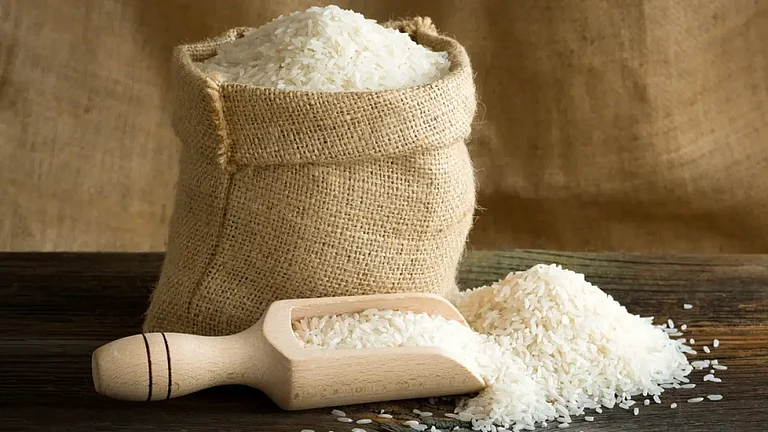
The scale of the disruption is substantial. According to the report, around 200,000 tonnes of basmati rice are currently stranded at Indian ports, with a similar quantity stuck mid-transit.
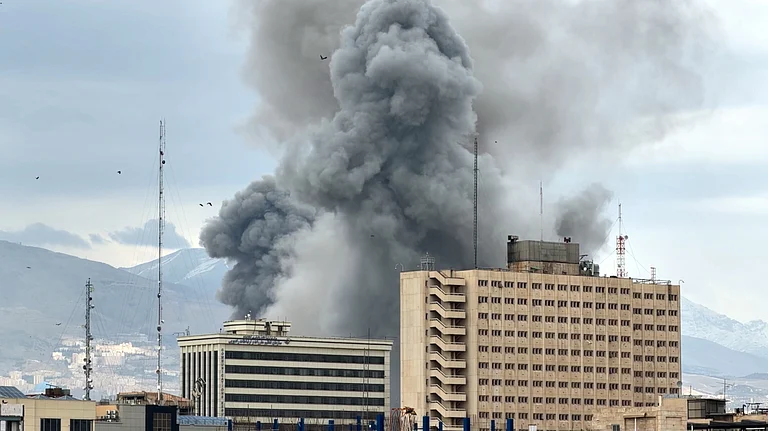
Earlier, Reuters cited trade officials and reported that the backlog was closer to 400,000 metric tonnes and noted that new export deals have largely dried up since freight rates more than doubled following US and Israeli strikes on Iran over the weekend.

Why West Asia Matters So Much
India is the world's largest exporter of basmati rice, and West Asian nations are its biggest customers. Countries like Saudi Arabia, Iran, and the UAE together account for more than half of India's basmati export revenue, a trade worth over ₹50,000 crore annually.
Advertisement
Iran alone makes up nearly 40% of India's basmati exports, according to government data. Notably, Tehran had ramped up its purchases significantly in recent months amid rising regional tensions, which had pushed basmati prices up by 5-10% across varieties as recently as February, as per ET.
For now, the pain is falling primarily on exporters, not farmers. Most farmers have already sold their harvest, so the price slide offers them little buffer, but causes them limited immediate harm either.
However, cheaper prices are unlikely to spark higher domestic consumption, since most of India's basmati output is produced specifically for export markets, the report added.
Advertisement
Exporters, meanwhile, are caught in a tough spot, holding large inventories with rising port storage costs and steep insurance charges from shipping companies. Industry representatives have reportedly already approached several government bodies, including the Agricultural and Processed Food Products Export Development Authority (APEDA), the Directorate General of Foreign Trade (DGFT), and the Commerce Ministry, seeking relief on these charges.