
India, the world's fourth largest economy, is set to maintain the 'goldilocks' phase with tailwinds of good growth, low inflation and robust banking performance as well as reform initiatives poised to sustain the economic pace witnessed during 2025.
Propelling the themes of ease of living and ease of doing business, the BJP-led Union government's next Budget is expected to unveil new measures to spur capital expenditure and private funding, making the country a more attractive investment destination amid tariff and geopolitical uncertainties.
Real GDP growth accelerated through successive quarters, reaching 8.2% in Q2 of 2025-26, while retail inflation slipped below the Reserve Bank's lower tolerance band of 2% towards the close of the year.

1 September 2026
Get the latest issue of Outlook Business




A government note said that, with a GDP of $4.18 trillion, India has surpassed Japan to become the world's fourth-largest economy and is poised to displace Germany from the third-largest rank in the next 2.5 to 3 years, with a projected GDP of $7.3 trillion by 2030.
"The present macroeconomic situation presents a rare 'goldilocks period' of high growth and low inflation," it added.
The government is also working to update the base year for national accounts to 2022-23 from 2011-12, effectively addressing concerns raised by the International Monetary Fund (IMF) about the methodology for computing gross domestic product (GDP) data.
Advertisement

On the domestic currency front, foreign portfolio outflows from equity markets exerted downward pressure on the rupee; nonetheless, rupee volatility moderated in November from a month ago.
According to the Reserve Bank's assessment of the state of the economy, 2025 displayed strong resilience amid a challenging and uncertain global environment, with growth accelerating throughout the year.
The growth was driven primarily by robust domestic demand, especially rural consumption, aided by easing inflation and a pick-up in fixed investment, which sustained this momentum.
On the supply side, services continued to expand steadily, while manufacturing showed a revival after lagging earlier, though signs of moderation emerged towards the latter part of the year.
Advertisement
Agricultural prospects remained supportive, with higher kharif output and comfortable foodgrain stocks, helping contain price pressures.
Reflecting broad-based momentum across key sectors, the Reserve Bank of India revised its GDP growth projection for FY 2025–26 upward from 6.8 % to 7.3%.
International agencies, like the World Bank, IMF, Moody's, OECD, Fitch, and S&P, have echoed the optimism.
Experts opined that growth may moderate but will remain resilient, supported by strong domestic fundamentals, accommodative financial conditions and ongoing reforms.
They also said external headwinds from global trade uncertainties and their impact on exports may be a challenge. However, the expected conclusion of the ambitious India-US trade deal may further boost exports and the economy.
There are high expectations that Finance Minister Nirmala Sitharaman will announce additional measures to deepen reforms and boost the economy in the Union Budget in February.
Last time, she provided significant relief to taxpayers, along with measures to promote domestic and foreign investment.
Some of the major global firms which announced big-ticket investments include Microsoft ($17.5 billion by 2030), Amazon ($35 billion over the next five years), and Google ($ billion over the next five years).
Also, iPhone maker Apple, South Korean electronics major Samsung, and ArcelorMittal Nippon Steel India have announced mega-expansion plans.
Experts said the series of free trade agreements India had signed was also expected to help the economy expand.

The proposed India-US trade deal, which is likely to fructify soon, will be a catalyst for exports and the industry, including MSMEs.
In the later months of 2025, the government reduced GST rates and implemented the new labour codes.
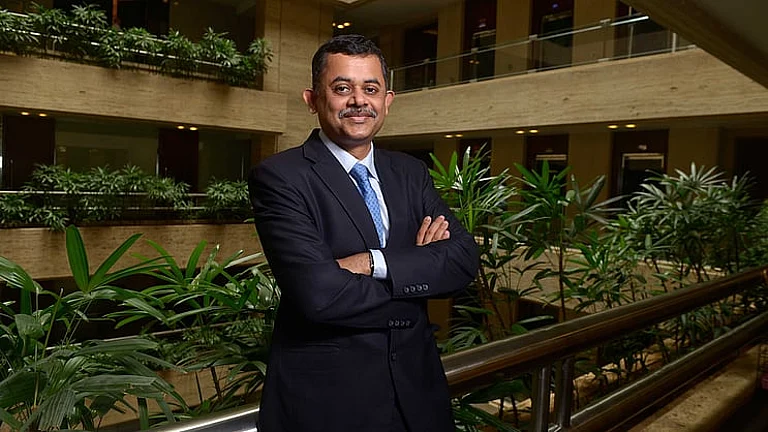
Bank of Baroda Chief Economist Madan Sabnavis said the Indian economy showed remarkable resilience in 2025, notwithstanding the shadow of tariffs lingering for the greater part of the year.
"This was due to a very strong domestic economy. Interestingly, exports have also held up, indicating that exporters have negotiated to an extent with the American customers as well as diversified the markets," he said.
The government would chip in by maintaining its capex targets, thus adding to overall investment. The year should have less uncertainty, as the tariff issue would be resolved through a deal, and we can expect a steadier rupee.
On the outlook, Aditi Nayar, Chief Economist, ICRA, said growth is expected to remain healthy at around 6.5-7% over the next several quarters, aided by policy support in the form of income tax and GST cuts, as well as the 125 bps in policy rate cuts.
While the CPI inflation trajectory is also expected to be upward-sloping, it is likely to remain at comfortable levels, averaging a little over 4% in FY2027.
"Such growth-inflation outcomes would be quite healthy, even if less favourable than the recent performance," Nayar said and added that continued formal sector job creation would be critical to support growth outcomes in the near and medium term.

Dharmakirti Joshi, Chief Economist at Crisil, was also of the opinion that the Indian economy outperformed expectations in 2025, with growth surprising on the upside and inflation remaining lower than anticipated.
He said that although India's external vulnerability remains relatively low, it faced some of the highest US tariffs, which dampened foreign investor sentiment. As a result, challenges emerged regarding capital inflows, and the currency weakened.
"Looking ahead, we project GDP growth at 6.7% and inflation (largely driven by base effects) at 5% in fiscal 2027. We believe that weak capital inflows and sharp currency depreciation are transitory phenomena," Joshi added.