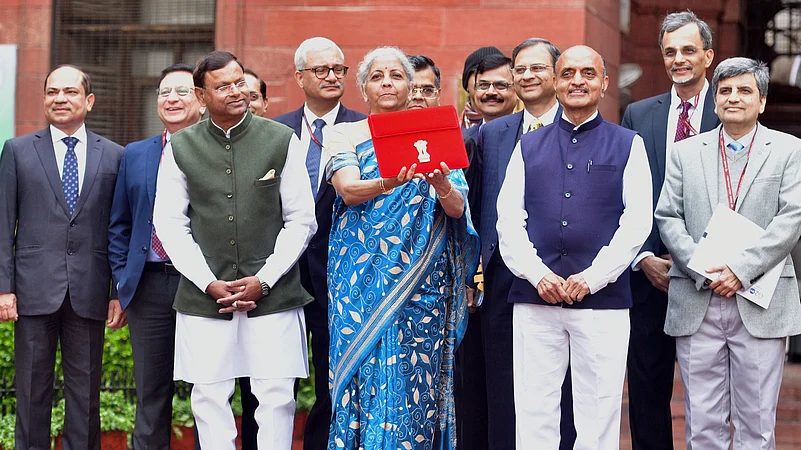

The government is considering cutting the number of customs duty slabs from eight to five or six in the upcoming Budget.
The proposed overhaul aims to address classification-related litigation, correct inverted duty structures, and align customs duties with GST framework.
The move follows earlier tariff rationalisation and comes amid a large backlog of customs cases, with over 75,000 disputes pending as of Dec 2024.
The Centre is preparing a fresh overhaul of its customs duty framework in the upcoming Union Budget by considering a reduction in the number of import tax slabs from the current eight to around five or six. The move is aimed at simplifying the tariff structure, cutting down litigation, and aligning import duties more closely with the country’s industrial and trade priorities, according to a report by The Economic Times.
The proposal is part of a broader effort to address long-standing issues in the customs system, particularly disputes over how imported goods are classified, the report added.

1 September 2026
Get the latest issue of Outlook Business

Such classification disputes are one of the biggest causes of customs-related litigation in India. A report by the Parliamentary Standing Committee on Finance noted that as of December 2024, more than 75,000 customs cases were pending, involving recoverable dues of over ₹24,000 crore.



The government is also looking to correct so-called inverted duty structures, where raw materials are taxed at a higher rate than finished products, and to reduce the number of discretionary exemptions that add complexity to the system. Work on this exercise has been underway for the past three to four months, and an announcement is expected in this year’s Budget, ET further stated citing sources.
Advertisement
This push comes at a time when India has recently concluded several trade agreements and is negotiating others, making it important for customs duties to be predictable and aligned with global trade commitments. The revamp is also linked to the government’s broader push for a paperless and seamless customs system to improve the ease of doing business.
Over the past two years, the Centre has already taken steps to rationalise customs duties. In the previous Budget, the government reduced and merged several tariff rates, bringing the number of basic customs duty slabs down to eight.
Advertisement
The Central Board of Indirect Taxes and Customs (CBIC) is also reportedly working to better align customs duties with the GST framework so that businesses face fewer compliance hurdles across indirect taxes. In addition, the government is reviewing the duty structure governing transactions between special economic zones (SEZ) and the domestic tariff area as part of wider SEZ reforms.
Last month, Finance Minister Nirmala Sitharaman had indicated that simplifying customs duties would be among the government’s next major reform priorities.