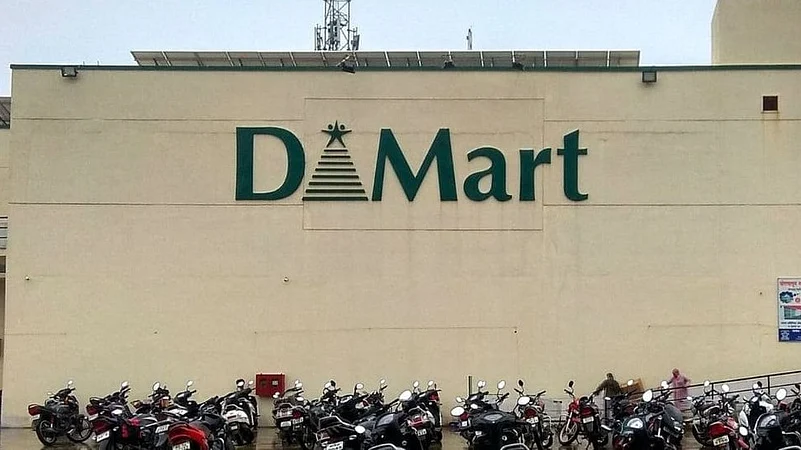
Avenue Supermarts Ltd, which owns and operates the retail chain D-Mart, has reported a 19.17 per cent year-on-year rise in its consolidated net profit at Rs 656.42 crore in the March quarter of FY26.
The company had posted a net profit of Rs 550.79 crore in the January-March quarter a year ago, according to a regulatory filing from Avenue Supermarts.
Revenue from operations increased 18.9 per cent to Rs 17,683.86 crore during the quarter under review. It was at Rs 14,871.86 crore in the corresponding quarter last fiscal.

1 September 2026
Get the latest issue of Outlook Business

"PAT (profit after tax) margin stood at 3.7 per cent in Q4FY26 as compared to 3.7 per cent in Q4FY25," the company said in its earnings statement on Saturday.
Total expenses of Avenue Supermarts in the March quarter were up 18.5 per cent to Rs 16,797.86 crore.
Avenue Supermarts' total income, which includes other income, was at Rs 17,702.03 crore, up 18.83 per cent in the March quarter.

In the entire FY26, Avenue Supermarts registered a profit of Rs 2,969.86 crore, up 9.7 per cent. Total consolidated income rose 15.8 per cent to Rs 68,894.84 crore during the financial year ended March 2026.
Commenting on the performance of the brick and mortar business, Managing Director & CEO Anshul Asawa said that gross margins saw slight improvement, and costs were largely in line with business growth.
Advertisement
Two-year-old and older D-Mart stores grew by 10.8 per cent during Q4 FY26 as compared to 8.1 per cent in Q4 FY25.
"Geopolitical tensions led to some spike in consumer buying during the month of March 2026, which normalised towards the end of the month. Our business has largely not witnessed any supply chain disruptions thus far. We opened 58 new stores during the quarter and also reached the landmark achievement of 500 D-Mart stores," he said.




About its online platform D-Mart Ready, Avenue E-Commerce CEO Vikram Dasu said that it has discontinued operations in one city during the quarter. As of March 31, 2026, it was operating in 18 cities.
Advertisement
Promoted by Radhakishan Damani and his family, D-Mart retails basic home and personal products across markets, which include Maharashtra, Gujarat, Andhra Pradesh, Madhya Pradesh, Karnataka, Telangana, Chhattisgarh, NCR, Tamil Nadu, Punjab and Rajasthan.