




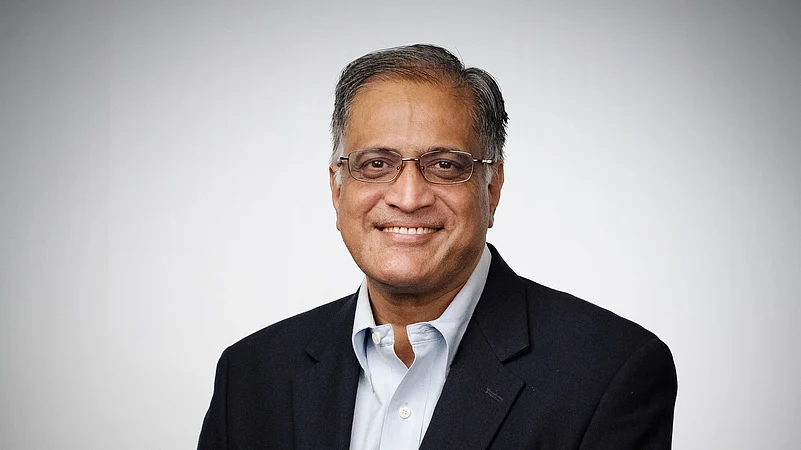

AI is a Y2K-like opportunity for India, says Sanjeev Jain of Wipro.
He drew parallels with past disruptions such as cloud computing, digital transformation and the 2008–09 financial crisis.
Each technological shift has historically created new markets, offerings and avenues for growth, said Jain.
Artificial Intelligence represents a opportunity for India, much like Y2K, according to Wipro’s Chief Operating Officer Sanjeev Jain. The event in the 2000s led to India becoming the back-office and IT operations destination, which has today ballooned into a more than $282 billion industry.
Near the end of the 20th century, computers globally faced a major problem as most companies used a two-digit format for dates. With the arrival of a new millennium, these systems had to shift to a four-digit date format. At the time, Indian IT firms used their expertise in Common Business-Oriented Language (COBOL) to help fix this critical computer date flaw that threatened sectors such as banking, power and transport. This also enabled companies to expand rapidly in the years leading up to 2000.

1 September 2026
Get the latest issue of Outlook Business

Drawing parallels with past disruptions such as cloud computing, digital transformation and even the 2008–09 financial crisis, Jain told Outlook Business that each technological shift has historically created new markets, new offerings and new avenues for growth.



“Somehow, we tend to be very quick in forecasting outcomes, but many times economic realities have proved otherwise. Each technological transition, from the Industrial Revolution to the digital era, has ultimately helped create new offerings, new scale and entirely new markets,” said Jain.
His remarks come at a time when Indian IT stocks have been on a downward path, barring the past two days of the India AI Impact Summit, where tech business leaders have tried to quell concerns regarding new agentic AI replacing work done by Software-as-a-Service (SaaS) players and even hurting jobs.
Advertisement
Investor concerns in recent weeks emerged after Anthropic unveiled new plugins for its Claude CoWork, which can read files, draft documents, review contracts and execute multi-step workflows across legal, finance, sales and marketing functions. This led to the Nifty IT index dropping about 16.51% in the one month.
But the Wipro COO explains that “technology by itself cannot deliver outcomes”.
“All technologies are ultimately tools—and tools require humans to apply them to solve real problems,” he added.
“What we are seeing now is that existing technology talent must learn to adopt and apply these new AI-driven capabilities. While some may call this a skill gap, the reality is that many of these technologies did not even exist when today’s workforce graduated. As they emerge, it becomes essential for professionals to continuously upskill.”
Advertisement
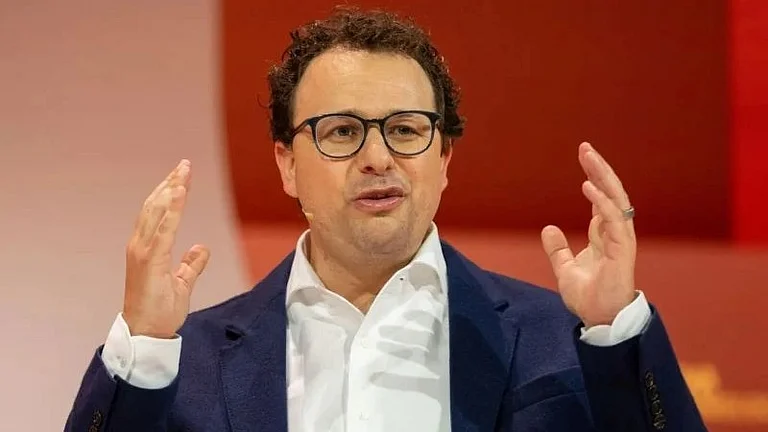
AI at Everyday Work
However, Sanjeev Jain says these technologies are acting as enablers that allow people to achieve far more than before—not just within enterprises.
“From farmers to small business owners, a wide range of users can benefit from AI-led solutions that democratise access to technology across society. We are also beginning to see productivity gains from AI reflected in client outcomes. Faster product rollouts, quicker revenue realisation and reduced operational costs are already visible in some financial metrics,” he said.
He added that even within Wipro, the company is seeing efficiency improvements across functions such as HR, finance and operations.
“Increasingly, AI is being embedded into new project solutions from the outset, with productivity gains factored in upfront. AI is becoming so pervasive that isolating its individual contribution may become difficult over time. Much like utilities we use every day, it is gradually becoming embedded into routine processes,” Jain said.
New Hiring Model
Jain also explained how Wipro is now shifting from a hire-and-train model, where freshers used to undergo a few weeks of training before being deployed on projects, to a model where the company goes to campuses to train students before hiring them.
“It means we are now engaging with students much earlier at the campus level. Under the new education policy, industry can contribute academic credits within university curricula. So we collaborate with universities to set up Centres of Excellence in areas such as cybersecurity, data science and AI, and introduce coursework that students would otherwise receive after joining the company,” he explained.
Through Wipro Cares, the IT major’s CSR arm, in partnership with NASSCOM’s FutureSkills programme, the company is working with nearly 600 government colleges in tier 2 and tier 3 cities to train faculty in emerging technologies, benefiting around 300,000 students so far.
Jain also said that this training is not just taking place externally but internally as well.
“We began this journey two years ago with a foundational programme called AI 101, which has now been completed by our entire workforce of 235,000 employees at Wipro, including the board of directors and the chairman. Building an AI-first mindset was the first step,” Jain said, further explaining that they have developed over 90 persona-based AI learning pathways in collaboration with partners such as Microsoft, Google, Amazon Web Services and IBM, among others.
“More than 50,000 employees have already undergone advanced AI training through these pathways. The focus now is on applying these skills to deliver tangible benefits for employees, clients and the organisation. Skilling remains a continuous journey, and as new developments such as agentic AI emerge, we will continue to evolve our learning programmes and equip our teams with the right tools to adapt and innovate,” he added.









