'Agentic Engineering' is replacing 'Vibe Coding' as the professional default for developers
Anthropic CEO says AI is 6–12 months away from performing end-to-end software engineering tasks
Humans shall act as architects and supervisors, orchestrating agents rather than writing code manually
“We might be six to 12 months away from when the [AI] model is doing most, maybe all of what the SWEs [Software Engineers] do end to end.” This is what Anthropic CEO Dario Amodei had to say on AI’s impact at the World Economic Forum in Davos.
His remarks went one step ahead of the industry conversations around AI merely replacing coding, which is an essential part of software engineering.

1 September 2026
Get the latest issue of Outlook Business

AI researcher Andrej Karpathy describes this more advanced shift in software development as “agentic engineering.”


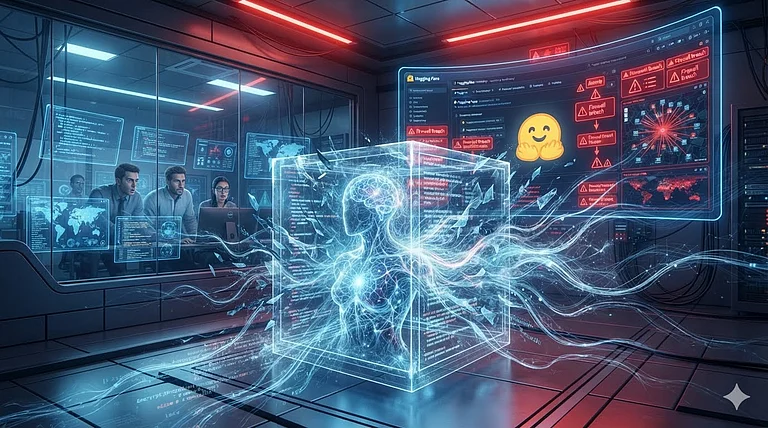
Karpathy argues that programming through large language model agents is increasingly becoming the default workflow for professionals, with humans largely limited to oversight and review. In this setup, he suggests that people write little to no code themselves, spending most of their time supervising and scrutinising the output generated by AI systems.
Karpathy also coined the term “vibe coding” to describe the practice of writing code using natural language prompts, and was among the first to identify this trend.
With the advent of AI, the industry has moved from writing code from scratch to AI-assisted or “vibe” coding, and is now transitioning toward fully agentic engineering.
Advertisement
Decoding Karapathy’s Viewpoint
On February 5, 2026, Andrej Karpathy posted on X to mark the one-year anniversary of the term “vibe coding.” He said the phrase had been coined casually and without much forethought, and was appropriate for that period when large language model capabilities were far less mature.
Karpathy noted that vibe coding worked mainly for fun, throwaway projects, demos and early explorations, adding, “It was good fun and it almost worked.”
However, the approach has since evolved as programming via LLM agents is “increasingly becoming a default workflow for professionals, except with more oversight and scrutiny.”
The objective, he explained, is to capture the leverage offered by AI agents without compromising software quality, which is why he now prefers the term “agentic engineering.”
Advertisement
Karpathy said it is “agentic” because developers no longer write code directly most of the time, but instead orchestrate agents and act as supervisors. It is “engineering” to emphasise that the process involves both art and science, requires expertise, and is a skill that can be learned and refined over time.
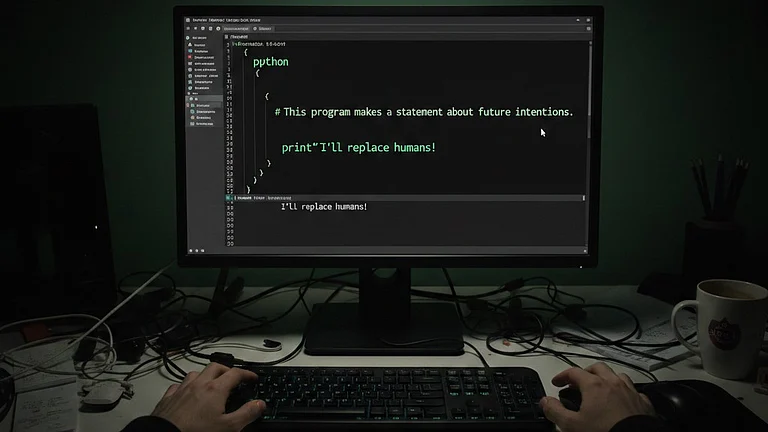
Agentic Engineering Explained
Agentic engineering is a software development approach in which AI agents or specialised coding assistants that can plan, test, and execute tasks, handle most of the implementation, while humans act as architects and supervisors.
This model shifts software engineering away from writing code toward orchestration.
Developers spend the vast majority of their time directing and coordinating multiple specialised agents rather than manually writing lines of code. It also enables autonomous implementation, where agents can independently generate code, run unit tests and complete pull request checks based on high-level instructions, such as refactoring an API for scalability.
Agentic Engineering in Practice
Addy Osmani, a software engineer at Google Cloud AI, explained in a blog post how agentic engineering works in practice. He said the process begins with planning. Before prompting an AI system, teams write a design document or specification to define the architecture and break the work into clearly scoped tasks.
The next step is direction followed by rigorous review. Developers assign a well-defined task to an AI agent, which then generates the code. That output is reviewed with the same discipline applied to a human teammate’s pull request.
If a developer cannot clearly explain what a module does, it should not be merged.
Testing, Osmani argued, is the biggest distinction between agentic engineering and vibe coding. With a strong test suite, AI agents can iterate repeatedly until tests pass, providing high confidence in the outcome. Without tests, an agent may incorrectly declare a task complete even when the code is broken.
Testing, he said, is what turns an unreliable agent into a dependable system.
Despite the heavy use of AI, ownership remains with the human team. Developers are responsible for the codebase, documentation, version control, continuous integration, and production monitoring. AI may accelerate execution, but accountability for the system does not shift.
Teams that apply this approach effectively often report faster development cycles. Osmani emphasised that these gains come from strengthening sound engineering processes, not abandoning them. AI takes care of repetitive and boilerplate work, while humans focus on architecture, correctness, edge cases, and long-term maintainability.
Ironically, Osmani noted, AI-assisted development rewards strong engineering discipline even more than traditional coding. Clear specifications lead to better AI output, comprehensive tests enable confident delegation, and clean architectures reduce hallucinated abstractions.
As one analysis he cited put it, “AI didn’t cause the problem; skipping the design thinking did.”

What About Software Engineering?
In his January 2026 essay titled “The Adolescence of Technology,” Anthropic CEO Dario Amodei wrote that AI models have reached a stage where they have become so proficient at coding that some of the strongest engineers he knows now hand over almost all of their coding work to AI.
He contrasted this with the situation just three years earlier, when AI struggled with elementary arithmetic and could barely write a single line of code.
Amodei added that even this assessment may underestimate the speed of progress. “Because AI is now writing much of the code at Anthropic, it is already substantially accelerating the rate of our progress in building the next generation of AI systems,” he wrote.
According to him, this feedback loop is gaining momentum month by month and could be only one to two years away from a point where the current generation of AI systems autonomously builds the next.
He said this loop has already begun and is set to accelerate rapidly in the coming months and years. Reflecting on the past five years of progress from within Anthropic, and on how upcoming models are shaping up, Amodei wrote that he can “feel the pace of progress, and the clock ticking down.”
Osmani believes that the rise of AI coding does not replace the craft of software engineering, but instead raises the bar for it. He said the developers who will thrive are not those who can prompt the fastest, but those who think most clearly about what they are building and why, and then use every tool available, including AI agents, to build high-quality software.