
DoT mandated smartphone makers to preload Sanchar Saathi within 90 days to combat cybersecurity threats
Apple and privacy groups criticised the mandatory preloading, citing surveillance concerns
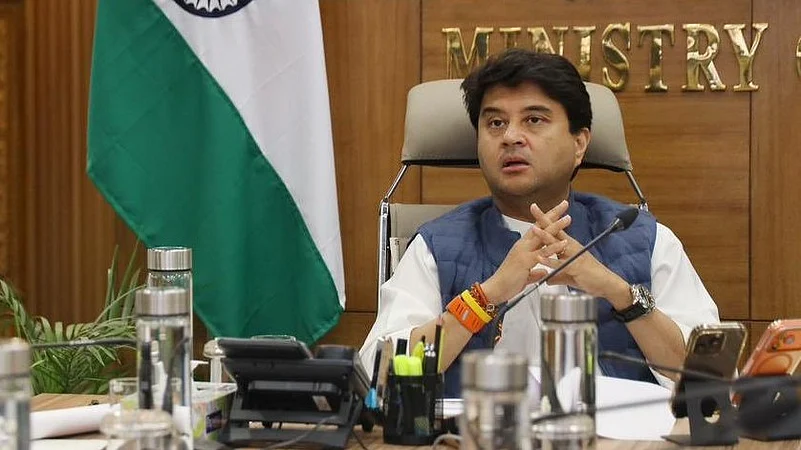
Minister Jyotiraditya Scindia clarified the app is optional and users can delete it if they choose
India’s Telecom Ministry on Monday confidentially mandated smartphone operators to preload the government’s Sanchar Saathi cybersecurity app on all their upcoming devices. The government’s rationale behind the mandate is to safeguard the citizens from buying the non-genuine handsets, enabling easy reporting of suspected misuse of telecom resources and to increase effectiveness of the Sanchar Saathi initiative.
However, several smartphone makers and users have criticised the move citing privacy concerns. Their argument is that preloading the app effectively grants the government broad access to users’ phones, undermining autonomy and data protection.

1 September 2026
Get the latest issue of Outlook Business

At its core, the entire saga has turned into a cybersecurity goals vs privacy concerns debate.




Sanchar Saathi Initiative & App
The Sanchar Saathi initiative is a citizen-centric service developed by India’s Department of Telecommunications. The name literally translates to “communication companion,” reflecting its mission to strengthen telecom cybersecurity and help users avoid fraud.
The Sanchar Saathi mobile app was officially launched on January 17, 2025.
In practice, the app and its accompanying web portal allow users to verify a handset’s IMEI before purchase. It allows to block or trace lost or stolen devices through the CEIR system, review mobile connections registered under their identity, report suspected fraud or spam, flag suspicious international calls, and access trusted banking and financial contact information.
Advertisement
Collectively, these features are intended to reduce identity theft and prevent telecom-related fraud.

The Mandate
The DoT directions mandate that manufacturers and importers of mobile handsets intended for use in India, under the provisions of Telecom Cyber Security, must adhere to specific guidelines.
Manufacturers and importers are required to ensure that the Sanchar Saathi mobile application is pre-installed on all mobile handsets manufactured or imported for use in India. They must also ensure that the pre-installed Sanchar Saathi application is clearly visible and accessible to end users at the time of first use or device setup, and that its functionalities are not disabled or restricted.
Advertisement
For devices that have already been manufactured and are currently in sales channels in India, manufacturers and importers should make reasonable efforts to push the application through software updates.
The Directions require full implementation within 90 days and submission of a compliance report within 120 days.
The Backlash
Smartphone manufacturing giant Apple was reportedly the first and most significant company to refuse compliance with the DoT mandate.
According to a Reuters report, Apple plans to inform the government that it does not follow such mandates anywhere in the world, citing the privacy and security risks they pose to the iOS ecosystem.
“It’s not just like taking a sledgehammer; this is like a double-barrel gun,” one source told the agency. Apple tightly controls its App Store and iOS software, which form the core of its $100-billion-a-year services business, whereas Android’s open-source structure gives manufacturers such as Samsung and Xiaomi greater flexibility.
The Internet Freedom Foundation (IFF) India’s leading digital-rights NGO published a formal statement describing the DoT directive as “disproportionate, legally fragile, and structurally hostile to user privacy and autonomy” and stated that it would work to push for its rollback.
Meghna Bal, Director at the Esya Centre, a technology policy think tank, said the mandate raises fundamental questions of transparency, security, and due process. “The core concern is that the app has been mandated without transparency, testing, or clarity on how user data will be protected. We don’t know who built it, how it works, or why it needs such expansive permissions,” Bal said.
Bal argued that the drawbacks far outweigh the claimed benefits. “The cons, unfortunately, outweigh the pros. There is no evidence of a pilot, no clarity on its data flows, and no explanation of how fraud intelligence will be gathered or verified. The app duplicates functions already offered by telecom providers and private apps. Worse, making it mandatory creates a single point of attack that exposes millions of users to potential breaches,” she added.
Amit Relan, CEO and co-founder of mFilterIt, an ad fraud detection and prevention firm, said concerns around data access are inevitable when a government-backed app is deployed at scale. “Whenever a government-backed app is widely deployed across devices, it’s natural for privacy questions to arise.
Addressing these concerns upfront through transparency, clearly defined data boundaries, and strong security standards is essential,” Relan said. “Trust in public digital infrastructure is built when privacy protections are visible and verifiable.”

Government’s Response
Responding to public backlash, Telecom Minister Jyotiraditya Scindia clarified on Tuesday that the Sanchar Saathi app would remain optional for users. “If you want to delete the app, you can, it is not mandatory. For instance, if you don’t want to use the app, don’t register for it. It will stay dormant, and delete it if you want to,” Scindia said.
He added that many citizens are unaware of the app’s role in protecting them from digital fraud and theft, noting that the government has a responsibility to make the tool widely accessible.
In a recent post on X, Scindia highlighted the growing adoption of Sanchar Saathi, framing it as a sign of public confidence in the government’s telecom fraud crackdown. “People’s trust in Sanchar Saathi is steadily increasing,” he wrote, calling the initiative “a significant step towards strengthening protection, transparency, and a customer-first approach.”
Scindia also reiterated that using the app remains entirely discretionary. “This is a completely voluntary and democratic system — users may choose to activate the app and avail its benefits, or if they do not wish to, they can easily delete it from their phone at any time,” he said.