

Farmers increasingly burn stubble after 3 pm to avoid satellite detection.
Monitoring systems miss most fires due to limited daytime observation windows.
Political row erupts as Delhi battles persistent poor air quality.
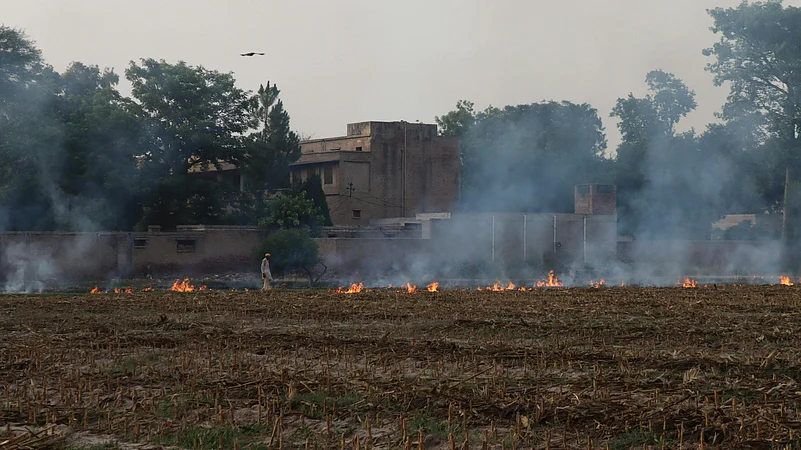
Farmers in Punjab and Haryana are increasingly moving stubble burning to late afternoon and evening hours to escape satellite detection, even as the overall area burnt this year has declined significantly, according to a report published by International Forum for Environment, Sustainability and Technology (iFOREST) on December 8.
The iFOREST report warned that India’s current monitoring systems are capturing only a fraction of actual fires due to their limited observation window and weakening the evidence base for air-quality policymaking.

1 April 2026
Get the latest issue of Outlook Business

The report also stated that the total burnt area in both states has reduced by 25% to 35% over recent years, indicating real progress in cutting down crop-residue burning.
However, the report also showed that the time of burning has shifted dramatically. In Punjab, over 90% of large farm fires in 2024 and 2025 occurred after 3pm, compared to just 3% in 2021. The trend appeared even earlier in Haryana, where most large fires have taken place after 3pm since 2019.
As a result of this change, the difference between what is visible from space during official monitoring hours and what is actually happening on the ground has grown.
The Indian Agricultural Research Institute (IARI) leads the Consortium for Research on Agroecosystem Monitoring and Modelling from Space (CREAMS), which currently uses MODIS and VIIRS polar-orbiting satellites for surveillance. These satellites only fly over India between 10:30 am and 1:30 pm. Consequently, most fires that start later in the day manage to avoid detection.
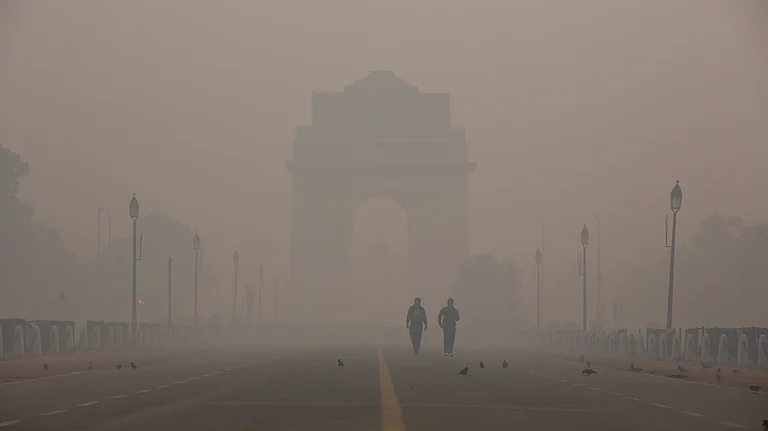
Farm fires in Punjab and Haryana affect Delhi's air quality every year between October and November. Northwesterly winds carry the smoke to the capital, where it frequently builds up and contributes to the region's already high pollution levels. Stubble burning can contribute up to 35–45% of Delhi's PM 2.5 on certain days.
Delhi CM Under Criticism
Meanwhile, Aam Aadmi Party (AAP) national convenor and former Delhi CM, Arvind Kejriwal, criticised Delhi Chief Minister through a post on X on December 9 sharing a video of her comments and questioning the scientific basis of her claims.
Kejriwal on X wrote, “AQI monitors are installed, water is being sprayed there so that the truth about pollution doesn’t reach the people of Delhi. In other words, there’s a game afoot to hide the figures and make it look like the ‘air is clean’. Second thing—when did this new science come about that AQI has now become temperature?”
The video shared by Kejriwal showed CM Gupta defending water spraying at pollution hotspots. In the clip, she said, “So you will spray (water) at a hotspot. Does spraying water on a monitor bring down the AQI,” she questioned.




“AQI is such a temperature which can be measured by using any instrument. So watering is the only solution for it. That’s what we are doing—just as previous governments did—and it is done only at the hotspots, where pollution is highest. That’s exactly where you would carry out cleaning,” the video posted by Kejriwal on X showed.
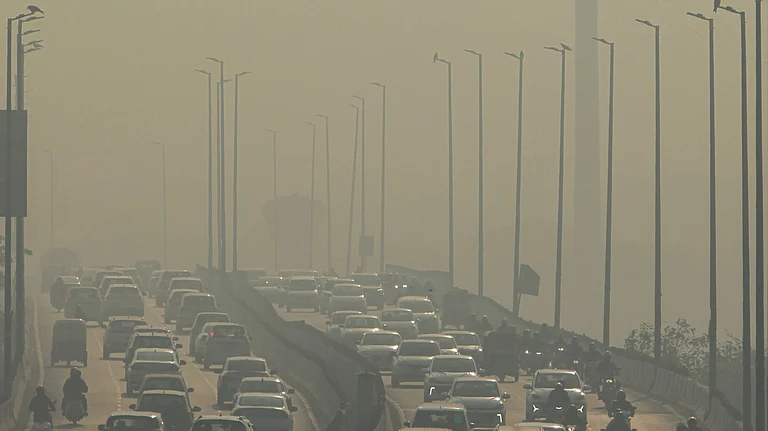
The exchange comes as Delhi continues to experience hazardous air. Delhi recorded a ‘poor’ AQI of 292 at 8 am on the morning of December 9, reported TOI. While the 24-hour average AQI stood at 282, falling under the ‘poor’ category and slightly down from a ‘very poor’ AQI of 314 on December 8.