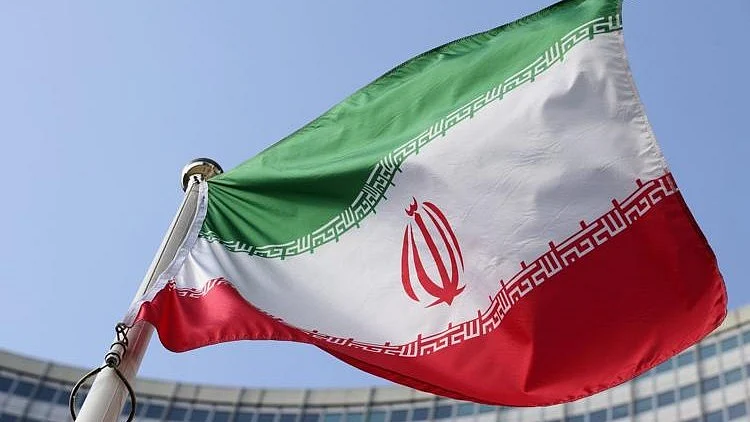
The talks between Iran and the US in Pakistan have ended without a deal due to "excessive demands" made by the American side, a top Iranian official said on Sunday.
Iranian Foreign Ministry spokesperson Esmaeil Baqaei, however, emphasised that "diplomacy never ends." US Vice President JD Vance, who led the American delegation, said the talks failed to reach a peace deal, citing Tehran not forgoing its nuclear programme as one of the key sticking points. He said the American side presented its "final and best offer" to the Iranian side, but it did not accept it.
Baqaei, however, said the two sides reached a consensus on some issues, but they held different views regarding "2-3 important matters".

1 September 2026
Get the latest issue of Outlook Business

"Finally, the talks did not reach an agreement," he was quoted as saying by the state-run Press TV.
He said that during the intensive negotiations that began Saturday morning, with Pakistan's mediation, numerous messages and texts were exchanged between the two sides.
"In the past 24 hours, discussions were held on various dimensions of the main negotiation topics, including the Strait of Hormuz, the nuclear issue, war reparations, lifting of sanctions, and the complete end to the war against Iran and in the region," Baqaei earlier said in a post on X.
"The success of this diplomatic process depends on the seriousness and good faith of the opposing side, refraining from excessive demands and unlawful requests, and the acceptance of Iran's legitimate rights and interests," he added.
Advertisement
He said these negotiations were held after 40 days of "imposed war" and in an atmosphere of "mistrust and suspicion".
"It is natural that we should not have expected from the beginning to reach an agreement within one meeting,” he was quoted as saying by Iran's semi-official Tasnim news agency. “No one expected that either.” "We have not forgotten and will not forget the experiences of America's breaches of promise and malicious acts," he said.


He thanked Pakistan for hosting the negotiations and for its efforts in advancing this process.
In a brief statement to the media, Pakistan's Deputy Prime Minister and Foreign Minister Ishaq Dar said his country helped mediate several rounds of “intense and constructive” discussions over the past 24 hours.
Advertisement
Expressing hope for progress, Dar said both sides should maintain a positive spirit to achieve durable peace and regional stability.
Dar said Pakistan would continue to play its role in facilitating engagement and dialogue between Iran and the United States in the coming days.
The Iranian delegation, led by Speaker Mohammad Baqir Galibaf, had arrived in Islamabad on Friday night, while the US delegation, headed by Vice President JD Vance, arrived on Saturday morning.
It was the first direct, high-level engagement between Iran and the US since the 1979 Islamic Revolution.
The conflict began after the US and Israel launched attacks on Iran on February 28, paralysing global energy markets and disrupting trade.
Iran had laid out a 10-point plan for the talks that included demands for the withdrawal of US forces from West Asia, the lifting of sanctions against Iran, and allowing it to control the Strait of Hormuz.
The failure to arrive at an agreement following the face-to-face negotiations between the two sides raised doubts over the effectiveness of their fragile two-week ceasefire as well as the prospect of reopening the Strait of Hormuz to stabilise the global energy market.