




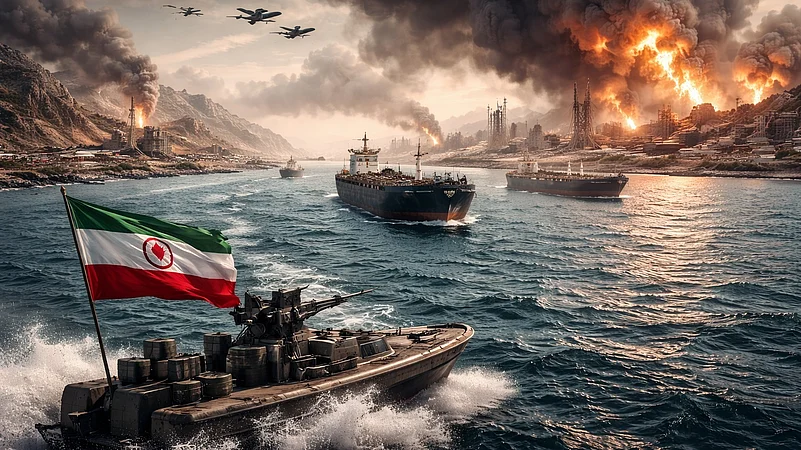

Iran’s Parliament Security Committee has proposed a rial-based toll system and regulatory framework for ships transiting the Strait of Hormuz.
The proposal may restrict vessels linked to the US and Israel and countries imposing unilateral sanctions on Iran.
The development comes amid escalating West Asia tensions, raising concerns over oil supply disruptions, trade flows, and global economic stability.
Tehran has announced that its Parliament’s Security Committee has approved a new proposal to regulate maritime traffic through the Strait of Hormuz, including the introduction of tolls on vessels and potential restrictions targeting specific countries, according to state media reports.
Iran’s state broadcaster, Islamic Republic of Iran Broadcasting (IRIB), said the proposal introduces a rial-based toll system for ships transiting the Strait. The framework also outlines measures related to maritime security, vessel safety, environmental safeguards, and financial rules governing passage through the strategic waterway.

1 September 2026
Get the latest issue of Outlook Business

Under the proposal, vessels associated with the US and Israel could be barred from passing through the Strait. Additional restrictions may also apply to countries that enforce unilateral sanctions against Iran. According to a Moneycontrol report citing IRIB, the proposal underscores Tehran’s assertion of sovereign control over the key shipping corridor and highlights potential cooperation with Oman in establishing a legal framework for managing transit.
The development comes amid the ongoing West Asia conflict involving Iran, Israel, and the US, which began on February 28. The tensions have contributed to instability in the region, volatility in global crude oil markets, and concerns over supply chain disruptions that could weigh on global economic growth.
Advertisement

US Signals De-escalation
Meanwhile, US Treasury Secretary Scott Bessent said the US aims to ensure freedom of navigation through the Strait. “The market is well supplied, and we are seeing more ships pass through on a daily basis as individual countries strike temporary arrangements with the Iranian regime. Over time, the US is going to reassert control over the straits, and there will be freedom of navigation, whether through US escorts or a multinational escort,” Bessent said.
US President Donald Trump also signalled a possible de-escalation in geopolitical tensions, even if the Strait of Hormuz remains shut. According to a Wall Street Journal report, Trump told aides that he would be willing to end US operations against Iran even if Tehran does not immediately reopen the waterway, as forcing a reopening could prolong the conflict.
Advertisement
According to CNBC, he said that if Iran does not reopen the Strait of Hormuz and agree to a peace deal, the US could target critical infrastructure including electricity plants, oil facilities, and possibly desalination infrastructure, according to a post on Truth Social.









