

India attracted $136.38 billion in foreign-currency inflows through its special forex facility by August 31
FCNR-B deposits from overseas Indians accounted for $127.23 billion of the total
The inflows give the RBI a larger cushion to manage rupee volatility and external shocks
India has mobilised $136.38 billion in foreign-currency inflows through a special forex swap facility, giving the Reserve Bank of India (RBI) a larger buffer to manage pressure on the rupee and respond to external shocks.
The inflows stood at $136.38 billion as of August 31, with the bulk coming from deposits raised from overseas Indians, according to the RBI.

1 October 2026
Get the latest issue of Outlook Business

The central bank had introduced the measures in June to attract foreign currency and strengthen the country’s external position after higher oil prices added pressure on the rupee.


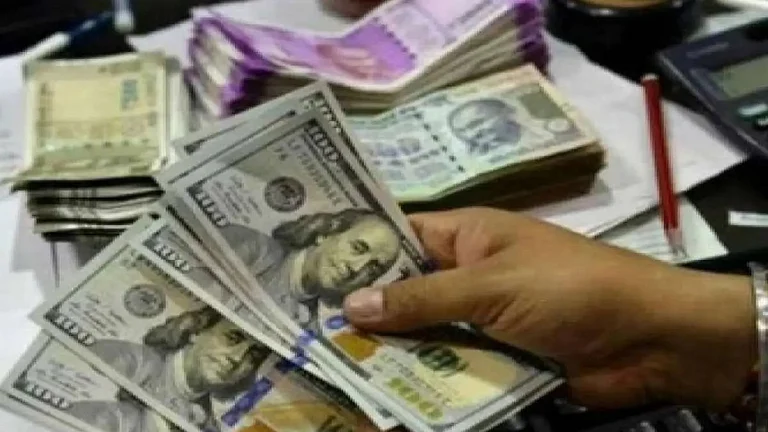
Foreign Currency Non-Resident (FCNR-B) deposits accounted for $127.23 billion of the total inflows, while external commercial borrowings contributed $3.89 billion and overseas foreign-currency borrowings brought in another $5.26 billion, the RBI said.
The $127.23 billion raised through FCNR-B deposits was a record amount mobilised through the programme and substantially exceeded market expectations, as per a report by Bloomberg (BBG).

Advertisement
The RBI had offered to absorb hedging costs for banks raising such deposits from overseas Indians and also permitted lenders to extend loans against the funds.
The scale of the inflows gives policymakers greater flexibility to manage the currency, although the rupee has shown limited movement since the special facility was introduced, per the report.
RBI Ends FCNR-B Window Early
The FCNR-B window, which was originally scheduled to remain open until the end of September, was closed on August 31.
The special swap facility for external commercial borrowings and overseas foreign-currency loans, however, will remain available until December 31.
Advertisement
The programme revives a strategy used during the 2013 taper tantrum, when India attracted about $26 billion through a similar initiative.
"This is clearly larger than expectations. This should give comfort to the RBI on currency, and their ability to manage volatility. Also, it helps understand why they closed the FCNR(B) window earlier than initial schedule," said Vivek Rajpal, Asia strategist at JB Drax Honore (UK), as per a report by Reuters.

Larger Reserve Buffer
India’s foreign-exchange reserves climbed to a record $729.33 billion in the week ended August 21, providing the RBI with additional room to counter risks from higher oil prices and elevated US Treasury yields.
The central bank has also increased dollar sales in recent days to support the rupee, as per a Reuters report.
However, the sizeable inflows could add excess rupee liquidity to the financial system. Siddharth Kothari, economist at Sunidhi Securities, said the RBI may need to sterilise the liquidity through measures including changes to the incremental cash reserve ratio (ICRR) and cash reserve ratio (CRR), per Reuters.