FCNR(B) inflows crossed $100 billion, far exceeding the RBI’s earlier $80-billion projection across three special foreign-currency funding routes.
The inflows have strengthened the RBI’s ability to intervene in currency markets and could help support the rupee amid external pressures.
Foreign-currency assets received through the swaps will add to the RBI’s balance sheet, potentially strengthening India’s record-high $729.33-billion forex reserves.
India’s foreign-currency fundraising exercise has delivered a far stronger response than the Reserve Bank of India (RBI) initially expected. Capital inflows through the Foreign Currency Non-Resident (Bank), or FCNR(B), deposit scheme crossed $100 billion by the August 31 deadline, according to official sources cited by The Financial Express.
The milestone comes after the RBI opened a special dollar-rupee swap facility in June to encourage banks to mobilise foreign-currency deposits from non-resident Indians (NRIs).

1 October 2026
Get the latest issue of Outlook Business

The unusually strong inflows eventually prompted the central bank to close the FCNR(B) window a month earlier than initially planned.
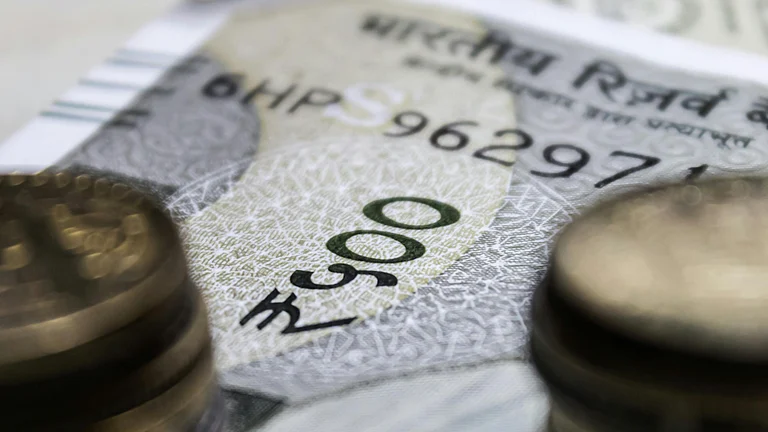



But what exactly drove the rush for FCNR deposits, why did the RBI shut the window early, and how could the inflows affect India’s rupee, foreign exchange reserves and balance of payments?
What Is The FCNR(B) Scheme?
FCNR(B) stands for Foreign Currency Non-Resident (Bank) deposits. The scheme allows NRIs to hold deposits with Indian banks in foreign currencies rather than in rupees.
Advertisement
For depositors, the arrangement provides exposure to a foreign currency while the deposits offer tax-free returns. For Indian banks, FCNR(B) deposits provide a source of foreign-currency funding.
The RBI’s special swap facility made it cheaper for banks to raise these funds. The facility was operationalised on June 8, while FCNR(B) inflows began on June 23.
The special swap deposits have maturities of three to five years, with most of the mobilisation taking place through five-year deposits.
Why Did Inflows Surge?
The key attraction was the economics created by the RBI’s swap facility. By lowering the effective cost for banks of mobilising foreign-currency deposits, the arrangement gave lenders room to offer significantly higher returns to overseas depositors.
Advertisement
Banks responded by raising interest rates on longer-duration FCNR(B) deposits, making the products more attractive to NRIs.
The response was substantially stronger than anticipated. The RBI had earlier estimated that the three special routes — FCNR(B), overseas foreign currency borrowings (OFCBs) and external commercial borrowings (ECBs) — could mobilise around $80 billion.
By August 21, RBI data showed that the three routes had already attracted $72.85 billion. FCNR(B) deposits accounted for $65.4 billion, OFCBs for $4.86 billion and ECBs for $2.59 billion.
By the August 31 deadline, FCNR(B) inflows alone had crossed the $100-billion mark, according to the official sources cited by FE. The latest figures for ECBs and OFCBs were not immediately available.
Why Did RBI Close The Window Early?
The FCNR(B) window was originally scheduled to remain open until September 30. The RBI, however, advanced the closure to August 31 following the unexpectedly strong response.
One concern was the risk associated with an eventual reversal of large foreign-currency inflows.
RBI Governor Sanjay Malhotra described the decision in an interview with FE as a “well-thought-out, calibrated, prudent and data-driven” response to evolving conditions.
Banks can nevertheless continue to avail themselves of the swap facility for FCNR(B) deposits that had already been contracted until September 11.
The ECB and OFCB windows, meanwhile, will remain open until December 31, 2026.
How Can FCNR Inflows Help India?
The immediate benefit is a stronger external funding position for India.
The inflows could provide a significant boost to the country’s balance of payments in the current financial year. Estimates suggest the capital account surplus could rise above $65 billion, potentially reversing deficits recorded during the previous two financial years.
The inflows also give the RBI greater flexibility in managing volatility in the foreign exchange market.
That is particularly important for the rupee, which came under pressure earlier this year. The currency touched a record low of ₹96.96 per US dollar in May 2026 amid the West Asia conflict.
On Tuesday, the rupee appreciated for a fourth consecutive session, gaining 22 paise to ₹94.95 per dollar, with RBI intervention supporting the currency.
Chief Economic Adviser V Anantha Nageswaran said the successful mobilisation of FCNR deposits provides strong support to India’s balance of payments and creates a floor for the rupee against the dollar.
What Does It Mean For Forex Reserves?
The foreign currency raised through the swaps will be reflected as foreign currency assets on the RBI’s balance sheet. This could provide an additional boost to India’s foreign exchange reserves.
India’s forex reserves stood at a record $729.33 billion in the week ended August 21.
The additional foreign-currency assets therefore strengthen the RBI’s external buffer and its ability to intervene in currency markets when required.
However, the RBI also has to manage the liquidity implications of these inflows. Malhotra pointed out that the marginal benefit of every additional dollar being swapped declines, while the cost of sterilising those funds for a longer period increases.
The FCNR(B) exercise has therefore achieved two objectives: it mobilised a substantial pool of foreign currency for India and strengthened the RBI’s ability to manage external and currency pressures.
At the same time, the decision to close the window early underlines why the central bank did not want the inflows to continue indefinitely.
For now, the more-than-$100-billion FCNR(B) mobilisation represents a major external funding boost. Its longer-term significance will depend on how the funds affect India’s balance of payments, foreign exchange reserves and rupee stability — and how the RBI manages the liquidity and reversal risks associated with such a large inflow.