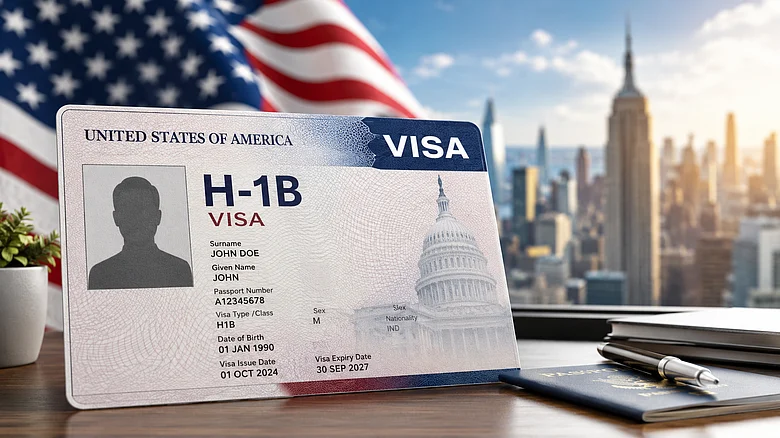

H-4 work permits could be rolled back: DHS has proposed removing certain H-4 spouses from the category eligible to apply for employment authorisation, reversing the 2015 rule.
Indian families could be hit hardest: Indians accounted for 71% of H-1B petitions approved in FY2024, while earlier data showed Indian nationals made up about 93% of initial H-4 EAD approvals.
No immediate impact: Existing H-4 EADs remain valid under current rules. DHS would need to publish a formal proposal, allow public comments and issue a final rule before any changes take effect.
The Trump administration is considering ending a work-authorisation programme that has allowed eligible spouses of H-1B visa holders to work in the US for more than a decade, a move that could disproportionately affect Indian families.
The Department of Homeland Security (DHS) has placed a proposal on its long-term regulatory agenda to remove certain H-4 dependent spouses from the category eligible to seek employment authorisation.

1 October 2026
Get the latest issue of Outlook Business

The proposal, listed under RIN 1615-AD14, would reverse the 2015 rule that created the H-4 Employment Authorisation Document (EAD) pathway.


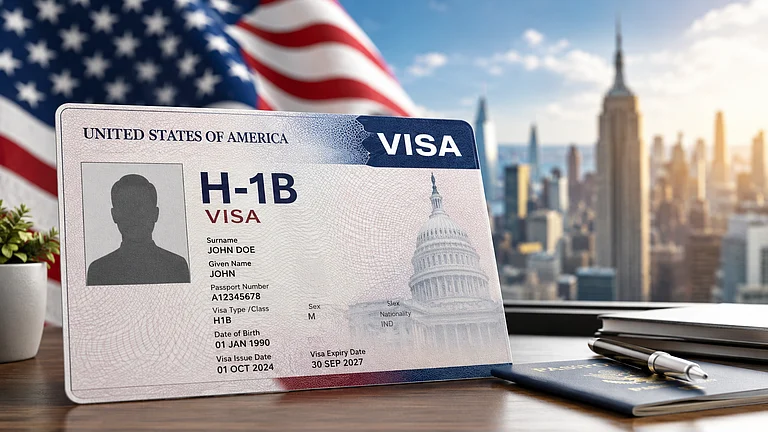
However, there is no immediate change for existing H-4 EAD holders. DHS has not yet published a formal Notice of Proposed Rulemaking (NPRM), and the current regulatory entry does not cancel existing work permits.
Why H-4 Spouses Could Be Affected
An H-4 visa is issued to the spouse or dependent child of an H-1B worker. While H-4 status allows family members to live in the US, it does not itself provide employment rights.
Advertisement
Under the 2015 rule, certain H-4 spouses can apply for an EAD if their H-1B spouse has progressed sufficiently through the employment-based green-card process.
This includes workers with an approved employment-based immigrant petition or those granted H-1B extensions beyond the normal six-year limit because their green-card process remains pending.
The EAD allows eligible spouses to work, change employers and earn an independent income.
Why Indians Could Face A Bigger Impact
Indian nationals could be particularly affected because they account for the majority of H-1B beneficiaries.
USCIS data shows that 71% of H-1B petitions approved in fiscal 2024 were for beneficiaries born in India, compared with about 12% for China.
Advertisement
H-4 EAD recipients have also historically been predominantly Indian and female.
Earlier data showed that about 93% of approved initial H-4 EAD applications were for Indian nationals, while a Congressional Research Service analysis found that 94% of approvals between 2014 and 2017 were for women.
The programme has been particularly important because Indian H-1B professionals can face lengthy waits for employment-based green cards. The EAD allows spouses to maintain careers and contribute a second household income during that period.
What Happens Next?
DHS would first have to publish a proposed rule in the Federal Register, followed by a public-comment period and a final rule before any changes could take effect.
The current proposal does not clarify whether existing EADs would remain valid until expiry, whether renewals would be allowed or how pending applications would be handled.
The Trump administration had considered eliminating H-4 EAD eligibility during its first term, but that effort was withdrawn in January 2021. For now, H-4 EAD holders remain eligible to work under existing rules.