The government said kharif 2026 fertiliser requirement has been reassessed at 383.9 lakh tonnes.
Current stock stands at 197.56 lakh tonnes, or more than 51% of demand.
Farmers have bought 86.65 lakh tonnes of fertiliser so far, about 22.57% of total requirement.
The government on Monday said farmers have bought 11.17 lakh tonnes of organic manure in the ongoing kharif sowing season, a 3.5 times jump from the year-ago period, indicating a gradual shift from chemical fertilisers.
The Centre also reiterated that the overall stock position of fertilisers in the country is comfortable and there is no challenge in availability. It is also monitoring the situation on a regular basis to ensure adequate domestic supply.
At an inter-ministerial briefing on the recent developments in West Asia, Aparna S Sharma, additional secretary in the Union Ministry of Chemicals and Fertilisers, said, "For kharif 2026, the fertiliser requirement has been reassessed by the Department of Agriculture at 383.9 lakh tonnes and against this, the stock as on today is 197.56 lakh tonnes".
1 September 2026
Get the latest issue of Outlook Business

The stock is more than 51% of the kharif season demand and this is significantly higher than the usual level of 33%, she added.
"The purchase of fertiliser has been about 86.65 lakh tonnes for the ongoing kharif, that is approximately 22.57% of the total requirement," Sharma said.
Advertisement
The secretary also said the farmers have procured 11.17 lakh tonnes of organic manure in the season, compared to 3.2 lakh tonnes during the corresponding period last year.
"This substantial increase reflects a positive trend towards greater adoption of the organic nutrient sources and a gradual shift in the farmers' preference from chemical fertiliser to the organic alternatives," Sharma said.
The secretary asserted that there is no major challenge in availability of fertilisers currently.
"The domestic production and import continues, and a total of 147.4 lakh tonnes have been imported as well as domestically manufactured after the crisis situation. In June, more than 25 lakh tonnes of imported urea, DAP, and PKS have arrived at the ports, and a tender of 17 lakh tonnes of urea is under progress," she said.
Advertisement
Sharma said the government is clearing all subsidy bills as per the budgetary provision.
She said the "situation is being monitored at the highest level in the Empowered Group of Secretary meetings to ensure adequate availability of fertiliser and raw materials".
In 2025, nearly 73% of the country's total fertiliser requirement was met through domestic production.

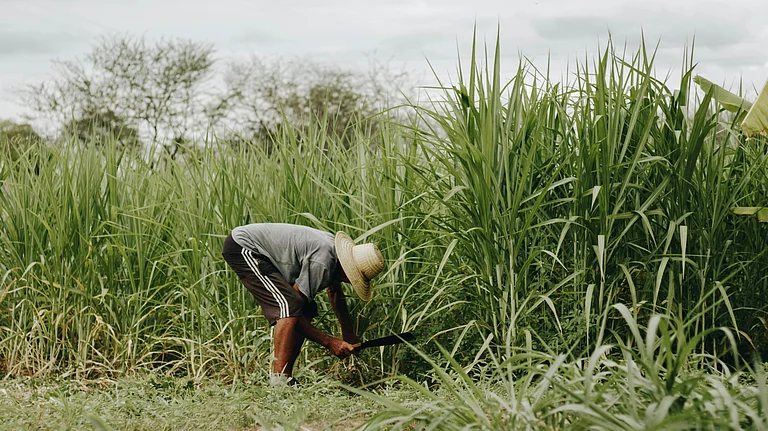
India imports a large quantity of urea and di-ammonimum phosphate (DAP) to meet local demand.
Total domestic production of fertilizers, including urea, DAP, NPKs, and SSP has increased from 433.29 lakh tonne in 2021 to a record 524.62 lakh tonne in 2025.
The country's urea production has increased from 225 lakh tonne during 2014-15 to 306.67 lakh tonne in 2024-25. The country imported more than 100 lakh tonne of urea last fiscal year to meet local demand.
The budgetary allocation for fertiliser subsidies in 2026-27 stands at ₹1.71 lakh crore and the import bill is likely to rise as rates in global markets have shot up.
At present, the MRP of neem-coated urea is ₹242 per bag (45kg), while the DAP is being sold at ₹1,350 per bag (50kg).