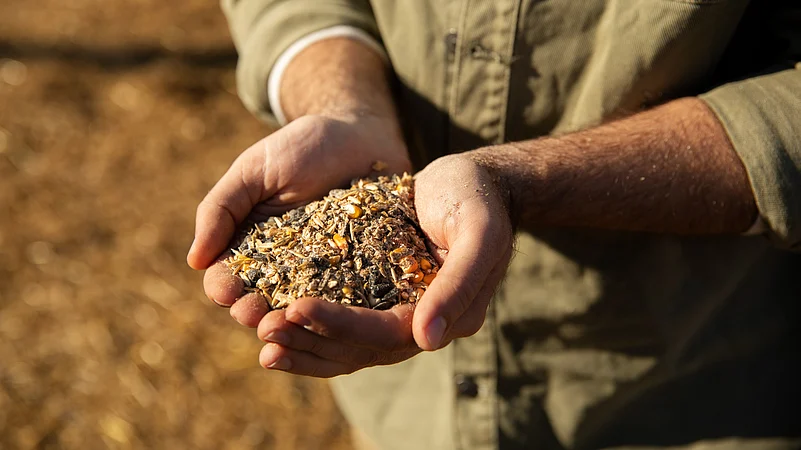
India's private seed companies are holding 20-30 per cent surplus stock for the kharif season, but ensuring timely distribution to critical rain-deficient geographies remains the key challenge as El Nino threatens to deliver a weak and delayed monsoon this year, industry body FSII has said.
Federation of Seed Industry of India (FSII) Chairman Ajai Rana said while the sector was well-prepared following a bumper seed production season for corn, rice, and millets, a recent survey of 1,000 farmers showed 75 per cent had already purchased seed while the remaining 25 per cent were waiting for the monsoon – underscoring the urgency of moving stocks from surplus areas to vulnerable districts before the planting window closed.
"We typically plan with 15-20 per cent buffer for returns. This year's strong seed production has further strengthened our position. … Many companies are having 20-30 per cent surplus stock," Rana told PTI in an interview.

1 September 2026
Get the latest issue of Outlook Business

In scenarios where farmers may need to replant due to a weak or delayed monsoon, the surplus stock (both government and industry) should help.
"But the key challenge is not total availability but timely distribution to the right geographies," he noted.
Short-duration and climate-resilient hybrids are critical in distressed districts, he added.
The government has pegged certified seed availability at 192.43 lakh quintals against a requirement of around 173 lakh quintals, a surplus of 11.2 per cent for this kharif season. The private sector, which supplies nearly 70 per cent of seeds through a network of over 10 lakh retailers, has built additional buffer stocks over and above this.
Advertisement
The government has identified 315 districts across 12 states that are likely to be impacted due to the delayed monsoon this kharif season.
Rana said nearly 50 per cent of Indian agriculture remained rain-fed, making the kharif season acutely vulnerable to the El Nino weather pattern this year.
"El Nino is not good news for our agriculture, especially the kharif season, which is the major season. It will particularly impact geographies where irrigation coverage is low," he said.
Planting is currently delayed in Madhya Pradesh, Chhattisgarh, parts of Jharkhand, and Bihar. Northern irrigated areas, including Punjab, Haryana, and western Uttar Pradesh, are over 90 per cent covered and largely unaffected, he added.
Advertisement
If a weak monsoon continues in July and August, Rana suggested that farmers go for short-duration and high-yielding varieties suited for a shorter crop period, while adjusting agronomic practices like applying fertiliser earlier for rice.

He also said there is a "myth" that hybrids need more water and fertiliser.
"In reality, due to hybrid vigour, they often need less. For example, in Punjab/Haryana, hybrids require only 2 bags of urea versus 3-4 bags for non-hybrid varieties, and mature 15 days earlier." A clear shift towards early and medium-maturity varieties is underway across most crops and regions, Rana said, adding that the industry had stocked and supplied seeds accordingly.
For rice, the biggest kharif crop, Rana identified Madhya Pradesh, Chhattisgarh, Bihar, eastern Uttar Pradesh, Bengal, Odisha, and Telangana as areas needing urgent attention, with farmers needing to shift to shorter-duration varieties.
Corn (maize) cultivation in Madhya Pradesh, Maharashtra, and Karnataka was also being closely monitored, while millets such as sorghum and pearl millet were well-placed to handle a deficient rainfall year, with adequate stocks available following the government's Millet Mission, he said.


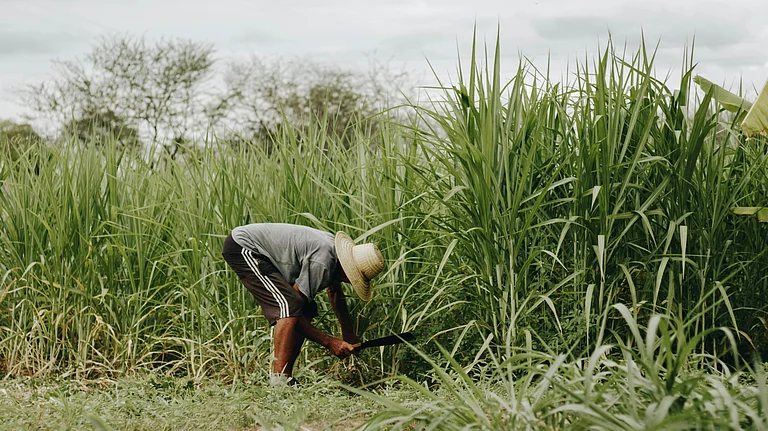
Rana flagged concern over Telangana's decision to announce a bonus on fine-grain long-duration rice varieties, calling it contradictory in a drought-prone year.
"In a drought-prone year, incentives for long-duration fine varieties push more rice cultivation when we should be promoting early-medium varieties like MTU 1010 that suit the conditions. We have reached out to state governments on this," he said.
He also noted that rice area had crossed 50 million hectares last year against an earlier normal of 42-44 million hectares, describing the trend as far from ideal for a monsoon-dependent country.
GRASSROOT COORDINATION -------------------------------- FSII member companies have mapped the vulnerable districts using remote sensing tools and are running real-time monitoring through digital platforms and telephonic surveys.
A recent survey of 1,000 farmers found 75 per cent had already purchased seed, while the remaining 25 per cent were waiting for the monsoon, Rana said.
"The main issue is grassroots coordination -- moving seed from surplus areas like Mathura and Agra to needy districts in Rajasthan," he said.
SEED QUALITY CONCERNS ----------------------------- On the risk of spurious seeds circulating during a distress year, Rana said FSII was actively supporting the government's SATHI initiative for seed traceability, with all member companies having implemented QR codes on seed bags for farmer verification.
On agronomic advice for farmers in vulnerable districts, Rana recommended opting for short-duration, high-yielding hybrids, applying fertilisers earlier in the season, and transplanting rice nurseries at 25-30 days of age to minimise yield penalties from delayed transplanting.