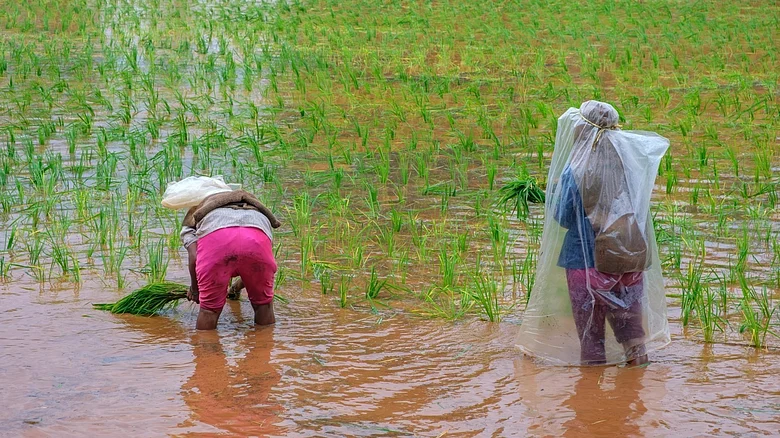
Three-fourths of the kharif-sown area is projected to receive below-normal rainfall.
Reservoir storage remains above normal across key regions, the report said.
Productivity risks could emerge later due to moisture stress and tighter fertiliser availability.
Healthy reservoir storage is likely to offset the impact of rain shortfall due to El Nino on sowing of kharif crops and their initial growth, but moisture stress, risk of pest infections and constrained fertiliser supplies could weigh on yields, a report said on Thursday.
El Nino is a climate phenomenon historically associated with weaker monsoon and heightened uncertainties over rainfall.
Crisil Intelligence expects El Nino-led rainfall variability to influence India's 2026 kharif season, but healthy reservoir storage is expected to limit the impact on sowing and early crop development.

1 October 2026
Get the latest issue of Outlook Business

Despite three-fourths of the kharif-sown area being projected to receive below-normal rainfall, the impact on early-season crop establishment is likely to remain relatively limited, it said.
Major agricultural states, including Punjab, Haryana, Rajasthan, Uttar Pradesh, Gujarat, Madhya Pradesh, Maharashtra and Karnataka, are expected to witness rainfall deficits. However, reservoir storage remains comfortably above normal storage across key regions, at 44% in the western region, 34% in the northern region, 20% in the central region and 6% in the southern region, the report stated.
Combined with irrigation penetration of 48%, 65%, 76% and 52%, respectively, these conditions are expected to support sowing activities and crop establishment despite weaker rainfall.
Advertisement
Although reservoir storage in eastern India remains 11% below normal, favourable rainfall received over the past month has improved soil moisture conditions across the region.
As a result, sowing and crop establishment activities are expected to progress on a stable footing, although the region remains more dependent on the timely progression of monsoon and rainfall distribution compared with the rest of the country.
However, productivity risks could emerge during the latter half of the season due to moisture stress, higher pest and disease pressure, and tighter fertiliser availability, it stated.
The report further stated that tighter fertiliser supplies and increased dependence on crop protection products might also add to input challenges.
Advertisement
The eventual kharif output will largely depend on rainfall distribution through the season and the availability of critical agricultural inputs, added the report.