India’s young population has unprecedented potential to leverage AI tools for new projects, innovation, and entrepreneurship.
Sensible technology and AI policies in India create a strong foundation for innovation, making the country distinctive in the global AI ecosystem.
AGI is on the horizon within five to eight years, but current AI models, while impressive, still have limitations, particularly in generalizing across diverse tasks.
With the world’s largest young population, India is set to offer its youth unprecedented opportunities through artificial intelligence, Google DeepMind CEO Demis Hassabis told Outlook Business.
“I see a huge opportunity for the youth of India to harness these advanced tools to launch new projects, build innovative solutions, and create successful businesses. That, I believe, is the key takeaway of the summit for me ,” said Hassabis.

1 October 2026
Get the latest issue of Outlook Business

When asked what sets India apart in the global AI ecosystem, CEO of Google DeepMind, highlighted the country’s sensible technology and AI policies, which he said make India truly distinctive.
“Yes, I think their approach has been very sensible. The policies are well thought out and create a strong foundation for AI innovation,” said Hassabis.
He also praised the scale, diversity, and high level of participation at the conference, noting that the overall summit was good enough.
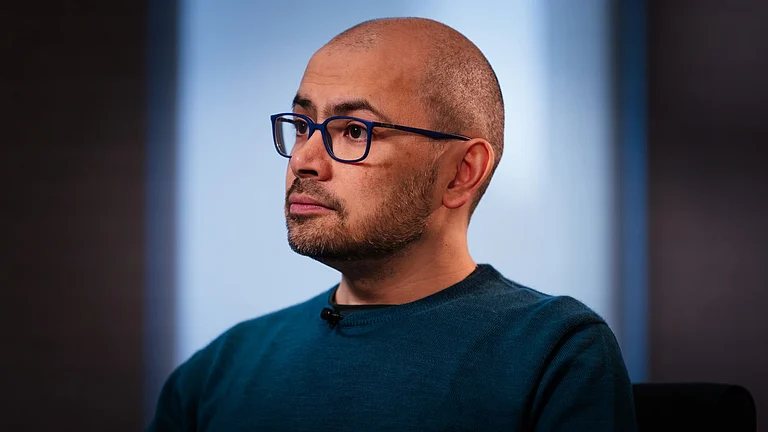
Google DeepMind CEO participated in the summit on 18 February and, in his keynote address, also said that the world is at a threshold moment for AGI (Artificial General Intelligence), which could become a reality within the next five to eight years.
Advertisement
There, he also noted that today’s AI models are highly impressive, but they still have significant limitations, including inconsistencies across different tasks capabilities one would expect from a truly general system.
Hassabis is a British computer scientist, neuroscientist, and entrepreneur best known as the co-founder and CEO of Google DeepMind. He was also awarded the 2024 Nobel Prize in Chemistry for his groundbreaking work on protein structure prediction using AI.