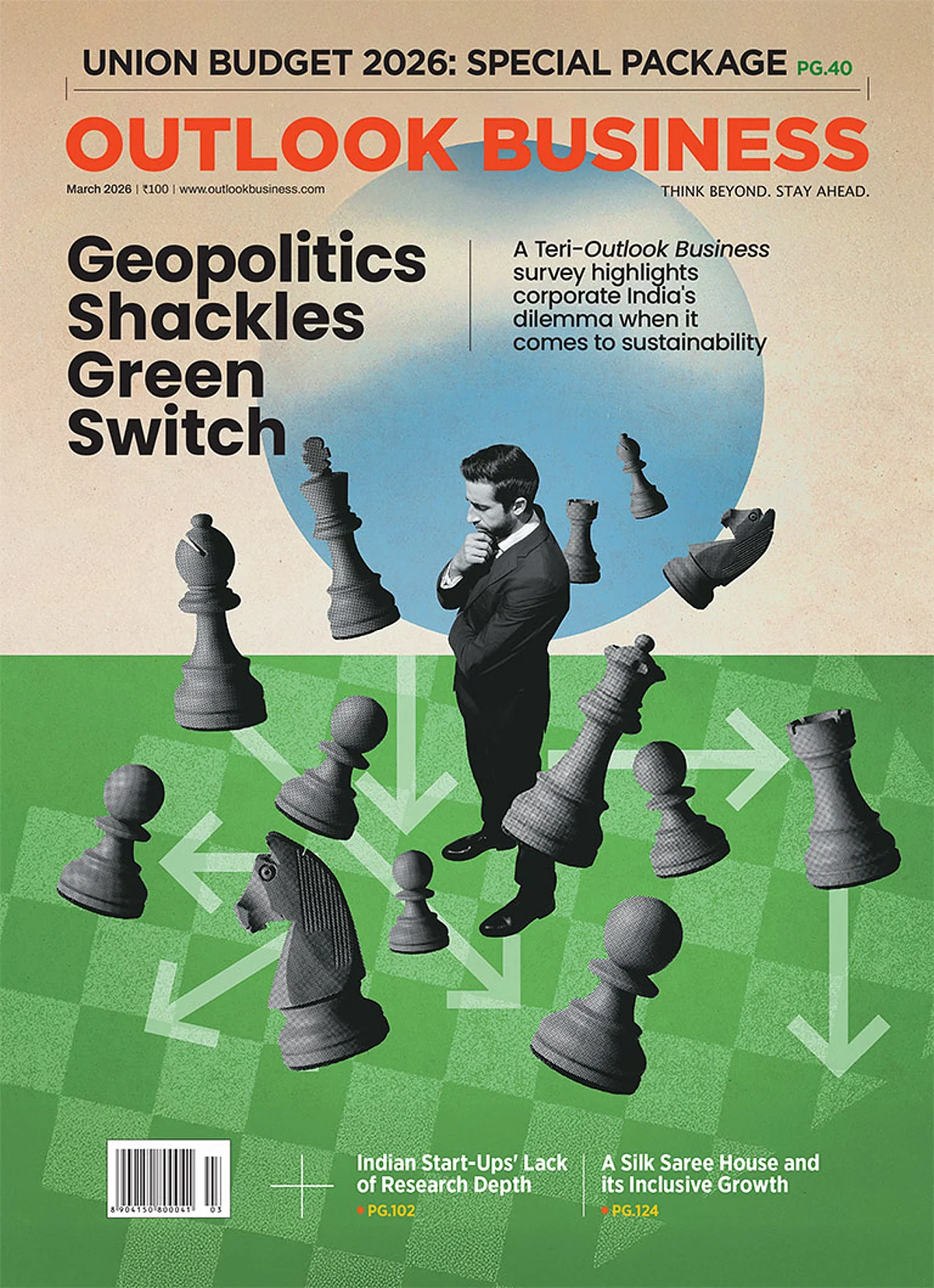
Wealthy nations wield disproportionate influence in setting the terms of global climate negotiations. Our March issue examines the geopolitics of the sustainability regime and argues that Western economic power is being deployed in ways that could unsettle emerging economies
BY Neeraj Thakur 1 March 2026
AI Summit 2026 in Delhi: India showcased its AI ambitions and promising start-ups, but limited breakthroughs exposed structural challenges slowing its rise in the global AI race
BY Nabodita Ganguly 1 March 2026
With revenue growth lagging projections, Nirmala Sitharaman’s Budget strategy faces mounting pressure, raising questions over financing the Viksit Bharat ambition
BY Parth Singh 1 March 2026
While execution remains critical, the direction of the Union Budget 2026 is clear: India is betting on its human capital and strategic sectors
BY Nilesh Shah 1 March 2026
Sachchidanand Shukla of L&T says revenue augmentation is key in Budget 2026. Strategic spending over spree could strengthen India’s resilience if executed well
BY Sachchidanand Shukla 1 March 2026
Budget reforms to unlock rare earth reserves and boost processing incentives mark a turning point for India’s metals and mining sector, says Priya Agarwal Hebbar
BY Priya Agarwal Hebbar 1 March 2026
HD Kumaraswamy, Union Minister of Heavy Industries talks to Himanshu Ojha about the steps taken to decarbonise hard-to-abate sectors and efforts to reduce imports of clean technology among other issues
BY Himanshu Ojha 1 March 2026
Over 70% of respondents from India Inc say geopolitics is influencing sustainability strategy, with supply chain disruption, price volatility and market access emerging as key concerns, as per Teri-Outlook Business survey
BY Sudipto Dey 1 March 2026
The Teri-Outlook Business survey reveals financial, regulatory and operational hurdles India Inc’s C-suite faces in achieving sustainability and ESG targets
BY Outlook Business Desk 1 March 2026
By focusing on decision architecture rather than outcomes, the survey methodology informs execution-oriented dialogue among policymakers, investors and corporate leaders on translating commitments into measurable progress
BY Arupendra Nath Mullick 1 March 2026
Teri-Outlook Business survey finds technology gaps, policy uncertainty, limited green finance and weak green demand are major challenges for corporate decarbonisation in India
BY Himanshu Ojha 1 March 2026
Saurabh Garg, secretary, Ministry of Statistics and Programme Implementation talks to Devabrata Dutta about how India’s National Indicator Framework helps companies align ESG, CSR and sustainability strategies with national priorities
BY Devabrata Dutta 1 March 2026
Nearly 40% of companies are unaware of or not aligned with India’s National Indicator Framework, finds Teri-Outlook Business survey, highlighting gaps in corporate ESG adoption
BY Devabrata Dutta 1 March 2026
Deep decarbonisation in several sectors presents a structural challenge not just for India, but globally. The nearer milestones of 2030 are ambitious and challenging
BY Ajay Shankar 1 March 2026
Emerging economies are expected to lead the energy transition, but economic growth, urbanisation and manufacturing often reduce renewable energy adoption, highlighting the gap between goals and reality
BY Parth Singh 1 March 2026
Manisha Girotra, chief executive, Moelis India, tells Ashutosh Mishra why India’s funding story is now structural, not cyclical. She talks about how domestic funds are shaping India’s private equity landscape and competing with global PE players
BY Ashutosh Mishra 1 March 2026
Only 3 of 35 founders at India’s top AI start-ups hold PhDs, highlighting a research gap that risks India being a user of AI rather than an innovator in the global AI race
BY Tarunya Sanjay 1 March 2026
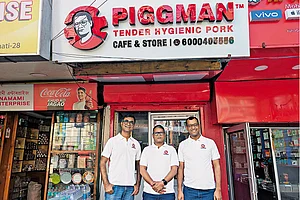
The rise of Symbiotic Foods’ Piggman cafés highlights how Northeast rural entrepreneurs are scaling unconventional ideas into sustainable businesses, driving inclusive development by training farmers in new technologies and boosting their incomes
BY Bunty Thoidingjam 1 March 2026
Founded in 1971, a heritage silk saree house has evolved from a neighbourhood store in Kolkata into one of India’s fastest-growing heritage silk saree retailers
BY Tarunya Sanjay 1 March 2026