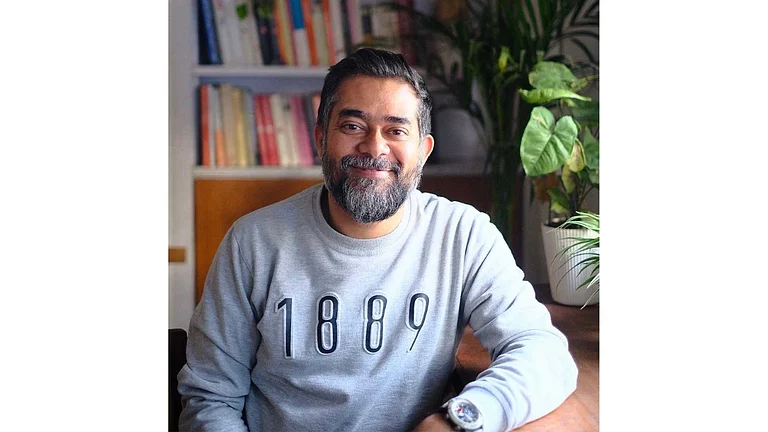
A banker and an engineer walked into a room. While the former wanted to make a difference in his home state, the latter had just the blueprint to make it happen.
No, this is not the premise of a joke. This is a fortuitous coming together of two people, who saw a business opportunity and ran with it. This is the story of a start-up making waves in a largely informal landscape of pork industry.
Piggman (formerly Slice of Gahori) has emerged as a definitive brand for the Northeast, a region that consumes nearly 70% of the country’s pork. Founded by Manoj Kumar Basumatary, a former banker, the brand is now the face of a modernised “farm-to-fork" ecosystem spanning the Northeast.

1 September 2026
Get the latest issue of Outlook Business

Basumatary and his friend Khanindra Kalita, a former engineer, started a piggery with just 25 sows and two boars in 2014. This was later incorporated as Symbiotic Foods in Assam’s Sonitpur district in 2016.
But why a piggery? Kalita pointed out to Basumatary the massive scope the sector offered with at least 70% of the region’s pork demand being met via imports. The aim was to not just meet the massive demand but to build a formal brand-led retail business.
Idea to Table
Though sustenance-level pig farming is common in Assam and the Northeast, availability of quality piglets for commercial farming is still wanting.
Basumatary did a lot of research. He spent time in Belgium (2014–18) and visited Dutch farms to learn more about the advanced value chains in Europe. But it was the funding from Dutch impact investor Tuvalu that gave the much-needed scale the piggery hungered for. This ₹60-lakh funding came at a time when banks had refused to even lend ₹10 lakh.

The start-up also secured ₹3.5 crore through the Northeast Venture Fund scheme. Set up by North Eastern Development Finance Corporation (NEDFi) and the Ministry of Development of North Eastern Region, the scheme was launched in 2017 to give small start-ups capital assistance.
According to Prasanta Kumar Talukdar, who heads the ₹100-crore NEDFi Venture Capital, Symbiotic differentiates itself through an end-to-end, traceable value chain spanning farmer engagement, production support, processing, cold-chain logistics and organised retail.
Science is also key to what the start-up's vision for the pork industry. R Thomas, principal scientist at the Indian Council of Agricultural Research-National Research Centre on Pig (ICAR-NRCP), says, Symbiotic's quality-conscious approach aligns well with user expectations and regulatory requirements.
By using global breeds like Large White Yorkshire and Landrace, and training farmers under its backward-integration model, Symbiotic ensures quality and hygiene of its produce. The training spans across vaccination, feed management and sourcing piglets from best breeds for supply chain transparency.
“We extend technical support to Symbiotic. Such research-industry linkages are key to ensure adoption of evidence-based practices from the early stages of growth,” says Thomas.
The D2C Shift
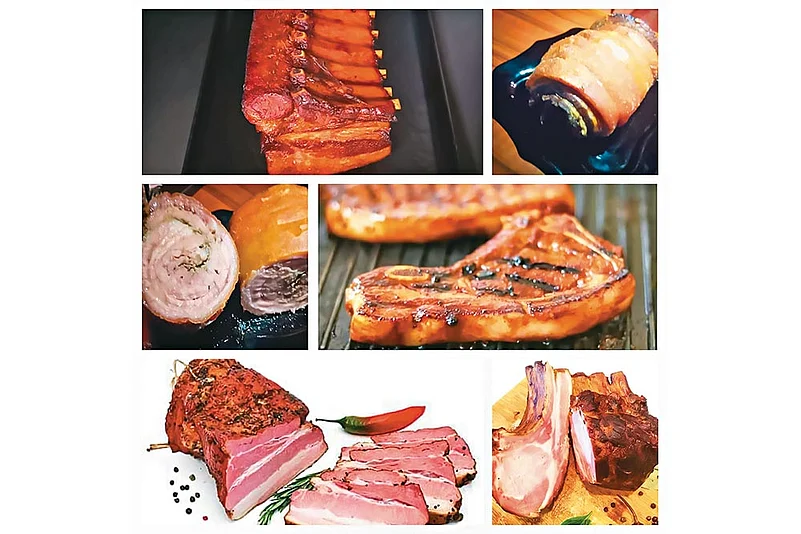
Come 2020, the Covid-19 pandemic set Basumatary on the direct-to-consumer path. This is how Slice of Gahori, a ready-to-eat and ready-to-cook brand, was born and later rebranded Piggman in 2024. It set up a processing plant at a cost of ₹5 crore with European equipment.
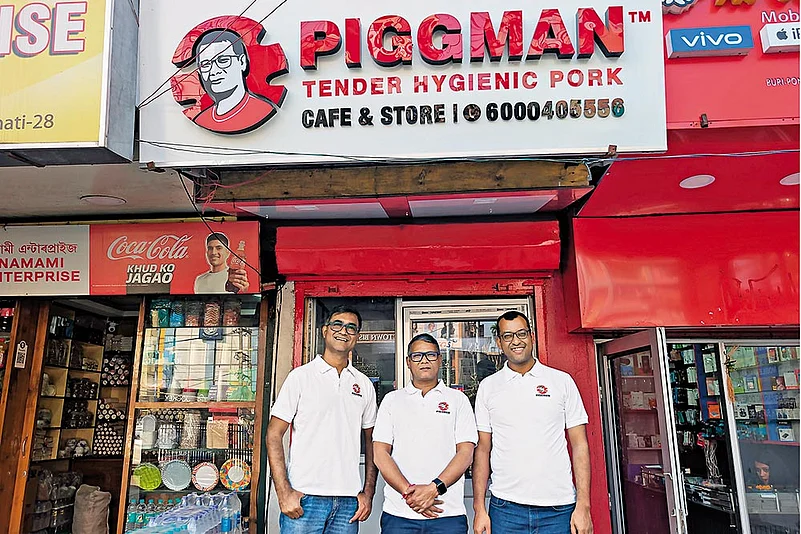
The start-up now boasts of eight operational PIGGMAN Cafés & Stores—six in Guwahati (Assam), one in Tezpur (Assam) and one in Dimapur (Nagaland). It aims to expand to 20 outlets by March this year and 100 stores by March 2027 in the Northeast. It has plans to enter Delhi-NCR and Bengaluru too.
With an expected revenue of ₹7.5 crore in the current financial year 2025–26, Symbiotic represents the formalisation of a traditionally informal livestock sector. “We have around 40 people working with us directly and indirectly. Once the processing unit is fully up and running, we expect to employ at least 100,” says chief marketing officer Kalita.
Symbiotic has also trained more than 3,000 farmers through residential programmes and around 5,000 farmers under the Bodoland Pig Mission. By March 2027, it plans to work with over 1,000 pork-producing farmers to improve breeding practices, productivity and market access, aimed at enhancing farmer incomes and long-term livelihood security.
Symbiotic has now scaled to a 200-sow breeding farm, producing around 4,500 piglets annually with a network of farmers who collectively raise around 10,000 pigs. “We’ve formed farmer clusters and bank-linked them for easier credit access. We stand as assured buyers of their produce. This is how we’re building an ecosystem,” says Basumatary.
Inclusive Development
Talukdar says Symbiotic’s inclusive rural development through farmer integration closely aligns with NEDFi’s vision. “We don't intend to compete with the small farmer and the local butcher. We aim to provide pork of international quality,” says Pranjal Deka, who joined Symbiotic as chief strategic officer in May 2025.
Symbiotic also aims to position the region as an export hub, with shipments to Bhutan, Hong Kong, South Korea and Japan. Today, it trains thousands of young people across the Northeast and is targeting ₹100 crore in revenue in 4–5 years, underscoring how rural entrepreneurs are turning unconventional ideas into scalable, sustainable businesses.