
Meesho says its zero-commission policy, scale-driven logistics, and tech-first operations give it a structural cost advantage over rivals
AI-led personalisation and a broad seller base aim to address quality and pricing challenges for value-conscious shoppers
With its IPO underway, the company is doubling down on ads, low-cost fulfilment, and deeper market penetration, not fast delivery
At a time when top e-commerce players like Amazon, Flipkart and Myntra are doubling down on 10-minute delivery game, IPO-bound Meesho is building a model that runs counter to the trend. Instead of chasing speed and convenience, the social commerce platform is still betting on “value and affordability”.
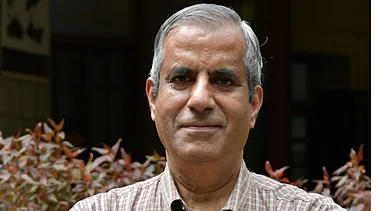
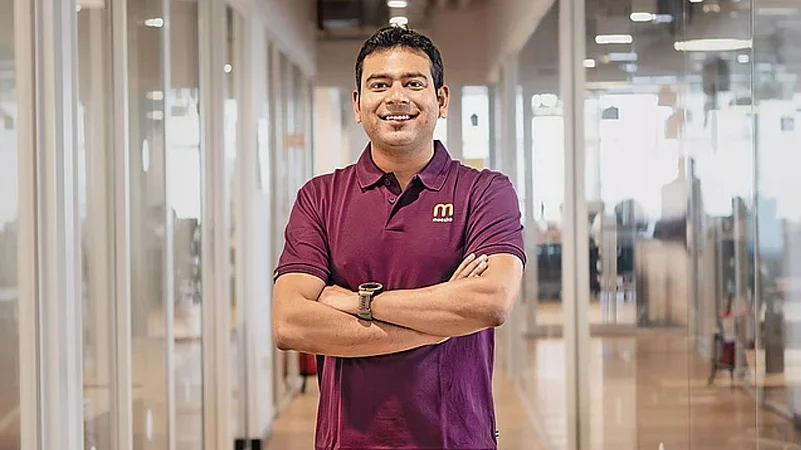
“Our user persona and use case are different. Many companies offer very fast delivery, 10-minute delivery, one-day delivery, etc. We are not optimising for this approach,” Meesho cofounder Sanjeev Barnwal told Outlook Business in an interview ahead of its public listing.

1 September 2026
Get the latest issue of Outlook Business

Meesho has gone from “Bharat-only app” to India’s highest-volume e-commerce platform. It has outpaced daily orders on Amazon India and Flipkart. Now it’s heading to the public market on December 3 with a ₹105–111 price band, valuing the firm at about ₹50,000 crore ($5.8 billion).
The public offering will close on December 5, with anchor investors set to receive their allocations on December 2. The e-commerce firm will make its debut on the stock market on December 12.
Advertisement
The Bengaluru-based company's maiden public offering will comprise a fresh issue of shares worth ₹4,250 crore, along with an Offer For Sale (OFS) of 10.55 crore shares valued at ₹1,171 crore at the upper band, taking the total issue size to ₹5,421 crore.
The offer for sale includes sale of equity shares by some of Meesho's early investors, including Elevation, Peak XV, Venture Highway and Y Combinator, and promoters & founders-- Vidit Aatrey and Sanjeev Barnwal. Meesho plans to utilise proceeds for investment in cloud infrastructure; marketing and brand initiatives as well funding inorganic growth through acquisitions and other strategic initiatives and general corporate purposes.
Advertisement
Overall, 75% of the issue size has been reserved for qualified institutional buyers, 15% for non-institutional investors and the remaining 10% for retail investors.
Meesho is a technology platform that drives e-commerce by bringing together four key stakeholders -- consumers, sellers, logistics partners and content creators.
Edited Excerpts:
As competitors like Amazon and Flipkart double down on low prices and discounts, what would be Meesho’s core advantage as it goes public?
I think we have five major advantages, which get stronger as the flywheel rotates. First, we are the pioneers of the zero-commission model in the e-commerce sector. This has brought a lot of selection online because they were able to list low-margin products as well.
Second, we are the lowest-cost distribution channel for sellers like low logistics cost, low server cost, low customer support cost, etc. Overall, the cost of doing business is quiet low on Meesho.
Third advantage is operating leverage. Logistics is a scale business, and we are already the largest platform in terms of annual transacting users and orders. During H1 FY25, our annual transacting users (ATU) base was 234 million, and we did about 2.3 billion orders. As we grow, we naturally get better pricing and continue to optimise logistics.
The fourth advantage is competition among sellers. With approximately seven lakh sellers in the past year, the competition itself pushes product prices down. And the last one is tech-first approach. We solve many problems through technology, which became a huge operating leverage for us.
For instance, we have around 2,000 employees, and 57% of them are in tech role. All these factors strengthen with scale. As more consumers come to the platform, more sellers join, selection increases, price competition increases, and the flywheel continues. Over the years, we have also added new flywheels like Valmo, and the content-commerce platform.
Meesho is known for low prices, but product quality is a constant concern. What are you doing to improve it?
Our retention is very strong. With 234 million annual transacting users, our transaction frequency has grown over time. In FY23, it was around 7.5 times a year earlier, now it has gone up to 10 times in the latest reported period. So, we are not only adding new users (53% YoY in H1), but our existing users are also buying more often.
On the scale of quality, it is humanly impossible to manually control the product quality. So, we rely on sophisticated AI algorithms. We create a personalised affluence score for every consumer. Quality benchmarks differ from person to person.
Our AI models understand this affluence score accurately. When a user opens the app, we recommend products from 15 crore active listings that clear that user’s personalised quality benchmark.
These investments helped us in increasing the average product rating over the last two years. Our Play Store rating has also gone up continuously, and we now have the highest rating among Indian e-commerce marketplaces. So this is how we address quality issues using AI.
Which single user-level metrics do you watch closely, and how have they changed in recent years?
We track many metrics because the platform is complex. There are many dynamics in a marketplace. Even for consumers, there isn’t just one metric; it’s not just order frequency or NMV per customer. We look at all of them together. We have shared certain metrics in the prospectus, and those are the only ones we are disclosing today.
What share of your orders comes from tier 1 versus tier 2/3 cities, and which regions will you prioritise over the next five years?
We have shared consumer distribution data in the prospectus. Around 12% of consumers come from the top eight cities; the remaining 88% are from beyond these cities. Even 12% of 234 million is a large number. We have strong penetration across tier 2, tier 3, and metros. About 54% of users are women.
We see a well-distributed consumer base. We are a horizontal e-commerce platform with demand across categories; not just apparel, but home & kitchen, baby care, and more.
For future, we don’t focus on specific regions. Our mission is to democratise internet commerce. There are many places in India where e-commerce penetration is still low. A good proxy is chat app usage. WhatsApp has around 800 million users in India.
In emerging markets like China and Southeast Asia, the number of e-commerce users is similar to the number of chat app users. We believe India will follow a similar path. We want to continue driving growth and take Meesho to every customer.
Meesho offers zero-commission for many sellers, so what’s your long-term monetisation strategy?
The reason our platform is zero commission is that we want every seller, even those with low-margin products, to join and sell on Meesho. It makes these products viable for sellers and allows them to pass benefits to customers.
We make money in two ways: first, logistics margin. Valmo’s innovations has taken our cost per shipment extremely low, so we charge a small markup. The second monetisation method is advertisements.
With around seven lakh active sellers, many want higher ranking or visibility via sponsored listings. Ads are a meaningful revenue stream, similar to other companies in emerging markets. We will continue to strengthen our ad products and expand margins.

There were speculations that Meesho initially explored a $10 billion valuation, which later settled around $5-6 billion. Why?
We never said it was $10 billion, those were speculations. Valuation works like this: when we started the IPO process, we met institutional investors. Based on their feedback, our investment bankers indicated the price band where most long-term investors we want to partner with were comfortable. That is what we recommended to the board, and that is the price band that came out.
Do you have plans to enter quick commerce market?
No, we don’t have any such plans. Our user persona and use cases are different. Many companies offer very fast delivery, 10-minute delivery, one-day delivery, etc. We are not optimising for this approach. The fundamental difference is whether you optimise for value-conscious use cases or convenience-focused ones. We are in the first bucket.
Quick commerce optimises for convenience, and convenience comes at a cost that we don’t want to absorb. We believe the larger Indian market will always be affordability-focused. In emerging markets like China and Southeast Asia, companies like Taobao, Pinduoduo, and Shopee succeed by being value-focused.
And in steady state, such companies capture larger market share. We believe India will see the same trend: more affordability-driven demand than convenience-driven.